13 Impressive Health Benefits of Jicama: Nutrition, Uses & More
Explore the extraordinary health benefits of jicama, from gut health to heart protection, and easy ways to enjoy this versatile root.
13 Impressive Health Benefits of Jicama: Nutrition, Uses & FAQs
Jicama, also known as Mexican yam bean or Mexican turnip, is a crisp, juicy, and mildly sweet root vegetable celebrated for its nutritional value and versatility. Native to Central America, jicama has become a beloved staple in kitchens and health circles worldwide due to its impressive array of vitamins, minerals, antioxidants, and dietary fiber. Below, we explore everything you need to know about jicama: its nutritional profile, top health benefits, culinary uses, and frequently asked questions so you can confidently add this nutritious vegetable to your diet.
Table of Contents
- What Is Jicama?
- Nutritional Value of Jicama
- 13 Health Benefits of Jicama
- Uses of Jicama
- Selection and Storage
- Potential Risks and Side Effects
- Frequently Asked Questions
What Is Jicama?
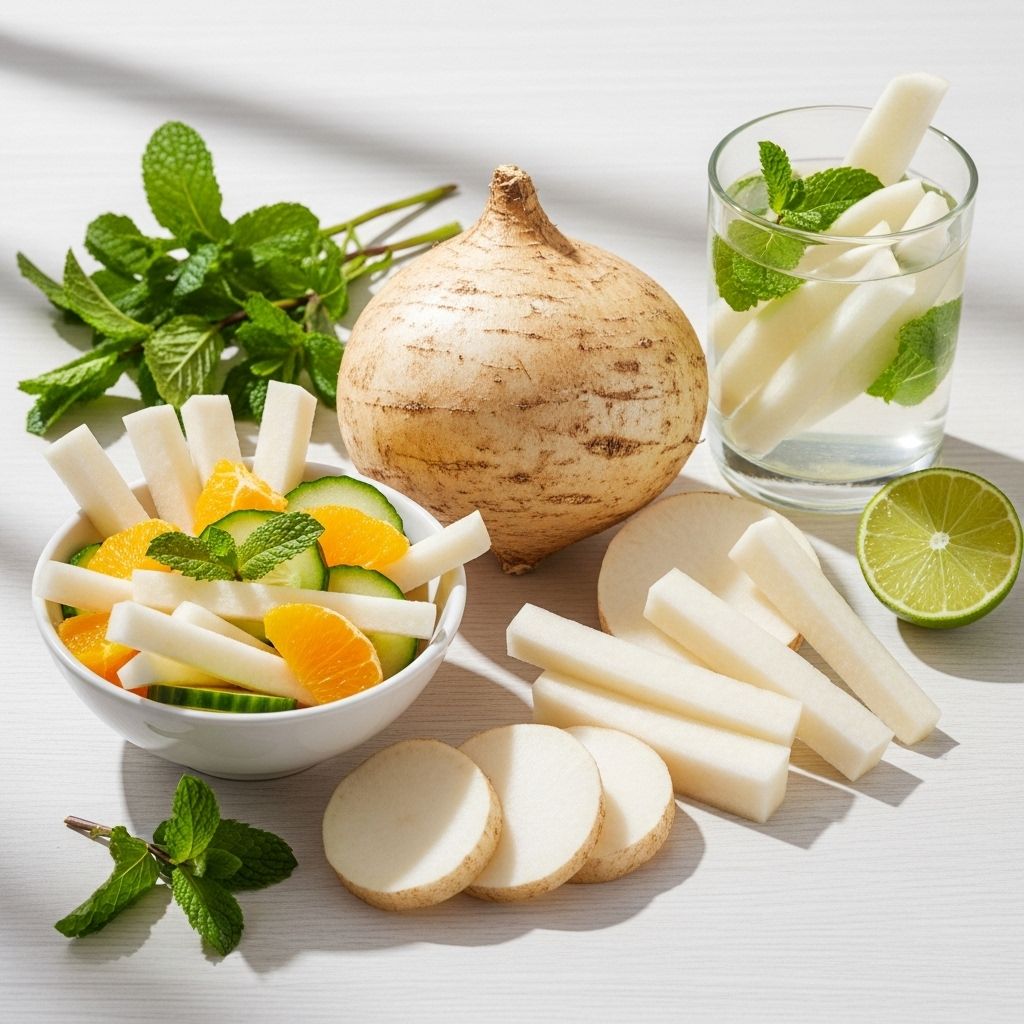
Jicama (Pachyrhizus erosus) is a round, starchy root vegetable covered with thin, brown skin and filled with crunchy, white flesh. A member of the legume family, it’s commonly referred to as Mexican potato, Mexican water chestnut, yam bean, and occasionally as Chinese turnip. Originating from Mexico and Central America, jicama thrives in warm climates and has been cultivated worldwide, including Asia and Africa.
Its flesh has a unique crisp texture and sweet, nutty flavor, reminiscent of a cross between a potato, pear, and water chestnut, making it delicious both raw and cooked.
Nutritional Value of Jicama
Jicama is celebrated for being low in calories yet dense in essential nutrients. Here is an overview of its nutritional composition per 1-cup (130 grams) serving:
| Nutrient | Amount per 1 cup (130g) |
|---|---|
| Calories | 49 |
| Carbohydrates | 11.5 g |
| Protein | 1 g |
| Fat | 0.1 g |
| Fiber | 6.4 g |
| Vitamin C | 29% of RDA |
| Folate | 4% of RDA |
| Iron | 4% of RDA |
| Potassium | 6% of RDA |
| Magnesium | 4% of RDA |
| Manganese | 4% of RDA |
| Water | 85% |
This root vegetable offers a combined benefit of hydration, satiety, and an exceptional dose of fiber, making it suitable for a wide variety of diets and health goals.
13 Remarkable Health Benefits of Jicama
1. Aids in Digestion and Gut Health
Jicama is particularly high in fiber, especially a prebiotic fiber known as inulin. Inulin nourishes beneficial gut bacteria, promoting a healthy gut microbiome and enhancing nutrient absorption.
- Prebiotic effects foster efficient digestion and regular bowel movements
- Reduces constipation and supports a healthy gut barrier
- May alleviate symptoms of certain digestive disorders
2. Supports Weight Management
The high fiber and water content of jicama help promote satiety with fewer calories, making it a smart snack or addition to meals for those looking to manage or lose weight.
- Helps reduce hunger and prevent overeating
- Low in calories and fat, high in volume
- Supports stable blood sugar, which can help curb cravings
3. Boosts Immune Function
With up to 29% of the daily value for vitamin C in just one cup, jicama strengthens the immune system and enhances the body’s ability to fight infections.
- Vitamin C serves as an antioxidant, neutralizing free radicals
- Promotes production of white blood cells
- Helps reduce inflammation associated with disease
4. Promotes Heart Health
Several nutrients in jicama contribute to heart health.
- The fiber content has been shown to lower LDL (bad) cholesterol
- Pottasium helps regulate blood pressure
- Antioxidants support vascular health
- May help reduce risk of blood clots
5. Antioxidant Powerhouse
Jicama contains several antioxidants, including vitamin C, vitamin E, selenium, and beta-carotene. These compounds help protect the body from oxidative stress and cell damage associated with aging and chronic diseases.
- Linked to lower risk of cancer, diabetes, cardiovascular disease, and cognitive decline
- Counteracts environmental and metabolic stressors
6. Improves Blood Sugar Control
Jicama’s high fiber—especially soluble fiber—and low glycemic index make it safe for people with diabetes or those monitoring their blood sugar. It slows sugar absorption and minimizes spikes.
- Suitable for diabetic diets and may prevent rapid blood sugar fluctuations
- Low glycemic load
7. Enhances Hydration
Composed of over 85% water, jicama offers a naturally hydrating snack, particularly suited for hot climates or after exercise.
- Combats dehydration
- Hydrating alternative to processed snacks
8. Promotes Bone Health
Jicama provides essential minerals—like calcium, magnesium, and potassium—important for bone strength and density.
- May reduce risk of osteoporosis
- Supports structural health as we age
9. May Aid in Cancer Prevention
The antioxidants and dietary fiber in jicama have been linked to a decreased risk of certain cancers by protecting cells from DNA damage and supporting a healthy colon environment.
- Inulin fiber supports colon health
- Helps remove toxins and waste efficiently
10. Improves Brain Function
Rich in vitamin B6, jicama supports neurotransmitter synthesis and enhances mental energy.
- Promotes nerve and brain health
- Helps in the formation of red blood cells
11. Supports Healthy Skin
The vitamin C and antioxidants in jicama help improve collagen synthesis, which is essential for skin elasticity and wound healing.
- Protects skin from oxidative stress
- Promotes vibrant, youthful complexion
12. Enhances Oral Health
Vitamin C also plays a significant role in maintaining healthy teeth and gums.
- Strengthens periodontal tissues
- Reduces gum inflammation and bleeding
13. Versatility in Healthy Eating
As a virtually allergen-free, gluten-free, and non-GMO food, jicama can be incorporated into various diets—including vegan, paleo, keto, and diabetic-friendly plans—supporting overall health and nutrition diversity.
- Easy to add raw or cooked to salads, slaws, dips, and stir-fries
- Mild, refreshing flavor pairs well with sweet, salty, and spicy seasonings
How to Use Jicama
Jicama is highly versatile in the kitchen thanks to its sturdy texture and mild sweetness. Here’s how you can enjoy it:
- Raw: Peel and slice into sticks or rounds for dipping into hummus or nut butter.
- Salads and Slaws: Add julienned jicama to salads and slaws for crunch and subtle sweetness.
- Fruit Cups: Combine with mango, pineapple, lime, and chili powder for a refreshing snack.
- Cooked: Stir-fry, roast, bake, or sauté jicama as a low-calorie substitute for potatoes or water chestnuts.
- Salsas: Dice jicama and add to fresh salsas for a crisp texture.
Selection and Storage Tips
- Choose firm, dry, and unblemished roots for best flavor and texture.
- Store whole, uncut jicama in a cool, dry place for up to two weeks.
- Refrigerate peeled or cut jicama in an airtight container; use within 3–5 days for maximum freshness.
- Never eat the skin, leaves, or seeds, as they contain natural toxins and are not safe for consumption.
Potential Risks and Side Effects
- Jicama is generally safe when eaten as a peeled root.
- The skin, leaves, and seeds contain rotenone, a compound that is toxic to humans and animals. Avoid consuming any part besides the peeled flesh.
- Allergic reactions are rare. As with any new food, introduce small amounts initially, especially for children or sensitive individuals.
Frequently Asked Questions (FAQs)
What are the main health benefits of eating jicama regularly?
Eating jicama can help improve digestion, support heart health, regulate blood sugar, enhance immune function, and promote healthy skin due to its fiber, vitamin C, antioxidants, and hydration properties.
Can jicama help people with diabetes or blood sugar issues?
Yes. Jicama has a low glycemic index and high fiber content, making it a smart choice for people managing blood sugar levels or diabetes. It slows sugar absorption and prevents spikes.
How does jicama support gut health?
Jicama’s inulin, a prebiotic fiber, feeds beneficial gut bacteria, aiding regular bowel movements, improving digestion, and maintaining a healthy gut barrier.
Is it safe to eat jicama raw? How should it be prepared?
Jicama is delicious when raw, just ensure you peel the tough skin before eating. After washing and peeling, cut into sticks or cubes. Do not eat the skin, leaves, or seeds.
What nutrients in jicama boost heart health?
Jicama’s fiber, potassium, vitamin C, and antioxidants help regulate blood pressure, decrease cholesterol, and protect against oxidative stress, supporting a healthy heart.
How can I add jicama to my meals?
- Slice into salads, slaws, and spring rolls
- Serve with guacamole, salsa, or as a crunchy snack
- Roast or stir-fry with spices
Is jicama safe for children?
Yes, once peeled and cut, jicama is safe for most children and provides a hydrating, crunchy snack. Always supervise young children while eating raw vegetables to prevent choking.
Is jicama keto-friendly or good for weight loss?
Absolutely. With its low net carbs and high fiber, jicama fits low-carb, keto, and weight loss diets very well.
Takeaway
Jicama stands out as a nutritious, low-calorie root vegetable packed with fiber, vitamin C, antioxidants, and hydration. Its versatility means it can be enjoyed raw, cooked, alone, or as an addition to family meals. With science-backed health benefits—ranging from improved gut and heart health to weight management and glowing skin—jicama is a smart, delicious way to boost your nutrition and culinary variety.
Similar Articles








Read full bio of Sneha Tete