Black Pepper vs. White Pepper: What’s the Real Difference?
Uncover the distinctions in flavor, appearance, and culinary uses of black and white peppercorns.
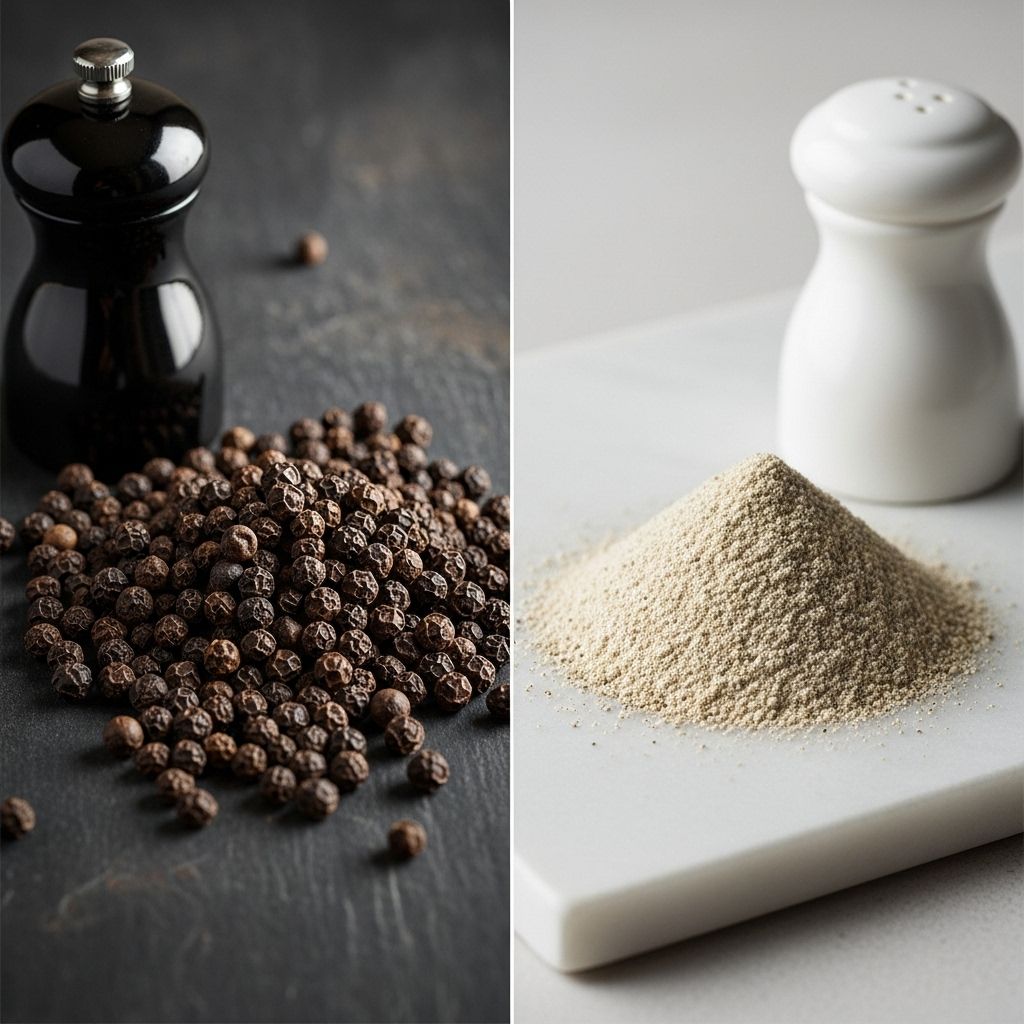
If you’re a curious home cook or food enthusiast, chances are you’ve encountered both black pepper and white pepper in recipes or at the grocery store. Though these popular spices look and taste distinct, they both originate from the same plant—yet their differences can transform a dish. This article explores how black and white peppercorns differ in flavor, appearance, production methods, uses, and more, so you can make informed choices in your kitchen.
What Are Black and White Pepper?
Black and white pepper come from the berries of the Piper nigrum vine. However, the timing and method of their harvests and processing set them apart:
- Black pepper: Harvested when pepper berries are almost—but not quite—fully ripe. The berries are then sun-dried, during which the outer skin turns dark brown or black and wrinkly.
- White pepper: Made from fully ripe pepper berries. The red outer skin is removed, leaving only the inner seed, which is dried again. This process produces lighter-colored, smooth white peppercorns.
Origins and History of Peppercorns
Piper nigrum is native to southwest India, where black and white peppercorns have played important roles in cooking and medicine for centuries. As one of the world’s oldest and most widely traded spices, pepper was historically so valuable it was sometimes called “black gold.” Trade routes spread its popularity from Asia to Europe and beyond.
Harvesting and Processing Methods
- Black Pepper: Harvested at maturity, before full ripeness; the berries are then dried whole in the sun, causing their skin to ferment and darken.
- White Pepper: Made from berries picked at peak ripeness; the berries are soaked to soften and remove the outer skin, leaving a pale, smooth inner core, which is dried again.
Visual Comparison Table
| Feature | Black Pepper | White Pepper |
|---|---|---|
| Color | Dark brown to black, wrinkled | White to light gray, smooth |
| Processing | Dried whole with skin | Soaked and husked, then dried |
| Flavor | Robust, earthy, and complex | Sharper, hotter, and more pure |
| Common Uses | General seasoning, visible garnish | White sauces, light dishes |
Flavor Profile: More Than Just Heat
- Black pepper: Offers a layered, woody, and slightly floral taste with moderate heat and lingering flavor. Its complexity makes it versatile for most dishes.
- White pepper: Delivers a sharp, clean, and often hotter punch. Its taste is described as more pungent and less complex, with a sometimes earthy or slightly fermented note depending on processing.
The difference in flavor is due to the presence or absence of the outer skin: black pepper retains more of the berry’s aromatic compounds, whereas white pepper’s stripped seed offers less aroma but more direct spice.
Appearance and Culinary Presentation
Black pepper has a rich, dark, almost black color and a textured surface. It’s often used as a finishing touch or garnish, especially where its specks stand out visually against pale foods. White pepper’s appearance is pale and finely ground, blending seamlessly into light-colored sauces, soups or mashed potatoes, where black specks would look distracting.
Best Uses in Cooking
- Black pepper: Ideal for most recipes, including savory meats, roasted vegetables, salads, marinades, and as a table condiment. Its appearance enhances presentation in dark or colorful dishes.
- White pepper: Commonly used in East Asian cuisine, creamy sauces (like béchamel), mashed potatoes, egg dishes, and soups where a fleck-free look is preferred.
Can You Grind White Pepper?
Absolutely! Both black and white peppercorns can be ground fresh for optimal flavor and aroma. Grinding whole peppercorns just before use (whether black or white) releases volatile oils that quickly lose potency if pre-ground and stored.
Popular Pepper Grinds
- Whole Peppercorns: Freshest taste; ground as needed for robust flavor. Used in pickling, marinades, stocks, and soups.
- Cracked Pepper: Coarse texture for visual appeal and bursts of flavor—great as a garnish.
- Coarse, Medium, Fine Grinds: Coarse grinds retain flavor longer and offer texture; medium and fine are preferred for blending smoothly into dishes and as table condiments.
Nutritional Information
Both black and white pepper are low in calories and rich in antioxidants, compounds linked to potential health benefits ranging from improved digestion to anti-inflammatory effects. The main active component, piperine, may help with nutrient absorption. While their nutritional profiles are similar, the removal of the outer skin in white pepper slightly alters its phytochemical makeup—but differences are minor for most eaters.
Varieties Beyond Black and White Pepper
While black and white peppercorns are most common, pepper comes in additional variants and blends:
- Green Peppercorns: Milder flavor, picked while unripe, with a fresh, herbal note. Often used in sauces and some Asian dishes.
- Pink Peppercorns: Not true pepper; from the South American Schinus Terebinthifolius plant. Sweet, fruity flavor and vibrant color for garnishes and spice blends.
- Peppercorn Blends: Combining two or more types delivers a more complex aroma and taste than using a single type. Mixed peppercorns are visually appealing in clear mills or on finished dishes.
Comparison Table: Types of Peppercorns
| Type | Botanical Origin | Flavor Notes | Best Uses |
|---|---|---|---|
| Black Pepper | Piper nigrum | Earthy, robust, moderately hot | Everyday seasoning, visible garnish |
| White Pepper | Piper nigrum | Pungent, pure, more heat | White sauces, light dishes, Asian cuisine |
| Green Pepper | Piper nigrum | Herbaceous, mild | Sauces, pickling, fresh dishes |
| Pink Pepper | Schinus Terebinthifolius | Sweet, fruity | Garnishes, blends |
How to Choose the Right Pepper?
- Select black pepper for depth and complexity in robust recipes and when visual contrast is desirable.
- Choose white pepper for a sharper taste in lighter dishes where you want heat without dark flecks.
- Experiment with green, pink, or mixed peppercorns in specialty recipes or as an aesthetic accent.
- Whenever possible, grind whole peppercorns fresh to maximize flavor.
Storing and Freshness Tips
- Keep whole peppercorns in an airtight container away from heat and light for best shelf life and potency.
- Pre-ground pepper loses volatile oils and flavor faster, so only grind as much as you’ll use soon.
- Whole peppercorns remain flavorful for up to a year or longer; ground pepper should be used within a few months.
Frequently Asked Questions (FAQs)
Do black and white pepper have different health benefits?
Both are similar nutritionally, containing dietary fiber, piperine, and antioxidants. The main difference is their flavor profile and appearance rather than health benefits.
Is white pepper always hotter than black pepper?
White pepper tends to taste sharper or hotter, but the difference is subtle and can vary by growing conditions, age, and processing.
Can you substitute black pepper for white pepper?
Yes, in most recipes they’re interchangeable for heat. However, black pepper will be visible in light-colored foods and has a different aroma.
Why does white pepper sometimes taste musty?
Some traditional processing methods for white pepper, especially soaking, can introduce a fermented or earthy note. Modern processing reduces this effect but may still be present.
Are pink peppercorns related to black pepper?
No; pink peppercorns come from a different plant (Schinus species) and have a sweet, aromatic taste, not the heat of true pepper.
Conclusion: The Power of Choice in Your Kitchen
Black and white pepper, despite sharing their botanical origin, bring different nuances to food through their distinct processing and flavor profiles. Understanding when to use each type can elevate your culinary results—whether you’re seeking depth, heat, or the perfect visual effect in your dish. Whatever variety you choose, fresh-ground pepper unlocks the fullest aroma and taste, making this ancient spice an enduring staple on tables worldwide.
Similar Articles






Read full bio of medha deb