Pho Bo: Vietnamese Beef Noodle Soup Recipe and Guide
Experience the warmth and flavor of traditional Vietnamese Beef Pho, with step-by-step instructions and tips for achieving authentic taste at home.
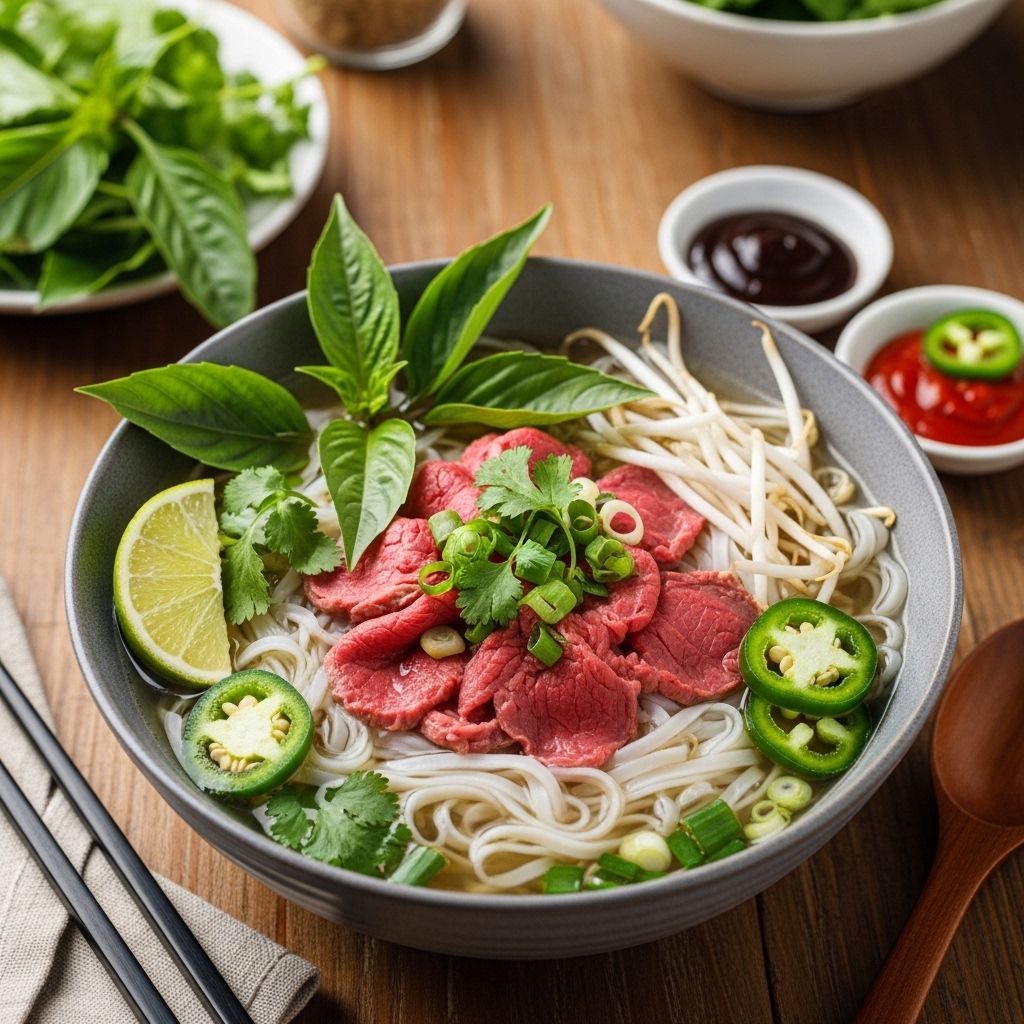
Pho Bo: Vietnamese Beef Noodle Soup
Few dishes evoke the heart and soul of Vietnamese cuisine quite like Pho Bo, the iconic beef noodle soup. With its aromatic broth, tender beef slices, rice noodles, and fresh garnishes, Pho Bo warms the soul and excites the palate. Traditionally enjoyed throughout Vietnam as a hearty breakfast or a satisfying any-time meal, Pho Bo has found devoted fans worldwide, captivating both home cooks and culinary explorers.
What is Pho Bo (Phở Bò)?
Phở (pronounced “fuh”) means rice noodles, and bò translates to beef. This celebrated soup consists of delicate rice noodles bathed in a robust, fragrant beef broth and garnished with thinly sliced beef, fresh herbs, and crunchy vegetables. Pho’s taste is layered and complex, thanks to hours of simmering beef bones with signature warm spices.
Across Vietnam, you’ll find different regional takes on Pho Bo, but all share the unifying qualities of a flavorful broth, slippery rice noodles, and customizable toppings. Pho is cherished as a breakfast favorite but also served for lunch or supper, illustrating its place as the national dish of Vietnam.
Ingredients for Vietnamese Beef Pho
- Beef Bones & Meats: Marrow bones, oxtail, brisket, beef shank, and/or short ribs form the base for stock. Add thinly sliced raw beef (such as tenderloin or sirloin) for serving.
- Rice Noodles: Flat rice noodles, often labeled “pho noodles.”
- Spices: Star anise, cinnamon stick/cassia bark, cloves, coriander seeds, fennel seeds, black cardamom pods, and black peppercorns.
- Aromatics: Yellow onion, garlic, shallots, and ginger—charred for depth and smokiness.
- Seasonings: Fish sauce, salt, rock sugar (or white sugar), and optionally MSG.
- Toppings & Garnishes: Scallions, cilantro, Thai basil, bean sprouts, lime wedges, shallots, thinly sliced hot chiles, hoisin sauce, and chile paste.
Equipment You’ll Need
- Large stockpot (8-quart or larger)
- Fine mesh strainer or cheesecloth
- Tongs and large slotted spoon
- Sharp chef knife (for slicing beef thinly)
- Baking sheet (for charring aromatics)
Step-by-Step: Making Authentic Pho Bo at Home
1. Preparing the Beef Bones and Meats
- Rinse beef bones and any cuts with meat (brisket, shank) in cold water.
- Place bones in a large pot, cover with cold water, and bring to a boil. Boil vigorously for 5 minutes to remove impurities.
- Drain, rinse bones and pot, then refill with fresh water. This ensures a clear broth.
2. Charring the Aromatics
- Onions, garlic, ginger, and shallots should be halved (leave skins on).
- Place on a baking sheet and broil/grill until the surfaces are charred (about 5-8 minutes). This step adds classic smoky depth to the broth.
3. Toasting the Spices
- Add spices (star anise, cinnamon, cloves, coriander seeds, fennel seeds, black cardamom, peppercorns) to a dry skillet.
- Toast over medium heat for 1-2 minutes until fragrant, stirring constantly.
4. Simmering the Broth
- Combine the cleaned bones, beef, charred aromatics, and toasted spices in the stockpot. Top with about 4 to 4.5 quarts (16-18 cups) fresh water.
- Bring to a gentle simmer. Remove any foam that rises to the surface for the first hour.
- Add seasonings: fish sauce, rock sugar (or white sugar), and salt.
- If using meaty bones (shank, brisket), remove them after 1.5–2 hours once tender. Reserve for topping and thin slice when cool.
- Simmer broth gently, uncovered, for 3 hours (longer for deeper flavor; some traditional recipes call for 6+ hours).
- After simmering, strain out all solids to achieve clear broth. Skim surface fat. Optionally reserve some fat (nước béo) to add to finished bowls for extra richness.
5. Preparing the Rice Noodles
- Cook rice noodles according to package directions, usually by soaking in hot water or boiling briefly.
- Drain and rinse under cold water to prevent sticking; divide into serving bowls.
6. Assembling the Bowls
- Arrange noodles in each bowl. Top with cooked beef (brisket or shank) and very thin slices of raw beef (steak or tenderloin) as desired.
- Scatter sliced onion, scallions, and cilantro on top.
- Pour steaming hot broth over the beef and noodles—the broth’s heat will gently cook the raw beef slices.
- Add optional fat for flavor and sheen.
7. Serving and Garnishing
- Present each bowl with a platter of garnishes: fresh bean sprouts, Thai basil, fresh cilantro, lime wedges, sliced hot peppers (such as Thai chiles), hoisin sauce, and chile paste.
- Let diners customize with their favorite additions, squeezing lime, adding herbs, and stirring in condiments to taste.
Traditional Pho Bo Variations
- Southern-Style Pho: Usually comes with abundant garnishes and is lightly sweet.
- Northern-Style Pho: More restrained, with fewer toppings, a heartier savory broth, and a focus on simplicity.
- Pho Tai: Features thinly sliced rare beef steak added at serving, cooked by the broth’s heat.
- Pho Bo Vien: Includes beef meatballs along with (or instead of) sliced beef.
Tips & Tricks for Perfect Pho Bo
- For Clear Broth: Parboil and rinse bones before simmering. Skim off all foam and impurities.
- Thin Beef Slices: Partially freeze beef before slicing for paper-thin cuts.
- Char Depth: Do not skip charring aromatics or toasting spices. These steps define the broth’s iconic flavor.
- Fish Sauce: Add to taste and use high-quality fish sauce for authenticity.
- Customize Noodles: Some like their noodles softer; some prefer extra bite. Adjust soaking/boiling time as desired.
Pho Bo: Nutrition Information
| Component | Calories | Carbohydrates | Protein | Fat | Key Nutrients |
|---|---|---|---|---|---|
| One typical bowl | 350–500 kcal | 50–60g (from noodles, sprouts) | 22–32g (from beef and broth) | 6–16g | Iron, Vitamin C (from garnishes), Collagen |
Pho Bo is naturally gluten-free, light, and packed with protein, making it a wholesome meal when enjoyed with plenty of fresh herbs and vegetables.
Essential Ingredients at a Glance
- Beef Bones: For a rich, gelatinous broth
- Spices: Star anise, cinnamon/cassia, coriander seeds, fennel, cloves, cardamom
- Aromatics: Onion, ginger, garlic, shallots (charred for flavor)
- Rice Noodles: Flat, medium-width pho noodles are traditional
- Fish Sauce & Rock Sugar: For seasoning and subtle sweetness
- Beef Cuts: Brisket, shank, tenderloin, or sirloin (sliced thinly for serving)
- Herbs: Scallions, cilantro, basil; optional: mint or culantro
History and Cultural Significance
Pho Bo’s origins trace back to early 20th-century northern Vietnam, where it evolved from French and Chinese culinary influences. Over time, recipes varied by region: in Hanoi (north), Pho is typically more austere and savory; in Ho Chi Minh City (south), bowls are adorned with a wider range of herbs and sweetened with extra sugar. Today, Pho Bo is more than a dish—it’s a cultural experience and symbol of Vietnamese comfort food enjoyed worldwide.
Frequently Asked Questions (FAQs)
Q: What kind of beef is best for Pho Bo?
A: The most flavorful broth comes from a mix of marrow bones, shank, and brisket. For toppings, use brisket, shank, or thinly sliced rare steak (such as sirloin or tenderloin).
Q: Can I make Pho Bo with store-bought broth?
A: While homemade beef stock is ideal, you can quickly doctor store-bought beef broth by adding toasted spices, charred onion and ginger, and simmering for at least 30 minutes. It won’t have the same depth but will satisfy a pho craving.
Q: How do I get my beef slices paper-thin?
A: Place raw beef in the freezer for 20-30 minutes, then slice against the grain as thin as possible with a sharp knife.
Q: What toppings are traditional for Pho Bo?
A: Typical pho toppings include fresh bean sprouts, Thai basil, cilantro, scallions, lime wedges, sliced chilies, and sometimes hoisin or sriracha. Customize according to personal preference.
Q: Is Pho Bo gluten-free?
A: Yes, Pho Bo is naturally gluten-free as it’s made with rice noodles. Always double-check packaged ingredients for added gluten if you have dietary sensitivities.
Quick Pho Bo Recipe (Simplified Version)
- Char onion, garlic, and ginger under broiler or open flame.
- Toast spices until fragrant.
- Add to pot with beef bones, brisket, and plenty of water. Simmer 3-4 hours.
- Season broth with fish sauce, salt, and a touch of sugar.
- Prepare noodles, arrange with sliced beef in bowls, and pour over hot broth.
- Garnish generously and enjoy!
Conclusion: Why Pho Bo is Loved Worldwide
Pho Bo is far more than the sum of its parts: it is a ritual of comfort and customization, a culinary journey through Vietnam’s history and hospitality. Whether you craft the broth from scratch or satisfy your appetite with a weeknight shortcut, each bowl is a feast—fragrant, inviting, and bursting with flavor. Savor the experience, experiment with toppings, and share with friends or family for a taste of Vietnamese tradition at your table.
Similar Articles


Read full bio of medha deb