Why Is My Aloe Vera Turning Yellow? Causes and Solutions Explained
Discover the real reasons your aloe vera turns yellow and learn practical remedies for a thriving, healthy plant.
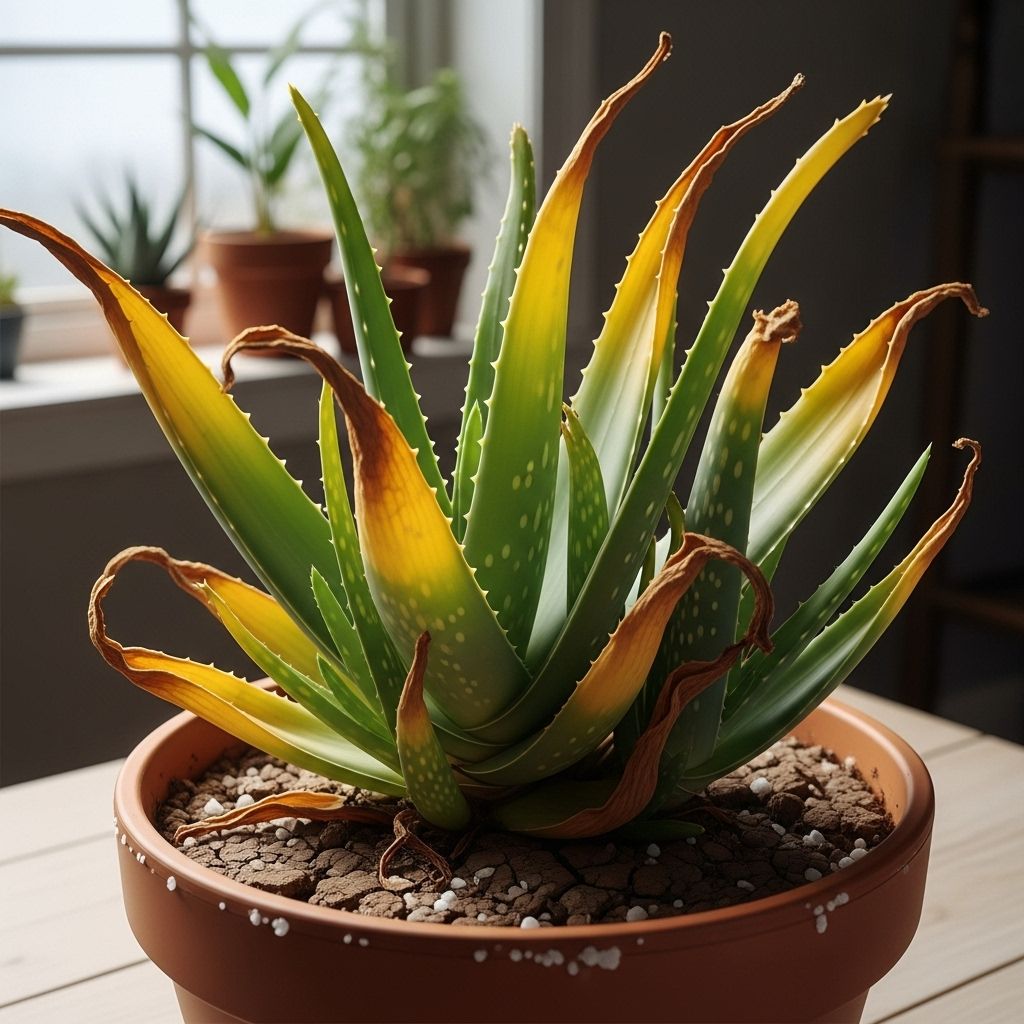
Aloe vera is renowned for its resilience and ability to thrive with minimal interference, making it a favorite among indoor and outdoor gardeners alike. Yet, despite its reputation as a low-maintenance plant, yellowing leaves are a common and worrying symptom that can signal a variety of issues. Whether it’s sudden yellow splotches, a gradual fading, or an entire plant losing color, these changes point to underlying stress. Understanding the specific problem is key to reviving your aloe and restoring its signature green vibrancy.
Contents
- Why Do Aloe Vera Leaves Turn Yellow?
- 9 Common Reasons for Yellowing Aloe Vera
- How to Remedy Yellow Leaves
- Troubleshooting: Pests, Disease, and Other Issues
- How to Prevent Yellowing of Aloe Vera
- Frequently Asked Questions
Why Do Aloe Vera Leaves Turn Yellow?
Yellowing in aloe vera usually signals a care issue. Unlike some plants, aloe does not yellow as part of seasonal change—it is always a sign that something, such as watering, light, nutrition, or environmental conditions, is amiss. Because aloe is adapted to survive drought and poor soils, too much attention—especially overwatering or overfeeding—is a frequent issue that leads to leaf discoloration. Correct diagnosis based on symptoms will allow you to take swift corrective action.
9 Common Reasons for Yellowing Aloe Vera Leaves
Below are the leading causes of yellow aloe vera leaves, with descriptions of symptoms and how to distinguish each one.
1. Overwatering
Overwatering is the number one cause of yellow aloe vera leaves. Aloe’s succulent tissues are designed to store water—frequent watering disrupts this, causing root rot and mushy, yellow leaves. If the soil is wet and leaves feel soft and limp, overwatering is almost certainly the problem.
- Leaves turn pale yellow, become floppy, and may show translucent spots
- Soil stays constantly damp
- Roots may have a foul odor (a sign of rot)
2. Underwatering
Underwatering is less common, but possible—especially in hot, dry weather or with very small pots. Symptoms can look similar to drought stress:
- Leaves become thin, curl inward, and fade from green to yellow or brown
- Leaf tips may dry out and shrivel
3. Cold Temperatures
Though aloe is desert-adapted, prolonged exposure to temperatures below 40°F (4°C) can cause tissue damage. The water in cells freezes, causing cellular rupture, which appears as yellowing, mushy leaves that may collapse when touched. Even indoor aloes are at risk near drafty windows or doors in winter.
- Leaves yellow rapidly and become mushy
- Entire leaves may detach and fall away with minimal touch
4. Old Age of Leaves
As aloe grows, older, bottom leaves naturally turn yellow and die back. This is normal if only the lowest leaves are affected, while the newer, top leaves remain green and vigorous.
- Bottom leaves yellow and wilt, while upper leaves remain healthy
- No other stress symptoms visible
5. Poor Soil and Drainage
Aloe vera needs a gritty, free-draining soil mix to thrive. Dense or water-retentive potting soil traps moisture at the roots, suffocating them—leading again to yellowed, drooping growth.
- Soil remains wet for days after watering
- Yellowing starts at the base of the plant
6. Incorrect Pot Size or Type
If a pot is too small, roots can become root-bound, which restricts water and nutrient uptake. Pots with no drainage make overwatering worse. Terracotta pots are best for succulents like aloe.
- Roots visible emerging from drainage holes
- Wilting despite regular watering
7. Nutrient Deficiency
Lack of nitrogen or iron, though rare in aloe, can cause yellowing. Old, lower leaves yellow with broad, uniform color loss from lack of nitrogen; new leaves with yellowing and green veins indicate iron deficiency.
- Faded, uniform yellowing on older leaves = likely nitrogen deficiency
- Yellow new leaves with green veins = possible iron deficiency
- Usually only a problem in old/poor soil or containers never refreshed
8. Light Issues (Too Much or Too Little)
Aloe vera needs bright, indirect sunlight. Too little light causes stretching (etiolation), loss of green pigment, and yellowing. Too much direct sun, especially if not acclimated, causes sunburn: leaves turn yellow, reddish, or bronzed, particularly near the tips and edges.
- Pale, elongated stems and yellowed leaves = not enough light
- Red/yellow patches or spots, especially after moving to a brighter window = sunburn
9. Pests and Disease
Pest infestations (notably aphids and mealybugs) can draw juice from leaves, causing yellowing, wilting, and sticky residue. Root rot, anthracnose, and aloe rust are the most significant diseases; fungal attack often starts with small yellow or brown spots.
- Sticky, distorted leaves = pests
- Soft, soggy, spotted leaves = fungal condition
How to Remedy Yellow Leaves
The remedy depends entirely on diagnosis. Here are step-by-step solutions based on each major cause:
Overwatering
- Remove the aloe from soil, check roots for rot (brown and mushy parts)
- Trim rotten roots with sterile scissors
- Repot in fresh, well-draining cactus/succulent mix
- Water only when soil is fully dry; keep pot in bright, indirect light
Underwatering
- Water deeply, letting water drain from the bottom of the pot
- Allow soil to dry out completely between waterings
- Increase frequency if air is dry or during active growth
Cold Damage
- Move aloe to a warmer spot away from drafts and windows during cold weather
- Prune away damaged leaves; new growth will recover as temperatures stabilize
Old Leaves
- Prune yellowed, bottom leaves with a sharp knife at base (if desired)
- Use removed leaves for propagation or external applications as you prefer
Poor Soil/Drainage
- Repot with cactus or succulent mix (sand, perlite, and potting soil blend)
- Ensure the container has drainage holes; avoid decorative pots with no escape for water
Incorrect Pot or Root Bound
- Repot into a pot 1-2 inches wider than the current root ball
- Gently loosen roots before replanting if they are tightly packed
Nutrient Deficiency
- Fertilize sparingly (early spring or summer) using diluted, balanced fertilizer
- Avoid overfeeding—aloe needs fewer nutrients than most houseplants
Lighting Adjustment
- For low light: Move aloe gradually closer to a bright window over 7-10 days
- For sunburn: Move out of direct intense sun; prune damaged areas if severe
Pests and Disease
- Remove pests with cotton swabs dipped in alcohol or wash plant with mild soap & water solution
- Apply neem oil for ongoing infestations
- Prune away diseased areas; apply sulfur fungicide or copper fungicide if necessary
Troubleshooting: Pests, Disease, and Other Issues
Pest Problems
- Aphids: Small, soft-bodied insects clustering on new growth and leaf bases; cause sticky residue and yellowing.
- Mealybugs: Cotton-like masses on leaves and stems; suck sap and cause weakening and discoloration.
- Spider Mites: Fine webbing and stippled yellow dots on the undersides of leaves.
Common Diseases
| Disease | Symptoms | Control |
|---|---|---|
| Anthracnose | Soggy, expanding yellow to red-brown spots | Low humidity, prune affected leaves, use fungicide |
| Aloe Rust | Yellow spots, orange spores under leaves | Remove infected leaves, improve airflow, use sulfur powder |
| Root Rot | Limp, discolored, wet-smelling roots and mushy lower leaves | Remove affected roots, repot into dry, gritty mix |
How to Prevent Yellowing of Aloe Vera
- Use well-draining soil and pots with drainage holes
- Water deeply, but only after soil has dried fully
- Keep aloe in a position with bright, indirect sunlight (avoid abrupt light changes)
- Protect from drafts and chilly air in winter
- Repot every 2-3 years with fresh soil for continual nutrients
- Inspect regularly for pests and prune away any infected tissue promptly
Frequently Asked Questions (FAQs)
Q: Is yellowing always a problem?
A: Not always. Some yellowing, especially of old bottom leaves, is a normal part of aloe’s growth. Excessive or widespread yellowing indicates stress.
Q: Should I fertilize my aloe vera plant if it turns yellow?
A: Only if you have not refreshed the soil in several years or there are symptoms of nutrient deficiency (see above). Most yellowing is caused by watering or light rather than lack of food.
Q: Can aloe recover from severe yellowing?
A: Yes, as long as some healthy roots remain and you correct the underlying cause. Remove damaged leaves, repot if necessary, and adjust care.
Q: Is it possible to save overwatered aloe?
A: In most minor cases, yes. Remove the plant from wet soil, trim away any mushy roots, and let both plant and roots dry for a day or two before repotting into fresh, dry mix. Resume watering after 7-10 days.
Q: How can I tell if my aloe needs more or less water?
A: Always check the soil. If the top inch is damp, avoid watering. If leaves shrivel and soil is bone dry, increase watering frequency, but never let soil stay soggy.
Q: My aloe is by a window and still turning yellow. Why?
A: Light could be too intense (causing sunburn), or there may be drafts/cold damage at night. Try moving to a spot with filtered light and steady temperatures.
Quick Aloe Vera Care Tips
- Water: Deeply but infrequently—better dry than wet.
- Light: Bright, indirect is best. Acclimate slowly to direct light if needed.
- Soil: Use cactus/succulent mix or add sand/perlite to potting soil.
- Fertilizer: Only lightly, once or twice per year, if at all.
- Temperature: Protect from cold below 40°F (4°C).
- Pests/Disease: Inspect frequently; act quickly if you spot signs.
Similar Articles




Read full bio of medha deb