7 Effective Alternatives to Salt for De-Icing Driveways
Discover safe, eco-friendly, and efficient ways to keep your driveway ice-free during winter without relying on traditional salt.
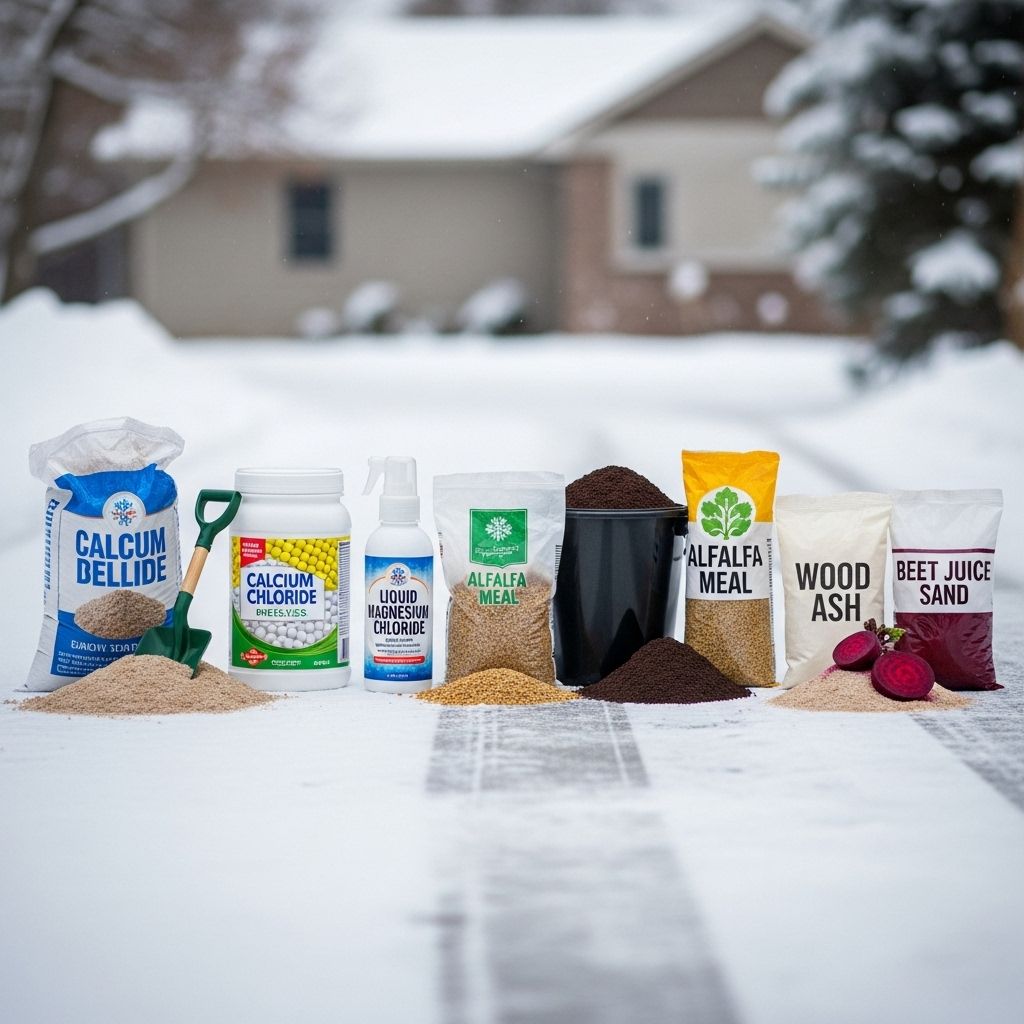
7 Better Alternatives to Salt for De-Icing Driveways
During winter, icy driveways pose considerable safety and accessibility challenges for homeowners. While rock salt is traditionally used as a de-icer, its environmental impacts, potential harm to pets, and damage caused to pavement have prompted a move towards safer and more sustainable alternatives. This article investigates the best non-salt de-icing solutions for driveways, focusing on their effectiveness, safety, and environmental footprint. Below, you’ll find comprehensive details on each alternative, practical application tips, and answers to frequently asked questions.
Why Avoid Rock Salt for De-Icing?
Before exploring alternatives, it’s critical to understand why traditional rock salt (sodium chloride) can be problematic:
- Environmental damage: Salt runoff harms plants, contaminates water sources, and disrupts aquatic ecosystems.
- Infrastructure corrosion: Salt accelerates deterioration of concrete and asphalt surfaces.
- Pet and child safety: Salt is hazardous for pets and children; ingestion is toxic, and prolonged contact can cause irritation.
- Limited effectiveness: Salt’s melting capacity drops sharply in sub-zero temperatures.
These risks make alternative approaches both a wise and responsible choice.
Top 7 Salt-Free Methods to De-Ice Your Driveway
Below are seven widely recommended salt alternatives and their relative advantages.
1. Fertilizer (Nitrogen-Rich Compounds)
Many homeowners find fertilizer with high nitrogen content is a convenient and cost-effective way to melt ice. Ingredients such as ammonium sulfate, potassium chloride, and urea are especially effective. Fertilizer works by lowering the freezing point of water, similar to salt, but is less corrosive to concrete and less hazardous to plant life when applied moderately.
- Benefits: Readily available; quick acting; safer for hard surfaces.
- Cautions: Excessive use may lead to runoff and nitrogen pollution.
2. Coffee Grounds
Used coffee grounds offer dual benefits: mild ice melting through residual nitrogen, and improved traction due to their gritty texture. Sprinkling coffee grounds over icy spots safely assists melting and prevents slips. Additionally, they are biodegradable and can be composted after use, making them a sustainable option.
- Benefits: Promotes traction; environmentally friendly; repurposes waste.
- Cautions: Can stain light-colored pavements if not cleaned promptly.
3. Sugar Beet Juice
Sugar beet juice is a leading eco-friendly alternative increasingly adopted by municipalities and homeowners. It lowers the freezing point of ice and helps other deicers, if present, adhere better to surfaces. It is safe for pets and less corrosive to vehicles and driveways.
- Benefits: Safe for pets; less corrosive; minimizes environmental harm.
- Cautions: May leave temporary stains on concrete if not cleaned swiftly; effect on local ecosystems still under study.
4. Vinegar
Vinegar contains acetic acid, which can lower ice’s melting point. While not as powerful as other de-icers, it is a convenient option when needed in a pinch. Vinegar will not harm most driveway surfaces and has negligible environmental impact.
- Benefits: Readily available; safe for most surfaces; non-toxic.
- Cautions: May require repeated applications for thick ice; mildly pungent odor.
5. Traction Agents: Sand, Sawdust, and Gravel
Unlike chemical alternatives, sand, sawdust, and gravel provide immediate traction without melting ice. They are especially useful for walkways and sloped driveways. These materials are inexpensive, widely accessible, and cause no chemical harm, though they will not eliminate the ice itself.
- Benefits: Boosts safety instantly; environmentally benign; can be mixed with small amounts of ice melt for enhanced effect.
- Cautions: Cleanup is required in spring; excessive use may lead to clogged drains.
6. Heated Driveways and Snow Melting Mats
Technological solutions such as radiant heated driveways and snow melting mats represent the highest level of convenience and effectiveness. These systems utilize embedded heating coils (electric or hydronic) or portable mats placed atop the surface, warming the pavement and preventing ice formation entirely. Systems can be manually or automatically operated, responding to temperature and precipitation sensors.
- Benefits: Provides continuous, automatic de-icing; protects driveway integrity; requires no chemicals.
- Cautions: High initial installation cost; possible need to replace or retrofit existing driveway; long-term savings may offset upfront expense.
7. Agricultural Waste Solutions (Grape Skin Extracts)
Recent innovations have yielded promising ice melting solutions based on agricultural waste, such as grape skin compounds. These natural formulations rapidly melt ice and do not harm water systems or pavement. While not commercially available everywhere, they represent the future in sustainable de-icing.
- Benefits: Highly effective; leverages waste streams; minimal environmental impact.
- Cautions: Limited commercial availability; ongoing research into ecosystem effects.
Comparison Table: Salt Alternatives for De-Icing Driveways
| Method | Effectiveness | Safety (People & Pets) | Environmental Impact | Cost |
|---|---|---|---|---|
| Fertilizer | Moderate | Generally Safe | Moderate – risk of runoff with excessive use | Low |
| Coffee Grounds | Low to Moderate | Safe | Low | Very Low |
| Sugar Beet Juice | Moderate | Safe | Low | Moderate |
| Vinegar | Low | Safe | Low | Low |
| Sand/Sawdust/Gravel | None (for traction only) | Safe | Low | Very Low |
| Heated Driveways/Mats | High | Safe | Very Low | High Initial |
| Grape Skin Extracts | High (emerging) | Safe | Low | Variable (market-dependent) |
General Tips for Safer, Greener De-Icing
- Clear snow early: Regular shoveling or plowing reduces ice buildup, minimizing need for chemical de-icers.
- Use alternatives moderately: Avoid over-application to prevent runoff and pollution.
- Combine traction agents and melting methods: Layering sand or coffee grounds atop mild de-icers increases safety.
- Monitor local ordinances: Some cities restrict types of de-icers allowed, especially near sensitive ecosystems.
Frequently Asked Questions (FAQs)
Q: Are fertilizers safe for all kinds of driveways?
Fertilizers with nitrogen are generally safe for asphalt and concrete when used occasionally. Overuse can cause stains or degrade certain types of pavement over time. Always verify the label and test on a small area first.
Q: Will coffee grounds harm plants or grass?
In moderate amounts, coffee grounds are beneficial to soil and unlikely to harm plant life. Avoid excessive application, as high nitrogen levels can cause nutrient imbalances.
Q: How do heated driveways compare to portable mats?
Both provide reliable ice removal; heated driveways are a permanent solution with higher installation costs, while mats are portable, lower-cost, and suitable for targeted zones like walkways or entryways.
Q: Are these alternatives effective during severe cold?
Some alternatives, such as heated systems and agricultural extracts, work effectively in sub-zero temperatures. Others (fertilizer, coffee grounds, beet juice) may lose efficacy below certain thresholds. Always check product performance guidance for your local climate.
Q: What’s the safest de-icer for pets?
Sugar beet juice, sand, and sawdust are among the safest options for pets. Avoid traditional rock salt and chemical de-icers known to cause irritation.
Conclusion: Choosing the Right De-Icing Solution
Effective winter maintenance starts with understanding the advantages and limitations of various de-icing methods. While rock salt has historically dominated, today’s eco-friendly alternatives—ranging from fertilizers and coffee grounds to sugar beet juice and high-tech heated driveways—offer safer, more sustainable approaches to winter safety. Evaluate your priorities (cost, convenience, environmental responsibility) and experiment with these methods to find the best fit for your home.
Similar Articles







Read full bio of medha deb