Dallas Long Range Weather Forecast: Seasonal Outlook & Trends
Explore Dallas's extended weather patterns, monthly trends, and what to expect throughout the coming seasons with our in-depth long-range outlook.
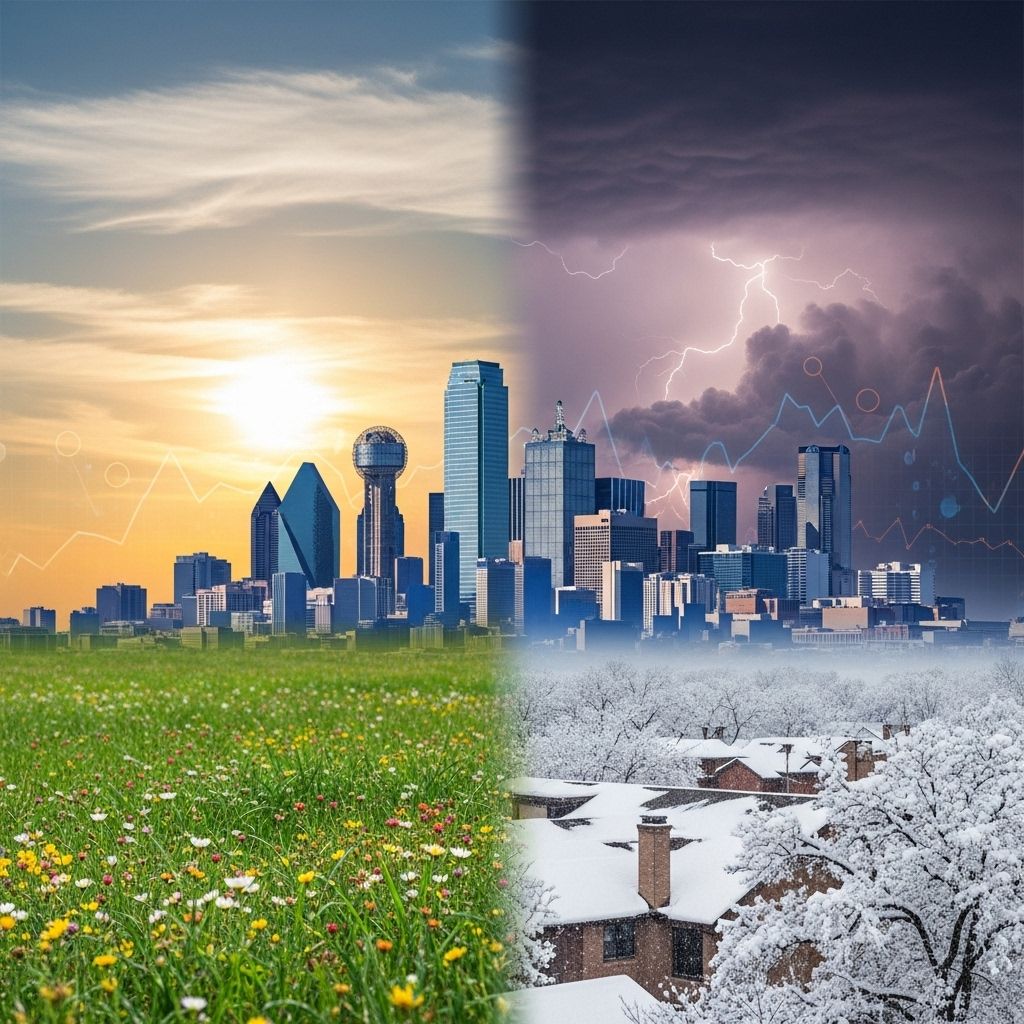
Dallas, Texas Long Range Weather Forecast
Dallas, located in North Texas, experiences distinct seasonal variations that play a significant role in local activities, agriculture, and travel. Understanding the city’s long-range weather forecast and monthly trends is essential for residents and visitors looking to plan ahead. This comprehensive guide offers detailed insight into Dallas’s weather patterns, monthly conditions, and answers to commonly asked weather questions.
Overview: What to Expect from Dallas Weather
- Climate: Subtropical, with hot summers and mild winters.
- Rainfall: Most common in spring and early fall.
- Variability: Rapid temperature changes and occasional storms, especially in transition months.
- Sunshine: Dallas is known for an abundance of sunny days, notably in late fall and winter months.
Monthly Weather Breakdown
Below is a detailed monthly forecast for Dallas, including high and low temperatures, precipitation expectations, and notable trends for each part of the year.
Late October Forecast
| Date | High / Low (°F) | Conditions | Precipitation | Wind | Humidity | Sunrise / Sunset |
|---|---|---|---|---|---|---|
| Sat Oct 25 | 75 / 65 | Heavy rain, cloudy | 1.69″ | 6 mph | 73% | 7:39 am / 6:42 pm |
| Sun Oct 26 | 77 / 63 | Showers early, partly cloudy | 0.02″ | 2 mph | 59% | 7:40 am / 6:41 pm |
| Mon Oct 27 | 83 / 60 | Partly cloudy | 0.00″ | 11 mph | 50% | 7:41 am / 6:40 pm |
| Tue Oct 28 | 70 / 54 | Morning clouds | 0.00″ | 15 mph | 31% | 7:41 am / 6:39 pm |
| Wed Oct 29 | 62 / 54 | Mostly cloudy | 0.00″ | 15 mph | 56% | 7:42 am / 6:38 pm |
Early November Forecast
- Temperatures: Highs typically range from 66°F to 80°F, with lows from 51°F to 62°F.
- Conditions: Mostly sunny with only isolated chances of rain.
- Rainfall: November generally sees 3 to 8 days of rain and around 115 mm (4.53 inches) total precipitation.
The majority of days remain dry, with a gradual drop in humidity as the month progresses. - Sun Hours: Average of 9.7 hours per day, contributing to pleasant outdoor conditions.
Mid to Late November Trends
- Temperatures shift downward, with daytime highs in the upper 60s to lower 70s °F by mid- to late November.
- Nighttime lows fall consistently into the 50s, sometimes dipping toward the high 40s by month’s end.
- Little to no snowfall is expected; November in Dallas is typically snow-free.
- Winds can increase slightly in late November, but gusts rarely reach damaging speeds.
Seasonal and Extended Weather Outlook
Dallas’s weather outlook for the upcoming seasons is shaped by regional and global climate trends, such as the ongoing El Niño or La Niña patterns. Here are projections for the upcoming months:
Winter (December – February)
- Temperatures: Mild to occasionally chilly, with highs in the 50s–60s °F and lows in the upper 30s to upper 40s °F.
- Precipitation: Light to moderate; rain is much more common than snow. Average total precipitation for winter months ranges between 2 to 3 inches per month.
- Snow: Snow is rare but occasional flurries or sleet events are possible, most likely in January or February. Accumulations are usually minimal.
- Sunny Days: Dallas winters are brighter than much of the U.S., providing clear skies ideal for outdoor winter sports and activities.
Spring (March – May)
- Warmer temperatures and increasing rainfall as spring progresses.
- Expect rapid weather changes—with possible thunderstorms, especially in April and May.
- Highs climb from 60s °F in March to near 80°F by late May.
- Spring is a transitional season and can bring sudden weather shifts—tornadoes, while rare, are not unheard of in North Texas.
Summer (June – August)
- Hot and humid; daily highs often exceed 95°F in July and August.
- Heat waves are frequent, but evenings may offer some relief as temperatures fall into the upper 70s to low 80s °F.
- Rain is less common but summer thunderstorms can be intense.
Fall (September – November)
- Cooler, more comfortable conditions develop from mid-September onward.
- Early fall can still feel like summer, but by late October and November, cooler and drier air prevails.
- This is a popular season for festivals and outdoor activities due to the pleasant climate.
Precipitation, Wind, and Sun
- Rain: October and November can bring either dry stretches or the occasional drenching storm system.
- Wind: Moderate wind speeds, typically from the south or southeast in fall, shifting to the north or northwest with cold fronts.
- Sunshine: Dallas averages over 232 sunny days per year, making it one of the sunniest urban areas in the United States.
- UV Index: Moderate in fall and winter (<3–4), but can reach high levels in summer.
Events and Seasonal Weather Impacts
- Outdoor Events: Fall and spring weather is ideal for festivals, marathons, and outdoor gatherings.
- Agriculture: The timing and intensity of fall rains can impact harvests and planting schedules for winter crops.
- Travel Considerations: Occasional heavy rain and storms can lead to delays, especially in late fall and spring.
Long-Range Weather Trends & Climate Factors
Dallas’s weather patterns are shaped by several factors:
- Global Patterns: El Niño years tend to bring wetter winter and spring conditions, while La Niña can shift North Texas toward slightly warmer and drier seasons.
- Urban Heat Island: Dallas’s size and sprawl contribute to higher overnight lows compared to rural surroundings, especially in summer.
- Severe Weather Risk: Dallas is on the southwestern edge of Tornado Alley. Severe thunderstorms are more likely in the spring and, occasionally, in late fall.
Frequently Asked Questions (FAQs)
Q: What is the average temperature in Dallas during November?
A: The average high is around 66°F (19°C), while lows typically dip to 50°F (10°C). However, values can vary from year to year.
Q: How much rainfall can be expected in Dallas in the late fall?
A: Roughly 3 to 8 days of rain are common in November, with an average monthly total of about 115 mm (4.53 inches).
Q: Does Dallas get snow in November?
A: Snowfall is extremely rare in November. On average, Dallas receives little or no snow until later winter months, and snow events tend to be brief and light when they do occur.
Q: When does Dallas usually experience its first frost?
A: The first frost typically arrives in mid- to late November, but some years may see it earlier or later depending on annual conditions.
Q: Is Dallas weather suitable for outdoor activities in late fall?
A: Yes. With generally mild temperatures and a high number of sunny days, late fall is popular for taking advantage of the city’s parks, trails, and outdoor venues.
Tips for Planning Around Dallas Weather
- Bring layered clothing for fluctuating temperatures in the fall and spring.
- Keep rain gear handy in October and November due to periodic heavy showers.
- Monitor local forecasts for updates during periods of rapid weather change, especially if outdoor events are planned.
- In summer, use sunscreen, stay hydrated, and avoid extended outdoor activities during peak afternoon heat.
Resources for Dallas Weather Updates
Stay informed by checking real-time and forecast updates from these authoritative sources:
- National Weather Service (NWS)
- AccuWeather
- Time and Date: Extended Forecasts
- NOAA Climate Prediction Center for long-range and seasonal outlooks
Summary Table: Dallas Weather at a Glance
| Month | Avg. High (°F) | Avg. Low (°F) | Rain Days | Snow Days | Sun Hrs |
|---|---|---|---|---|---|
| October | 75 | 55 | 6 | 0 | 10 |
| November | 66 | 50 | 4 | 0 | 9.7 |
| December | 58 | 42 | 5 | 0.1 | 9 |
| January | 57 | 39 | 5 | 0.2 | 9 |
| February | 62 | 43 | 5 | 0.1 | 10 |
Plan With Confidence
Whether you are a resident planning your week, a traveler anticipating your visit, or a business navigating seasonal shifts, Dallas’s long-range weather outlook equips you for what’s ahead. Use this forecast as a guide but always check updates to account for the region’s characteristic weather variability.
Similar Articles






Read full bio of medha deb