Dieffenbachia (Dumb Cane): Complete Growing and Care Guide
A comprehensive guide to growing, caring for, and troubleshooting Dieffenbachia (Dumb Cane)—from propagation to healthy foliage.
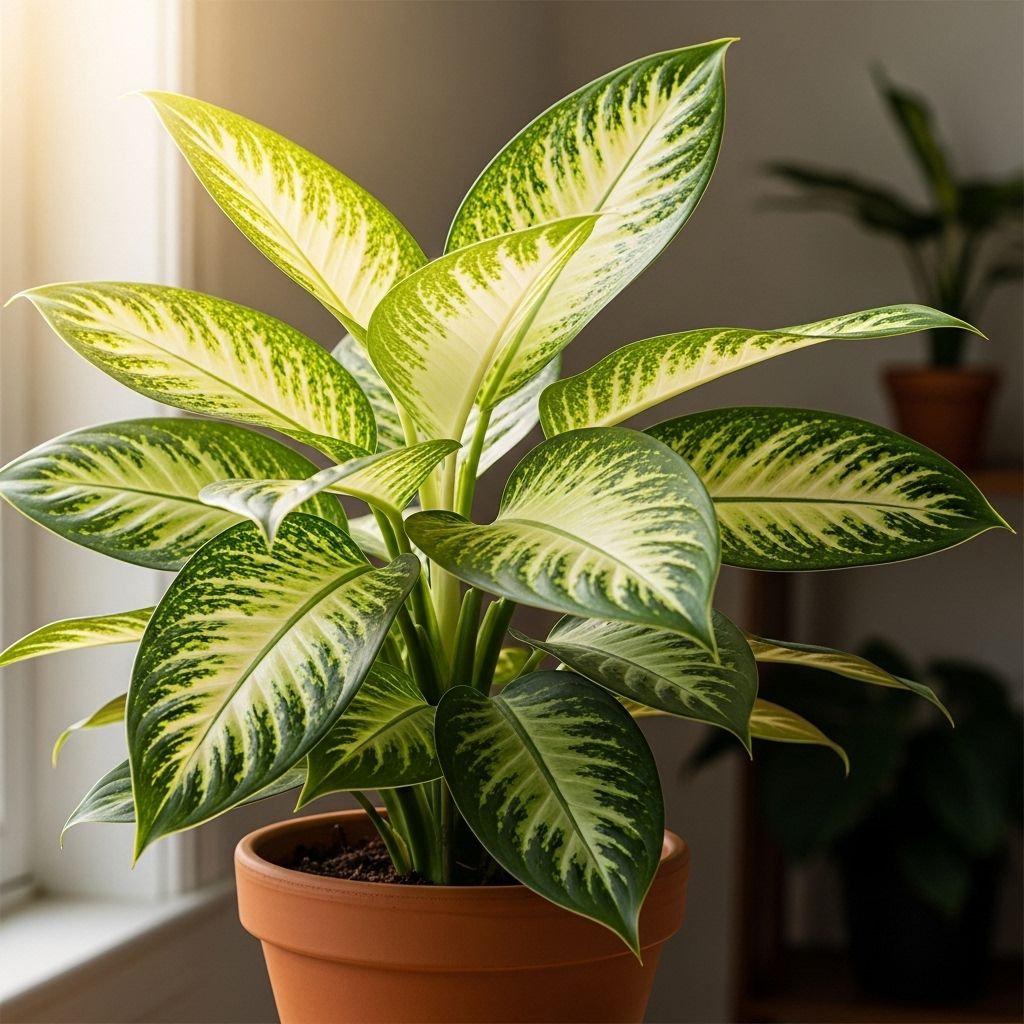
Dieffenbachia, widely known as Dumb Cane, is a beloved tropical houseplant popular for its bold, variegated leaves and easy-going nature. With lush foliage and impressive growth, it can brighten any indoor space. This guide covers everything you need to know about Dieffenbachia: its origins, varieties, propagation, daily care, common issues, and frequently asked questions.
Table of Contents
- Dieffenbachia Overview
- Popular Dieffenbachia Varieties
- Propagation Methods
- Growing and Care Requirements
- Troubleshooting and Common Issues
- Toxicity and Safety
- Frequently Asked Questions
Dieffenbachia Overview
Dieffenbachia is native to tropical regions of Central and South America. Prized for its decorative foliage, plants grow upright and deliver a burst of fresh green and cream variegation indoors. The name “Dumb Cane” comes from the temporary speechlessness caused by ingesting its toxic sap, making handling precautions essential.
- Genus: Dieffenbachia
- Common Names: Dumb Cane, Leopard Lily
- Origin: Central and South American tropics
- Growth Habit: Upright herbaceous perennial
- Foliage: Large variegated leaves, green with white, cream, or yellow patterns
Popular Dieffenbachia Varieties
Dieffenbachia encompasses a range of stunning cultivars, each featuring unique color patterns and leaf shapes. Here are some favorites:
- Dieffenbachia seguine: The classic Dumb Cane with mottled green and creamy white leaves.
- Dieffenbachia ‘Camille’: Noted for its pale, almost white leaf centers edged in dark green—excellent for brightening interiors.
- Dieffenbachia ‘Tropic Snow’: Large leaves with bold white and green marbling, robust and fast-growing.
- Dieffenbachia ‘Compacta’: As the name suggests, this variety remains petite and bushy, suitable for tabletops or shelves.
- Dieffenbachia ‘Reflector’: Deep green leaves with stunning chartreuse spotting and marbled veins.
| Variety | Leaf Pattern | Mature Size |
|---|---|---|
| ‘Camille’ | Light center, dark green edge | 2-3 ft tall |
| ‘Tropic Snow’ | White marbling, green border | 4-6 ft tall |
| ‘Compacta’ | Narrow, speckled leaves | 1-2 ft tall |
| ‘Reflector’ | Green with yellow splashes | 2-3 ft tall |
Propagation Methods
Dieffenbachia is easy to propagate, allowing you to multiply your collection or revive a failing parent plant. The most effective methods are stem cuttings and air layering.
Propagation from Stem Cuttings
- Best performed during spring or summer when the plant is actively growing.
- Wear gloves as Dieffenbachia sap is highly irritating.
- Cut a healthy stem into 1.5 to 2-inch segments, ensuring each piece has a node.
- Use only sterilized tools and choose stems with at least one or two leaves if possible.
Rooting Medium:
- Cocopeat (coconut coir) is preferred for its excellent moisture-retention and airiness, but sand also works.
- Lay cuttings horizontally on moist cocopeat or insert vertically with at least one node below the surface.
- Keep the medium consistently damp and provide indirect light.
- Roots and shoots usually appear within 6–10 weeks depending on temperature.
Other Propagation Techniques
- Water Propagation: Place stem cuttings in a glass of clean water, changing the water weekly until strong roots form, then pot up in soil.
- Air Layering: For leggy plants, wound a portion of the stem, wrap with moist moss, and wait for roots to develop before cutting and planting the new plant.
Growing and Care Requirements
Dieffenbachia thrives when basic tropical needs are met: warmth, moisture, and ample light—without extremes. Here’s how to keep your Dumb Cane happy.
Light Requirements
- Bright, indirect light is best. Near a filtered window is ideal.
- Avoid harsh direct sun, which can scorch leaves, causing browning or pale patches.
- Too little light reduces variegation and leads to weak, leggy growth.
Watering
- Keep soil evenly moist but never soggy; overwatering results in root rot.
- Water thoroughly when the top inch of soil feels slightly dry to the touch.
- Reduce watering during the cooler months or when plant growth slows.
- Drain excess water and empty saucers to prevent waterlogging.
Humidity and Temperature
- Prefers high humidity (over 50%). Mist leaves regularly, or group with other tropicals.
- Dieffenbachia tolerates typical home temperatures (65°F–75°F or 18°C–24°C), but dislikes cold drafts or sudden chills below 55°F (13°C).
- Brown leaf edges often indicate low humidity.
Soil and Repotting
- Choose a well-draining, peat-rich potting mix (standard houseplant soil with perlite or orchid bark works well).
- Repot every 1-2 years, or when the plant becomes rootbound. Move to a pot just 1–2 inches wider than the current container.
Fertilizing
- Feed monthly with a balanced liquid fertilizer during spring and summer.
- Reduce feeding in fall and winter when growth slows.
Pruning and Maintenance
- Prune leggy stems to promote bushier growth and remove yellow or damaged leaves promptly.
- Wipe leaves with a moist cloth to remove dust and keep variegation vibrant.
- Stagger pruning to avoid removing too much at once.
Troubleshooting and Common Issues
Even though Dieffenbachia is low-maintenance, it’s not immune to problems. Below are common issues, causes, and solutions.
| Problem | Likely Cause | Recommended Solution |
|---|---|---|
| Yellow leaves | Overwatering, poor drainage, nutrient imbalance | Let soil partially dry before watering; check drainage |
| Browning tips/edges | Low humidity, salt buildup, too much fertilizer | Increase humidity; flush soil |
| Leaf drop | Sustained cold, root rot, drought | Move away from cold spots; adjust watering |
| Wilting/drooping | Root rot or severe dryness | Check roots; remove affected portions; adjust watering |
| Loss of variegation | Insufficient light | Move closer to a bright, indirect source |
Pest and Disease
- Spider mites, aphids, and mealybugs can infest Dieffenbachia. Inspect regularly and wipe foliage with soapy water or neem oil.
- Root rot happens when soil is persistently wet. Avoid heavy soils and never let the pot stand in water.
Toxicity and Safety
Warning: All parts of Dieffenbachia contain calcium oxalate crystals. If chewed or ingested, these cause burning, swelling, and numbness—especially serious for children or pets. Even skin contact may trigger irritation, so always wear gloves when pruning or propagating.
- Keep plants out of reach of pets and children.
- Wash hands after handling.
- Consult a medical professional if ingestion occurs.
Frequently Asked Questions (FAQs)
Q: How do I propagate Dieffenbachia from cuttings?
A: Take 1.5” to 2” stem sections (with at least one node), and lay them on moist cocopeat or place upright in water or soil. Keep under indirect light and maintain moisture until roots and shoots appear, usually within 6–10 weeks.
Q: Why are my Dieffenbachia’s leaves turning yellow?
A: The most common cause is overwatering. Ensure the pot has good drainage and allow the top inch of soil to dry out between waterings. Pests, poor light, and nutrient deficiencies can also contribute.
Q: Is Dieffenbachia safe for pets?
A: No, Dieffenbachia is toxic to cats, dogs, and humans if ingested. Keep it out of reach and supervise children or pets around the plant.
Q: Can I prune my Dieffenbachia if it becomes too tall or leggy?
A: Yes. Prune stems above a node to shape the plant and encourage new growth. Pruned sections can be rooted to start new plants.
Q: How often should I fertilize my Dieffenbachia?
A: Fertilize monthly in the spring and summer with a balanced houseplant fertilizer, but reduce or stop feeding in cooler months when the plant slows down.
Pro Tips for Thriving Dieffenbachia
- Rotate your plant occasionally to ensure even light exposure and symmetrical growth.
- Group Dieffenbachia with other houseplants to raise local humidity.
- Inspect routinely for pests or leaf discoloration to act early on potential problems.
- Use filtered or distilled water if your tap water is high in salts—Dieffenbachia is sensitive to salty soil.
Summary
With lush, variegated foliage and forgiving care requirements, Dieffenbachia is a perfect statement plant for homes and offices. Success comes down to a well-draining medium, bright (but indirect) light, and consistent watering—plus, the right precautions for its toxicity. Whether you’re propagating new plants, managing pests, or enjoying mature specimens, these guidelines will help your Dumb Cane thrive for years.
Similar Articles




Read full bio of medha deb