Dividing Perennial Grasses for Healthier, More Vibrant Gardens
Learn how and when to divide perennial grasses to keep your garden thriving, maintain plant vigor, and multiply your ornamental displays.
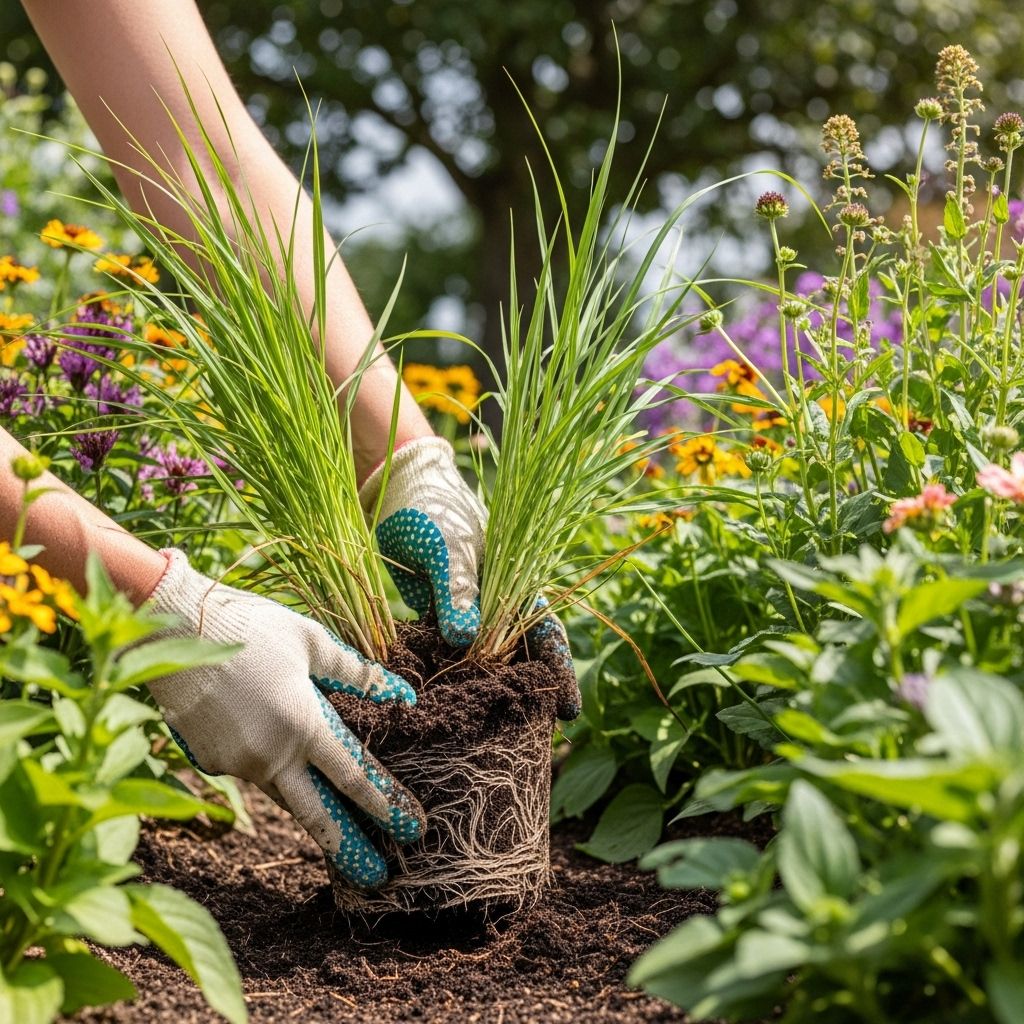
Dividing Perennial Grasses: A Comprehensive Guide
Perennial grasses are a staple in many gardens, lending movement, structure, and year-round visual appeal. However, as these grasses mature, their vigor may decline, or they may outgrow their allotted space. Dividing perennial grasses is a practical method to prolong plant health, rejuvenate clumps, and multiply your plant collection. This guide provides detailed instructions on when and how to divide both cool- and warm-season ornamental grasses, safety tips, recommended tools, and best practices for aftercare.
Why Divide Perennial Grasses?
- Maintain plant health: Older grass clumps often show reduced vigor, with new growth focusing on the outer edges and the center dying back. Dividing revitalizes the entire plant.
- Increase your plant stock: Division is an excellent (and economical) way to propagate more plants for your garden or to share with friends.
- Manage plant size: Prevent grasses from outgrowing their space and encroaching on neighboring plants.
- Improve appearance: Dividing eliminates the unattractive “donut” effect—a gap in the center with healthy growth only at the perimeter.
Understanding Perennial Grass Types: Cool-Season vs. Warm-Season
Perennial grasses fall into two main categories, each with distinct growth cycles that affect the best timing for division:
| Grass Type | Examples | Growth Habit | Division Timing |
|---|---|---|---|
| Cool-Season | Festuca, Calamagrostis, Deschampsia | Start growing early in spring, often before many perennials emerge | Early spring (ideal), or fall with caution |
| Warm-Season | Miscanthus, Panicum, Pennisetum | Begin growth later in spring when soil warms up | Late spring or early summer (after new growth appears) |
Recognizing When to Divide Grasses
Key indicators that your perennial grasses are ready for division include:
- ‘Donut’ shape: Healthy growth only on the clump’s perimeter, with a dying center.
- Decreased vigor: Reduced foliage density, fewer or smaller flower plumes.
- Limited space: The clump has outgrown its site or is crowding other plants.
Most perennial grasses benefit from division every 3-4 years, though some vigorous growers may need more frequent attention, especially in cool climates.
Best Time to Divide Perennial Grasses
- Cool-season grasses: Divide in early spring when new growth first appears, or in early fall, ensuring enough time for roots to establish before winter dormancy.
- Warm-season grasses: Wait until late spring to early summer, after they break dormancy and produce visible green shoots.
- Never divide while flowering: Avoid division during active flowering or seed production, as it stresses the plant and hampers recovery.
Preparing for Division: Tools and Safety
Ornamental grass blades can be extremely sharp; proper preparation and safety gear are essential. Gather the following items before starting:
- Sturdy gardening gloves: Prevents cuts from sharp blades.
- Sharp spade or shovel: For digging and slicing through roots.
- Hand saw, axe, or hatchet: Useful for large, tough root clumps.
- Pruning shears or soil knife: For fine adjustments and removing dead material.
- Protective clothing: Thick sleeves and pants shield against blade edges and debris.
Step-by-Step Guide: How to Divide Perennial Grasses
Follow these systematic steps for safe and successful grass division:
- Wear Gloves and Safety Gear
Always begin with gloves and durable clothing to avoid skin irritation or injury from sharp grass blades. - Cut Back Old Growth
Using pruning shears or loppers, trim away dormant or dead foliage to ground level. This gives a clear view of new shoots and the clump’s shape. - Excavate the Clump
Dig a wide circle around the entire grass clump, cutting deep to include as much of the root system as possible. For very large or established clumps, slice sections away if necessary. - Remove the Clump
Pry the root ball out of the ground carefully. Large, dense clumps may require extra effort—a pry bar, a helper, or in extreme cases, an axe or saw may be needed. - Divide into Sections
Using a sharp shovel, axe, or saw, split the excavated clump into smaller sections. Aim for divisions at least 3 inches wide, each carrying healthy shoots and roots. For tough grasses, halve or quarter as needed before further cutting. - Inspect and Clean Divisions
Remove any unhealthy, dead, or rootless portions from each division. Cut away excess dead foliage. - Replant or Pot Up Immediately
Plant the divisions in their new locations (garden bed or containers) as soon as possible. If you cannot replant right away, keep divisions moist and shaded to prevent drying out.
Quick Tips for the Division Process
- For smaller grasses, you may be able to separate clumps by hand or with a soil knife.
- Consider removing only the outer edges or a wedge from a healthy clump if full division seems unnecessary.
- For very large grasses, a chain saw is a last-resort option—use only if other methods fail, as it may cause collateral damage to roots.
- Immediately re-water and mulch transplants to help them settle in and recover quickly.
Aftercare for Newly Divided Grasses
New divisions are vulnerable and need additional care to thrive:
- Water consistently: Keep soil moist, but not soggy, especially during the first few weeks.
- Mulch lightly: Apply a thin layer of organic mulch to retain soil moisture and suppress weeds, but do not smother crowns.
- Fertilize sparingly: Grasses are rarely heavy feeders; a light application of compost or balanced fertilizer can aid establishment if needed.
- Monitor for stress: Be vigilant for signs of wilting, browning, or stunted growth, adjusting care as necessary.
Special Considerations and Problem-Solving
- If the clump resists division: Let the plant sit after initial digging to slightly dry, which can make splitting easier.
- Dealing with very tough roots: Soaking in water or cutting with a saw may be necessary for mature or woody grasses.
- Dividing pampas and other tough species: Cut back foliage, wear arm and eye protection, and use the sharpest blade you possess.
- If replanting isn’t immediate: Store divisions shaded and moist, and plant as soon as possible to prevent root desiccation.
Benefits and Rewards of Division
Properly divided and cared-for perennial grasses bounce back quickly, delivering healthier, more robust clumps. You’ll enjoy:
- Longer-lived plants with annual rejuvenation cycles
- Cost-effective plant multiplication for extending beds or sharing with friends
- Cleaner garden design with less overcrowding and unsightly gaps
Recommended Tools & Supplies for Dividing Grasses
- Long-handled, tempered steel snips for cutting foliage
- Heavy-duty loppers for thick stems
- Sturdy shovels with sharp, flat blades
- Axe, hatchet, or hand saw for dense clumps or woody roots
- Watering can or hose for aftercare
Frequently Asked Questions (FAQs)
Q: How often should I divide ornamental grasses?
A: Every 3–4 years is typical for most perennial grasses, but fast-growing species in cool climates may benefit from more frequent division to prevent loss of vigor and center dieback.
Q: Can I divide grasses at any time of year?
A: Division is safest and most effective when done in early to mid-spring for most grasses. Avoid dividing while the plant is flowering or when conditions are very hot, cold, or dry.
Q: What should I do with leftover divisions?
A: Share extras with friends, use them to fill other garden areas, or pot up divisions for later planting. Always keep divisions moist and shaded until planted.
Q: My grass clump is too large and heavy—what can I do?
A: Don’t hesitate to enlist help. Use tools like pry bars, axes, or handsaws, and remove manageable sections rather than tackling the entire clump at once.
Q: Can grasses be divided in containers?
A: Yes. Remove the root ball from the container, divide as per instructions, and replant each section. Ensure pots offer ample room for root growth.
Final Thoughts on Dividing Perennial Grasses
Dividing perennial grasses is a valuable skill for every gardener, offering healthier plants, improved display, and more options for creative planting. The process may seem daunting for large or long-established clumps, but with preparation, the right tools, and timely action, rewarding results are within reach. Regular division keeps your garden vibrantly textured and visually appealing, year after year.
Similar Articles


Read full bio of Sneha Tete