Best Companion Plants for Forget-Me-Nots: Complete Guide
Transform your garden with perfect forget-me-not pairings and expert tips
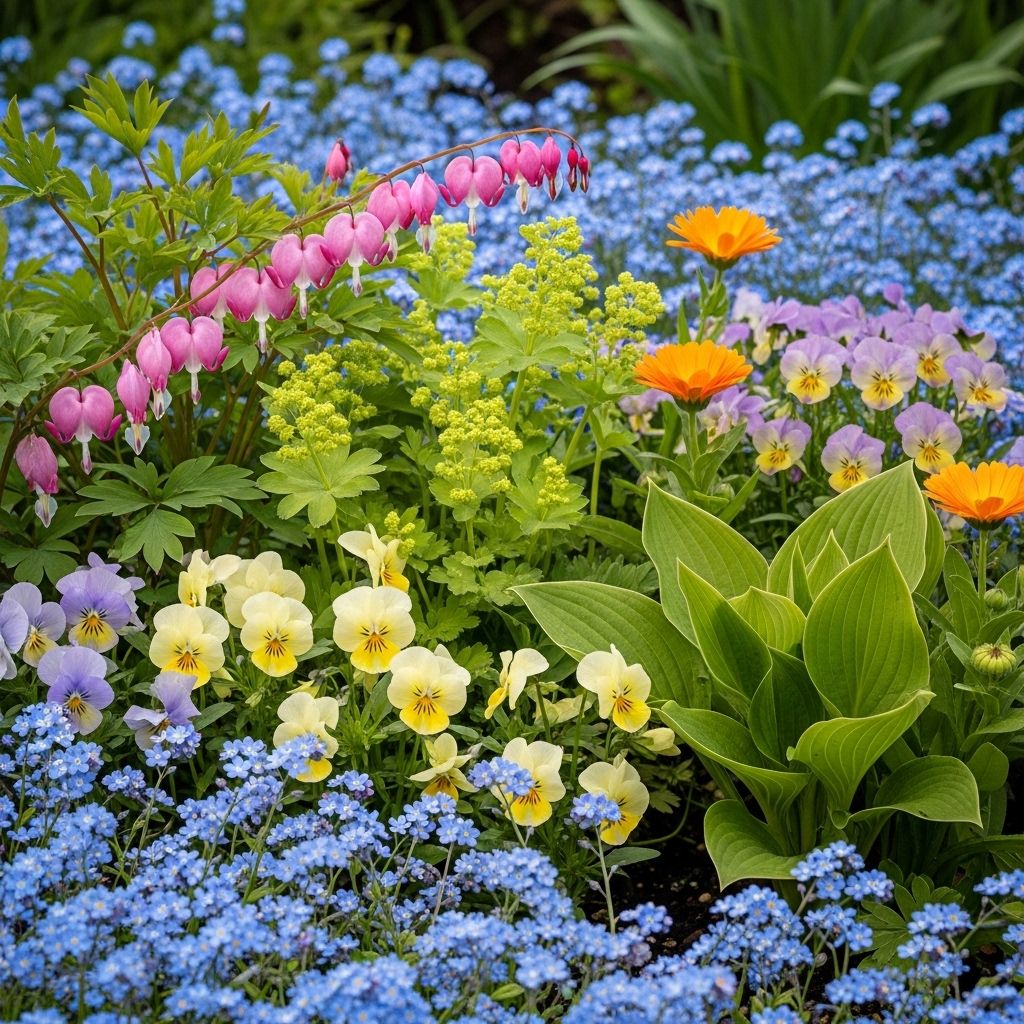
Forget-me-nots are among the most cherished flowers in any gardener’s repertoire, offering delicate blue blooms that signal the transition from spring to early summer. However, their relatively short blooming period means that strategic companion planting becomes essential for maintaining visual interest throughout the growing season. Understanding which plants grow well alongside forget-me-nots can transform a simple flower bed into a dynamic, multi-layered garden display that captivates from early spring through late summer.
The beauty of forget-me-nots lies not only in their charming flowers but also in their versatility as companion plants. These petite perennials serve as excellent partners for taller plants, providing groundcover and filling gaps between larger specimens. Their ability to thrive in various light conditions makes them adaptable to different garden situations, whether tucked beneath the canopy of taller perennials or spreading across sunny borders.
Understanding Forget-Me-Not Growth Characteristics
Before diving into companion planting strategies, it’s crucial to understand what makes forget-me-nots such valuable garden additions. These low-maintenance flowers typically grow to heights between 12 to 24 inches, creating clouds of sky-blue blooms that appear from late spring through early summer. Their compact size and spreading habit make them ideal for filling spaces between taller plants or creating a carpet of color beneath spring bulbs.
Forget-me-nots demonstrate remarkable adaptability to various growing conditions. They perform equally well in full sun or partial shade, making them suitable companions for plants with similar light requirements. This flexibility allows gardeners to incorporate them into diverse planting schemes, from woodland gardens to sunny borders. Once established, these resilient plants require minimal intervention, self-seeding readily to return year after year without becoming invasive or problematic.
The key to successful companion planting with forget-me-nots involves understanding their growth cycle and bloom time. These flowers typically begin blooming in late spring, providing a bridge between early spring bulbs and summer perennials. Their relatively short flowering period means that selecting companions with staggered bloom times ensures continuous color and interest throughout the season. Additionally, their low-growing nature makes them excellent candidates for underplanting taller specimens, creating vertical layers that add depth and dimension to garden beds.
Spring Bulbs: Perfect Early Season Partners
One of the most successful companion planting strategies involves combining forget-me-nots with spring-flowering bulbs, particularly daffodils and tulips. This pairing creates a spectacular display that extends the period of spring color while providing visual interest through contrasting heights and complementary colors. The timing works perfectly because bulbs typically bloom first, followed by forget-me-nots, with a delightful overlap period that creates stunning color combinations.
Daffodils make exceptional companions for forget-me-nots because their bright yellow blooms provide a striking contrast against the soft blue flowers. Plant daffodil bulbs in autumn at the appropriate depth, then scatter forget-me-not seeds or transplants around and between the bulbs. As the daffodils emerge in early spring, their bold yellow trumpets rise above the emerging forget-me-not foliage. When the forget-me-nots begin flowering, they create a beautiful blue carpet that complements the fading daffodils while the bulb foliage dies back naturally.
Tulips offer even more versatility as companion bulbs because they come in an extensive range of colors. Pink and purple tulips create harmonious color schemes with blue forget-me-nots, while red and orange varieties provide dramatic contrasts. White tulips paired with forget-me-nots produce an elegant, sophisticated look perfect for formal gardens. The tulip blooms rise majestically above the forget-me-not carpet, creating a two-tiered display that maximizes visual impact without requiring additional garden space.
Roses: Concealing Thorny Stems with Beauty
Roses present a unique challenge in garden design because while their blooms are spectacular, their lower stems often appear gangly and unattractive. Forget-me-nots provide an elegant solution to this common problem, growing tall enough to conceal the bare lower portions of rose bushes while adding complementary color at ground level. This combination creates a more polished, cohesive look in rose beds and mixed borders.
The practical benefits of pairing forget-me-nots with roses extend beyond aesthetics. The dense groundcover created by forget-me-nots helps suppress weeds around rose bushes, reducing maintenance requirements. Additionally, the forget-me-not foliage helps retain soil moisture around rose roots, which is particularly beneficial during dry periods. The blue flowers also provide a cooling visual counterpoint to warm-toned roses, creating a more balanced color palette.
When planting forget-me-nots around roses, allow adequate spacing for air circulation to prevent fungal diseases. Plant them in a ring around the rose bush, leaving a few inches clear around the main stem. This arrangement provides visual coverage while maintaining the health of both plants. The forget-me-nots will bloom as the roses begin their first flush of flowers, extending the period of color in the rose bed and creating a more dynamic display.
Shade-Loving Foliage Companions
For shady garden areas, combining forget-me-nots with attractive foliage plants creates year-round interest that extends well beyond the flowering season. This strategy proves particularly effective because foliage plants provide consistent visual appeal while forget-me-nots add seasonal color bursts. The textural contrasts between delicate forget-me-not flowers and bold foliage create sophisticated planting combinations that elevate shade garden design.
Ferns make outstanding companions for forget-me-nots in shaded locations. Their architectural fronds provide a dramatic backdrop for the dainty blue flowers, creating textural contrast that enhances both plants. As the forget-me-nots fade in early summer, the ferns continue developing, filling the space with lush greenery. Consider pairing forget-me-nots with varieties like Japanese painted fern, lady fern, or ostrich fern for varied effects.
Hostas represent another excellent foliage companion for forget-me-nots. These shade-loving perennials offer diverse leaf colors, sizes, and textures that complement the delicate forget-me-not blooms. Plant forget-me-nots between hostas to create a blue carpet that shows off the hosta foliage. As hostas emerge in spring, they provide an attractive backdrop for forget-me-not flowers. Later in the season, hosta blooms add vertical interest while their foliage continues providing visual appeal.
Heuchera, commonly known as coral bells, brings colorful foliage in shades ranging from deep purple to bright lime green. These versatile perennials pair beautifully with forget-me-nots because their mounding form creates attractive shapes while their varied leaf colors provide season-long interest. The combination of heuchera’s colorful foliage with forget-me-not’s blue flowers creates rich, layered plantings that work in both shaded and partially sunny locations.
Rock Cress: Creating Layers of Color
Rock cress presents an innovative companion planting opportunity that creates multiple layers of color and texture. This low-growing, spreading perennial produces masses of flowers in late spring, perfectly timed to overlap with forget-me-not blooms. The combination creates a tapestry effect with rock cress forming the lowest layer and forget-me-nots rising slightly above, producing a stunning display that works particularly well in rock gardens, along pathways, or cascading over walls.
Rock cress typically blooms in white, pink, or purple, all of which coordinate beautifully with the blue tones of forget-me-nots. The plant’s mat-forming habit means it spreads horizontally, while forget-me-nots grow more vertically, creating natural layers without competition for space. This pairing works exceptionally well along ledges or slopes where rock cress can drape over edges while forget-me-nots provide upright color behind.
Both plants share similar growing requirements, thriving in well-drained soil and tolerating various light conditions from full sun to partial shade. This compatibility simplifies maintenance because both plants respond to similar care regimes. After the spring bloom period concludes, both plants can be lightly trimmed to maintain tidy appearances, with forget-me-nots self-seeding to return the following year.
Additional Exceptional Companion Plants
Beyond the classic combinations already discussed, numerous other plants make excellent companions for forget-me-nots, each bringing unique characteristics that enhance garden displays. Primroses create charming cottage garden combinations, their cheerful flowers in yellow, pink, or purple blooming alongside forget-me-nots in mid to late spring. Both plants appreciate similar growing conditions and create naturalistic plantings that evoke woodland settings.
Bleeding heart provides graceful, arching stems adorned with distinctive heart-shaped flowers that dangle above forget-me-not carpets. The pink or white bleeding heart blooms complement blue forget-me-nots beautifully, while the plant’s ferny foliage adds textural interest throughout summer after both plants finish flowering. This combination works particularly well in partially shaded locations where both plants thrive.
Columbine offers another excellent companion choice, with its unique spurred flowers held on wiry stems above attractive divided foliage. Available in numerous colors including blue, pink, yellow, and white, columbines create airy, vertical accents rising above forget-me-not groundcover. Both plants tolerate similar conditions and create naturalistic combinations suitable for cottage gardens or woodland settings.
Ornamental onions or alliums provide striking spherical blooms on tall stems that create dramatic vertical accents above forget-me-not carpets. The purple globes of alliums contrast beautifully with blue forget-me-nots while their bloom time overlaps perfectly in late spring and early summer. This combination works particularly well in contemporary garden designs where architectural plant forms are valued.
Bearded iris creates sophisticated combinations with forget-me-nots, their elegant blooms rising majestically above the low-growing blue carpet. The wide range of iris colors available allows for countless design possibilities, from harmonious blue-on-blue schemes to bold contrasting combinations. Both plants tolerate full sun to partial shade and create impressive displays in late spring.
Design Principles for Companion Planting Success
Successful companion planting with forget-me-nots requires understanding fundamental design principles that ensure cohesive, attractive results. The most important consideration involves bloom time coordination. Since forget-me-nots flower from late spring through early summer, select companions that either bloom simultaneously to create peak displays or bloom at different times to extend the season of interest. Staggered blooming ensures the garden never looks empty or static.
Height variation creates visual interest and allows more plants to fit into limited space. Use forget-me-nots as low-growing groundcover beneath taller perennials and bulbs, creating vertical layers that add depth to plantings. This approach maximizes space utilization while creating more dynamic compositions than single-level plantings. Consider the mature heights of all plants when planning arrangements to ensure shorter plants aren’t overwhelmed by taller neighbors.
Color coordination plays a crucial role in companion planting success. Blue forget-me-nots work with virtually any color palette, but thoughtful combinations create more sophisticated results. Blue and yellow create classic complementary contrasts that feel fresh and energetic. Blue with pink or purple produces harmonious schemes perfect for romantic cottage gardens. Blue with white creates crisp, elegant combinations suitable for formal settings. Consider the overall color scheme you want to achieve and select companions accordingly.
Textural contrast enhances visual interest by combining plants with different leaf shapes and flower forms. Pair forget-me-nots’ delicate flowers and fine foliage with bold-leaved plants like hostas or architectural flowers like irises. This contrast makes both plants more noticeable and creates more engaging compositions than groupings of similar-textured plants. Mix soft, billowy forms with structured, upright shapes for maximum impact.
Growing Conditions and Care Requirements
Understanding the growing requirements of forget-me-nots ensures you select companions with compatible needs, simplifying maintenance while promoting plant health. Forget-me-nots thrive in well-drained soil enriched with organic matter but tolerate various soil types including clay, loam, and sandy soils. They adapt to different soil pH levels, from slightly acidic to slightly alkaline, making them compatible with most garden perennials.
Light requirements for forget-me-nots are flexible, with plants performing well in full sun to partial shade. In hot climates, afternoon shade helps prevent stress and extends the blooming period. This adaptability means forget-me-nots pair successfully with both sun-loving and shade-preferring plants, though matching light requirements ensures all plants in a combination thrive. When designing plantings, consider the specific light conditions in your garden and select companions accordingly.
Water needs for forget-me-nots are moderate, with established plants tolerating brief dry periods though performing best with consistent moisture. Avoid pairing forget-me-nots with drought-loving plants like sedums or plants requiring constantly wet conditions like water-loving irises. Instead, choose companions with similar moisture preferences to simplify watering and ensure all plants receive appropriate care.
Maintenance requirements remain minimal for forget-me-nots, making them ideal for low-maintenance gardens. They self-seed readily, returning year after year without requiring replanting. However, monitor their spreading to prevent unwanted colonization. If self-seeding becomes excessive, deadhead spent flowers before seeds mature. Most companion plants suggested here also require minimal maintenance, creating easy-care combinations perfect for busy gardeners.
Seasonal Planning for Continuous Interest
Creating garden beds that provide interest from early spring through fall requires strategic companion planting that considers bloom times and seasonal changes. Forget-me-nots typically bloom from late spring through early summer, creating a specific window of color. To extend visual appeal beyond this period, layer plants with different bloom times throughout the same bed.
Begin the season with early spring bulbs like crocuses and early daffodils that bloom before forget-me-nots. As these fade, mid-season bulbs like tulips and later daffodils overlap with emerging forget-me-not blooms. Following the forget-me-not display, summer perennials take over, with choices like daylilies, coneflowers, or black-eyed Susans providing color through summer. Finally, fall-blooming asters or sedum can conclude the season with late-season color.
Foliage plants provide consistent interest regardless of bloom time. Hostas, ferns, and heuchera maintain attractive leaves from spring through fall, creating a reliable backdrop for changing floral displays. This strategy ensures beds never look bare because foliage fills space when flowers aren’t blooming. The forget-me-not display becomes one element in an evolving tapestry rather than the sole focus.
Practical Planting Tips
Successful implementation of companion plantings requires attention to practical planting details. When combining forget-me-nots with spring bulbs, plant bulbs first at their appropriate depth in autumn, then add forget-me-not plants or seeds around them. This sequence ensures bulbs are positioned correctly while forget-me-nots fill surface areas. Mark bulb locations before planting forget-me-nots to avoid accidentally disturbing bulbs.
Space plants according to their mature sizes, allowing adequate room for growth without overcrowding. Forget-me-nots spread to about 12 inches across, so space them accordingly. Allow sufficient space between different plant species for air circulation, which helps prevent fungal diseases. Overcrowding creates competition for resources and increases disease risk.
When planting around existing perennials like roses or hostas, work carefully to avoid damaging established root systems. Dig small holes for forget-me-not transplants or scatter seeds around the base of mature plants. Water thoroughly after planting to help new additions establish. Mulch lightly around plants to retain moisture and suppress weeds, but avoid burying plant crowns.
Troubleshooting Common Issues
While forget-me-nots are generally trouble-free, occasionally issues arise that affect their performance or appearance. Excessive self-seeding represents the most common complaint, with plants sometimes spreading more vigorously than desired. Control this by deadheading spent flowers before seeds mature or by pulling unwanted seedlings in spring when they’re easy to identify and remove. In regions where forget-me-nots are considered invasive, monitor them closely and remove any plants growing outside designated areas.
Powdery mildew occasionally affects forget-me-nots, particularly in humid conditions with poor air circulation. Prevent this by spacing plants appropriately and avoiding overhead watering. If mildew appears, improve air circulation by thinning overcrowded plants and water at soil level rather than from above. In severe cases, apply organic fungicides according to product directions.
Aphids sometimes colonize forget-me-nots, clustering on new growth and flower buds. Control these pests with strong water sprays to dislodge them or apply insecticidal soap for persistent infestations. Encourage beneficial insects like ladybugs and lacewings that prey on aphids by planting diverse flowering plants and avoiding broad-spectrum pesticides.
Slugs and snails may damage forget-me-not foliage, particularly in damp, shaded locations. Control these pests with organic slug baits, beer traps, or physical barriers like copper tape around planting areas. Hand-picking at night when these pests are active also proves effective for small infestations.
Frequently Asked Questions
Q: What plants should not be planted with forget-me-nots?
A: Avoid pairing forget-me-nots with aggressive spreaders that might overwhelm them, such as mint or invasive ground covers. Also avoid drought-loving plants like lavender or sedum that require completely different watering regimes, as forget-me-nots prefer consistent moisture.
Q: Do forget-me-nots come back every year?
A: Yes, forget-me-nots readily self-seed and return year after year. Once established, they typically reseed themselves naturally, creating new plants without requiring replanting. They function as short-lived perennials or self-seeding biennials depending on climate.
Q: Can forget-me-nots grow in full shade?
A: Forget-me-nots tolerate partial shade very well but may struggle in deep, full shade. They perform best in locations receiving morning sun and afternoon shade or dappled sunlight throughout the day. In very shady areas, flowering may be reduced.
Q: When should I plant forget-me-nots with spring bulbs?
A: Plant spring bulbs in autumn at their appropriate depth, then add forget-me-not plants or seeds around them at the same time. This allows both plants to establish before winter and ensures coordinated blooming in spring.
Q: How do I prevent forget-me-nots from taking over my garden?
A: Deadhead spent flowers before seeds mature to prevent excessive self-seeding. Pull unwanted seedlings in spring when they’re small and easy to remove. In areas where they’re invasive, monitor them closely and remove plants growing outside designated areas.
Q: What colors go well with blue forget-me-nots?
A: Blue forget-me-nots pair beautifully with yellow (daffodils, primroses), pink (tulips, bleeding heart), purple (alliums, iris), and white (tulips, rock cress) flowers. They also look stunning against the green foliage of hostas and ferns.
Q: Can I grow forget-me-nots in containers with other plants?
A: Yes, forget-me-nots work well in mixed containers with spring bulbs, pansies, or trailing plants. Ensure the container has adequate drainage and all plants have similar water and light requirements for best results.
Q: How tall do forget-me-nots grow?
A: Forget-me-nots typically grow between 12 to 24 inches tall, making them ideal for edging, groundcover, or underplanting taller perennials and roses. Their compact size allows them to fill spaces without overwhelming companion plants.
Similar Articles





Read full bio of Sneha Tete