How to Grow Magnolia Trees from Seed: A Detailed Guide
Discover the complete process of starting magnolia trees from seed, from harvesting and stratification to planting and care for thriving trees.
Brilliant, showy blossoms and glossy green foliage have made magnolia trees a beloved ornamental feature across gardens and landscapes worldwide. Growing magnolias from seed unlocks the charm of nurturing these trees right from their humble beginnings, allowing gardeners to experience every milestone from harvest to flowering maturity. This deep-dive guide explains every step of magnolia seed propagation, from collection and preparation to sowing, germination, care, and transplanting, so you can foster healthy magnolia trees for years of beauty.
Benefits and Challenges of Growing Magnolia from Seed
- Genetic Diversity: Propagating magnolias from seed introduces new genetic combinations, resulting in unique tree forms.
- Rewarding Growth Journey: Witnessing a tree’s entire life cycle brings deep gardener satisfaction.
- Cost-Effectiveness: Seeds are often free or inexpensive compared to nursery transplants.
- Longer Timeframe: Magnolia trees grown from seed may take several years, often 7–10, to flower, unlike those propagated by cuttings or grafting.
- Variable Traits: Seed-grown trees may differ in appearance from their parents, with variation in flower shape, color, and growth habit.
Magnolia Seed Biology and Harvest Timing
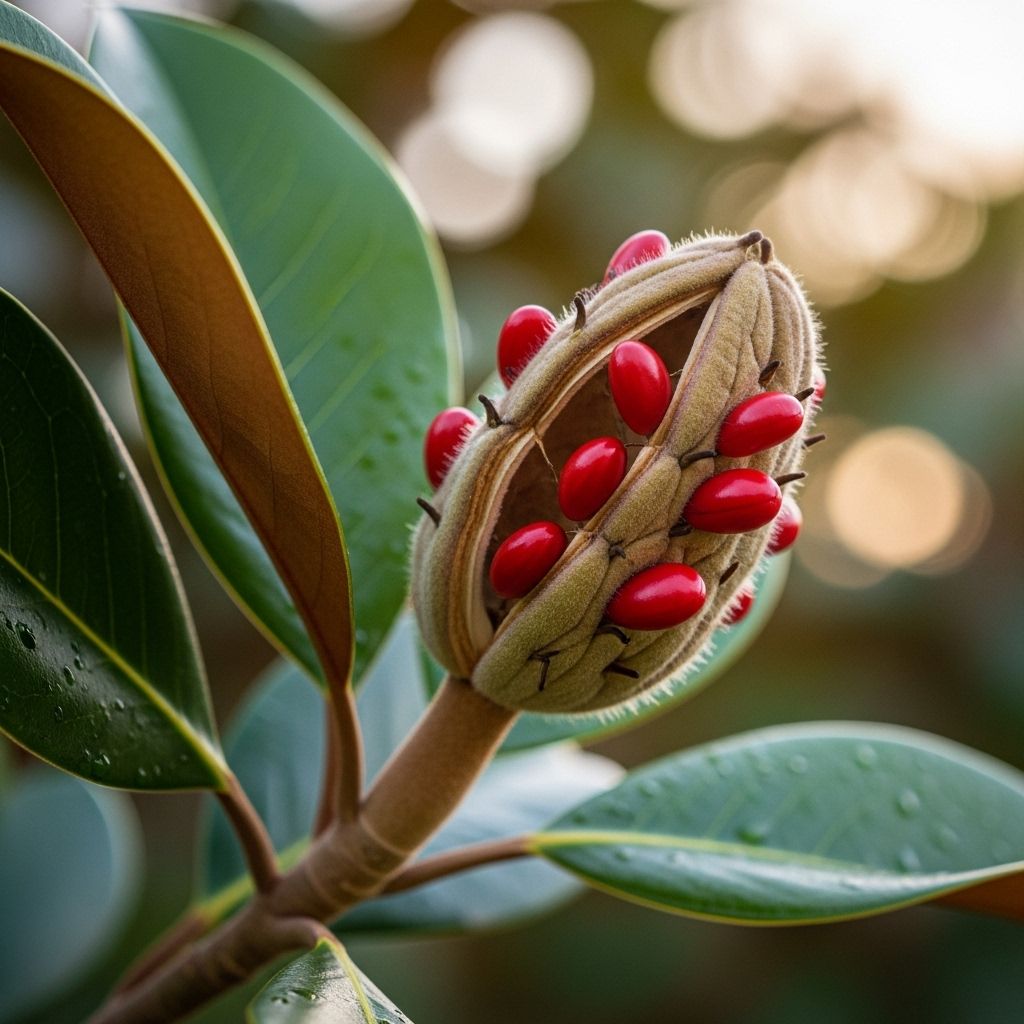
To achieve successful magnolia seed germination and healthy seedlings, understanding the seed’s biological cycle and harvest timing is critical. Magnolia seeds develop in clusters inside cone-like fruits, many species displaying eye-catching red, waxy-coated seeds in late summer through autumn. The vibrant coloration often attracts birds, making prompt harvest necessary.
Seed Maturity Signs:
- Scones appear dry and begin to open, revealing plump, red seeds.
- Fruits that detach easily from the cone indicate seed ripeness.
- Seeds on the ground below the parent tree are typically viable if freshly fallen and undamaged.
Harvesting generally happens in the fall, though exact dates vary by species and local climate.
Collecting and Cleaning Magnolia Seeds
Here’s how to safely collect and prepare magnolia seeds for propagation:
- Collect Ripe Seeds: Pluck mature red seeds from opened cones. Gather enough to account for variable germination rates—expect to lose some.
- Soak to Remove Coating: Place the seeds in a bowl of water overnight. The soaking process softens the waxy, red seed coat, which can harbor germination-inhibiting substances.
- Extract Seed: After soaking, gently rub and squeeze the seeds—either by hand or using a soft cloth—to slip off the outer coating, exposing the hard, dark kernel beneath.
- Rinse and Dry Slightly: Rinse de-coated seeds with clean water and pat them moderately dry. Do not allow seeds to dry out or shrivel; magnolia seeds must remain moist to stay viable.
Magnolia Seed Stratification: Mimicking Winter
Magnolia seeds naturally require a period of chilling (cold stratification) to break dormancy. This process imitates winter conditions so seeds will sprout in spring. Skipping stratification dramatically reduces germination rates.
Steps for Cold Stratification
- Mist and Prepare Storage: Lightly mist seeds so they remain slightly moist. Place them in a resealable plastic bag with a mix of damp sphagnum moss, peat moss, or vermiculite.
- Refrigerate: Set the bag in the refrigerator at 34–41°F (1–5°C). Avoid the freezer—temperatures below freezing can kill magnolia embryos.
- Chill Duration: Allow seeds to stratify for 3–4 months (usually November through February). Mark the start date on the bag for reference.
- Monitor Moisture: Check periodically to ensure the mix stays damp but never soggy or moldy. Remove any seeds that develop visible mold.
Testing Magnolia Seed Viability
Before committing to soil, check which seeds are likely to sprout using the water test:
- After cleaning, place seeds in a bowl of water for 20–30 minutes.
- Viable seeds generally sink to the bottom; non-viable or hollow seeds will float.
- Discard floaters to focus efforts on healthy, robust seeds.
Choosing the Right Planting Medium and Pot
Magnolia seeds require moist, well-draining, slightly acidic substrate. The ideal mix supports strong root development during germination and helps prevent fungal issues. Recommended soil ingredients include:
- High-quality potting soil (no slow-release fertilizer if possible)
- Sphagnum peat moss for acidity and moisture retention
- Perlite or coarse sand for drainage
- A dusting of worm castings for mild nutrition
Use small nursery pots (4-inch works well) for individual seeds, or seedling trays with cells for large batches. Ensure containers feature drainage holes to prevent waterlogging.
How to Sow Magnolia Seeds After Stratification
- Sow Indoors or Outdoors: In cold climates, sow seeds indoors in late winter, about 1–2 months before final frost; in mild regions, outdoor sowing after stratification is possible.
- Planting Depth and Spacing: Plant each seed roughly 0.5–1 inch (1–2.5 cm) deep. If using a communal pot, space seeds at least 2 inches (5 cm) apart to avoid crowding.
- Moisten the Soil: Water the soil thoroughly but allow excess to drain. The substrate should feel evenly moist but not soggy to the touch.
- Cover Gently: Top up with a thin layer of peat moss or potting soil. Firm lightly.
- Warmth and Sunlight: Place pots in a spot receiving indirect bright light and maintain temperatures around 70°F (21°C) for best germination. Avoid intense, direct sunlight that can overheat young sprouts.
Magnolia Seed Germination Timeline
With proper stratification and moisture, magnolia seeds typically begin to sprout within a few weeks after sowing in spring. Germination rates vary by species, environmental conditions, and seed source. It’s not uncommon for some seeds to remain dormant and sprout much later, so patience is essential.
- Germination Window: Anywhere from 2–8 weeks, sometimes longer for slow-to-sprout seeds.
- Watering: Keep soil consistently moist but never waterlogged. Use a spray bottle to avoid dislodging seeds.
Care for Magnolia Seedlings
Once the first set of true leaves appears, a period of diligent care begins. Proper light, moisture, and nutrition are critical for the seedlings’ healthy development.
- Light: Provide bright, indirect sunlight—gradually increase exposure as plants grow, but shield from scorching midday rays.
- Water: Continue with consistent, moderate watering to maintain evenly damp—but not soggy—soil.
- Fertilizer: Feed with a balanced, diluted liquid fertilizer only after several sets of true leaves form (about 1/8 strength monthly).
- Air Circulation: Ensure good airflow to prevent fungal disease on tender seedlings.
- Thinning: Remove weaker or excess seedlings to allow the strongest to thrive, especially in communal pots.
Transplanting Magnolia Seedlings
When magnolia seedlings are 4–8 inches tall, and night temperatures are reliably above 50°F (10°C), harden them off by slowly acclimating to outdoor conditions:
- Move seedlings outside for a few hours each day, gradually increasing exposure over 10–14 days.
- Choose a final planting site with partial to full sun (some species tolerate part shade) and rich, acidic, well-drained soil.
- Space trees according to species—generally at least 15–20 feet apart.
- Dig a hole slightly larger than the root ball. Set the seedling so the top of the root mass is level with the soil surface; backfill gently and water well.
- Mulch with bark or pine needles to retain moisture, but keep mulch away from the trunk to prevent rot.
Long-Term Magnolia Tree Care
- Water: Young trees need regular, deep watering until established (2–3 years). Mature magnolias are drought-tolerant but appreciate moisture during dry spells.
- Fertilization: Apply slow-release, acidic fertilizer in early spring for robust growth.
- Pruning: Little is needed. Remove damaged or crossing branches after flowering or in late winter to maintain shape.
- Protection: Shield saplings from strong winds and lawnmower/string trimmer damage.
- Pest and Disease Control: Magnolias are generally resistant, but watch for scale insects, powdery mildew, and leaf spot.
Common Magnolia Species to Grow from Seed
| Species | Flower Color | Height Range | Notes |
|---|---|---|---|
| Magnolia grandiflora | Creamy white | 60–80 ft (18–24 m) | Evergreen, large fragrant blooms; southern US native |
| Magnolia soulangiana | Pink to white | 20–30 ft (6–9 m) | “Saucer” magnolia; hybrid, common in gardens |
| Magnolia stellata | White | 10–20 ft (3–6 m) | Compact, early-blooming “star” magnolia |
| Magnolia virginiana | Creamy white | 10–35 ft (3–11 m) | “Sweetbay” magnolia; semi-evergreen, hardy |
Potential Problems and Solutions
- Low Germination Rates: Often due to incomplete stratification or dried-out seeds. Always keep seeds moist until planting.
- Rot or Damping-Off: Use sterile containers and media; avoid overwatering and ensure proper air flow.
- Pest Interference: Squirrels and rodents may dig up seeds. Cover pots with mesh or place them in a protected cold frame.
Frequently Asked Questions (FAQs)
Q: How long does it take for a magnolia tree grown from seed to bloom?
A: Magnolia trees grown from seed can take 7–10 years, sometimes longer, before reaching maturity and blooming, depending on species and local growing conditions.
Q: Can I plant magnolia seeds directly outdoors?
A: In climates with cold winters, you can plant freshly harvested seeds outdoors in fall and allow natural stratification over winter. Protect from predators and shifting soil. In warmer climates, forced refrigeration is preferred for consistent results.
Q: Should I fertilize magnolia seedlings?
A: Lightly feed once several sets of true leaves have formed. Use a balanced, diluted fertilizer. Avoid overfeeding, which can burn roots.
Q: Why did my magnolia seeds not sprout?
A: Poor germination often results from skipped stratification, planting dried seeds, or using improper soil moisture and temperature. Only stratified, moist, viable seeds in well-aerated soil will germinate reliably.
Q: Can I grow all magnolia species from seed?
A: Most magnolias grow readily from seed, but hybrids may not breed true, and some cultivated varieties only propagate vegetatively for desired traits.
Quick Tips for Magnolia Seed Success
- Use only freshly harvested, fully mature seeds for best results.
- Complete cold stratification—do not skip the chilling period.
- Never let seeds or seedlings dry out completely.
- Provide well-drained, acidic soil and moderate, consistent moisture.
- Be patient—magnolias are slow to mature but well worth the wait.
Conclusion: Growing Beauty from a Seed
Raising a magnolia tree from seed is a journey in patience and care, culminating in a uniquely beautiful addition to any landscape. While the rewards require time and attention, each step—from seed harvest and stratification to transplant and nurturing—builds a deeper connection with your magnolia. Observe the changing seasons, celebrate tiny seedlings, and look forward to the breathtaking day your hand-raised magnolia blooms for the first time.
Similar Articles


Read full bio of medha deb