Lewisia: Growing and Caring for the Mountain Jewel
Discover the essentials of cultivating Lewisia, from proper planting and care to propagation and troubleshooting for healthy, thriving blooms.
Lewisia: A Comprehensive Guide to Growing the Mountain Jewel
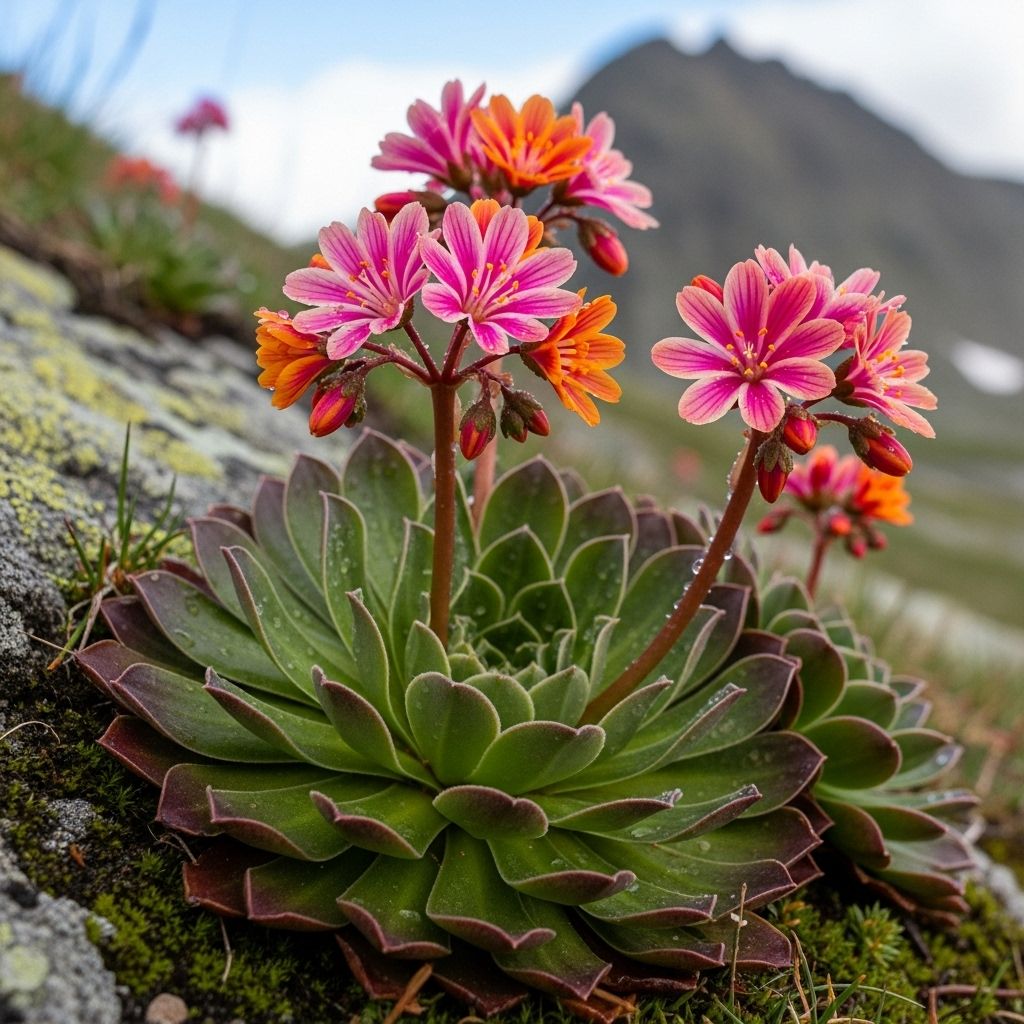
Lewisia cotyledon, commonly called cliff maids, is a remarkably beautiful perennial prized in rock gardens and containers for its vibrant blooms and unique, succulent foliage. Native to the rocky slopes of southern Oregon and northern California, this evergreen plant brings color and texture to the toughest garden spots, thriving where many others struggle.
Quick Overview of Lewisia
- Type: Evergreen perennial
- Native range: Southern Oregon and Northern California mountains
- Height: 8 to 10 inches (20 to 25 cm)
- Spread: Clumping, forms rosettes up to 12-28 cm across
- Flowers: Rainbow-hued, starry blooms in late spring to early summer
- Foliage: Fleshy, spoon-shaped green leaves
- USDA zones: 4–8 (hardy with winter protection)
Characteristics and Natural Habitat
Lewisia is adapted to thrive in rugged, well-draining habitats, typically clinging to rocky cliffs or subalpine slopes. Its deep taproot anchors it in place, providing excellent drought tolerance and giving it the ability to survive in less-than-ideal soils. The foliage forms attractive rosettes, and when in bloom, the plant creates a mass of colorful flowers atop slender stalks.
Why Choose Lewisia?
- Outstanding beauty and compact growth habit make it perfect for rock gardens, crevice gardens, green roofs, and containers.
- Irresistible to butterflies and pollinators.
- Blooms may be cut for petite, long-lasting flower arrangements.
- Excellent companion for Campanulas, Sedums, and other drought-tolerant perennials.
Lewisia Planting & Light Requirements
To replicate Lewisia’s native environment in your garden, careful attention to soil and placement is key.
- Planting position: Full sun near coastal areas; partial sun in regions with intense summer heat.
- Soil requirement: Slightly acidic, sandy, very well-draining soil. Succulent or cactus mixes enhanced with coarse grit, pumice, or granite mulch work well.
- Planting tip: Plant Lewisia with the crown raised above soil level to keep it dry and prevent rot. Top dress with gravel or granite chips to mimic its rocky home and protect the base from moisture.
Potting and Container Growing
Lewisia performs beautifully in containers, which can be easily moved to ideal locations through the year. When planting in pots:
- Use a shallow, wide container with ample drainage holes.
- Fill with a fast-draining mix; cactus or alpine soil works well.
- Plant the rosettes on a slight angle to ensure any water drains away from the crown.
- Top-dress generously with grit to prevent splashback against the leaves and deter slugs or snails.
Caring for Lewisia: Water, Feeding, and Maintenance
Maintaining a balance between drought and excess water is the main factor in Lewisia’s success.
- Watering: Allow the soil to almost dry out between waterings. Lewisia is drought-tolerant once established and prefers to be kept on the dry side. Overwatering, particularly in cool wet months, is highly detrimental.
- Feeding: Lewisia is not a heavy feeder. Apply a dilute, balanced fertilizer (such as 10-10-10 NPK) once or twice a season—typically in early spring and again after the first flush of blooms.
- Pruning: Regularly remove spent flowers (deadheading) to encourage more blooms. Trim away any yellow, limp, or damaged foliage.
- Drought tolerance: Once established, Lewisia can withstand periods of limited moisture. Supplement water only in severe drought for best flowering.
Lewisia Bloom Time & Color
Lewisia generally graces the garden with a vibrant floral display from late spring through early summer. Some varieties may rebloom or continue to flower sporadically into early autumn, especially if old flower stalks are removed promptly. The flowers come in a striking range of colors, from pink and orange to white, yellow, or even bicolored forms.
| Feature | Description |
|---|---|
| Bloom time | Late spring to early summer (with potential for repeat blooms) |
| Flower colors | Pinks, oranges, yellows, whites, bicolors |
| Height in bloom | 8–12 inches (20–30 cm) |
Lewisia Companion Plants
Because of its low-growing habit and preference for well-draining soils, Lewisia pairs perfectly with other alpines and succulents. Top companions include:
- Campanula (bellflowers)
- Sedum (stonecrop), such as Blue Spruce and Cape Blanco
- Dudleya, another drought-resistant California native
- Other rock garden or crevice-specialist species
Pest and Disease Prevention
Lewisia is relatively problem-free if proper conditions are maintained:
- Rot: The greatest threat is fungal rot from excessive moisture, especially in winter. Always ensure crowns stay dry and soil is never soggy.
- Slugs and snails: May nibble at succulent leaves. A top dressing of grit provides some protection.
- Deer resistance: Lewisia’s bitter leaves generally deter deer, making it a reliable choice even in deer-prone gardens.
Propagation of Lewisia
Enthusiasts can multiply their Lewisia in two primary ways: seed and division.
- Seed propagation:
- Harvest ripe seeds from spent flower stalks.
- Sow in well-draining soil, keeping consistently but lightly moist until germination.
- Germination often occurs within a few weeks, but seedlings require careful watering and a dry, bright environment.
- Division:
- Carefully unearth mature clumps and gently tease apart rosettes that have formed their own roots.
- Replant each separated rosette, taking care not to damage the delicate taproots or expose crowns excessively to moisture.
Seasonal and Climate Considerations
- Winter: Protect from excessive wet and frost by mulching with grit or moving pots to sheltered locations. Lewisia tolerates cold well if kept dry, surviving in USDA zones 4–8.
- Summer: In hot inland areas, afternoon shade can help prevent stress and prolong flowering.
- Microclimates: Planting on slopes or vertical crevices (such as rock walls) improves drainage and mimics the plant’s natural habitat.
Common Problems and Solutions
- Yellow or limp leaves: Typically caused by overwatering or poor drainage. Reduce moisture and ensure crowns are elevated above soil level.
- Flowering stops or fails: Usually a result of high summer temperatures, excessive dryness, or fertilizer deficiency. Provide partial shade during hot spells and use a mild fertilizer in early spring.
- Rot in winter: Improve drainage and add a gravel mulch; move containers to a sheltered spot.
Uses for Lewisia in the Garden
- Ideal for crevice or alpine rock gardens.
- Perfect for containers on patios, balconies, or green roofs.
- Excellent as an accent in raised beds, troughs, or slopes where water drains quickly.
- Brightens up even the smallest spaces with long-lasting, vivid color.
Frequently Asked Questions (FAQs)
Q: When does Lewisia cotyledon bloom?
A: Lewisia cotyledon usually blooms from late spring to early summer, with blooms sometimes recurring later in the season. Deadheading encourages continued flowering.
Q: Is Lewisia cotyledon deer-resistant?
A: Yes, Lewisia cotyledon is typically deer-resistant because of its bitter, succulent foliage, although very hungry deer may still sample it in rare cases.
Q: How do I propagate Lewisia cotyledon?
A: Propagate by collecting and sowing ripe seeds or by dividing mature clumps, ensuring each new rosette has roots and is replanted in free-draining soil.
Q: Are Lewisia cotyledon plants drought-tolerant?
A: Once established, Lewisia is quite drought-tolerant and prefers dry conditions over wet.
Q: Can Lewisia withstand cold temperatures?
A: Lewisia is hardy in USDA zones 4–8 and tolerates cold well if kept dry, but in areas with wet winters, protect with mulching or move containers under shelter.
Q: What are ideal companion plants for Lewisia?
A: Good options include Campanulas, Sedums, Dudleyas, and other drought-tolerant rock garden or succulent plants.
Q: What are the biggest threats to Lewisia?
A: Overwatering and poor drainage are the most common killers of Lewisia, leading to rot—especially in winter. Always keep the crown dry and the soil sharply drained.
Summary Table: Lewisia At a Glance
| Aspect | Details |
|---|---|
| Light | Full sun (coastal) or part sun (hot interiors) |
| Soil | Very well-draining, sandy or rocky, slightly acidic |
| Watering | Sparse, avoid wetting crown |
| Feeding | Light, diluted fertilizer twice yearly |
| Height/Spread | 8–10 inches tall, 12–28 cm spread |
| Hardiness | USDA zones 4–8 |
| Propagation | Seed or division |
| Pests | Few; avoid rot and snails/slugs |
With its arresting flowers, resilience, and suitability for even small gardens or containers, Lewisia remains a gardener’s favorite, especially in challenging settings. By following the simple care methods outlined above, gardeners can enjoy years of vibrant, mountainside blooms at home.
Similar Articles


Read full bio of medha deb