How to Grow a Pineapple: Complete Guide from Propagation to Harvest
Learn how to grow pineapples at home, from choosing your planting method to harvesting and troubleshooting common issues.
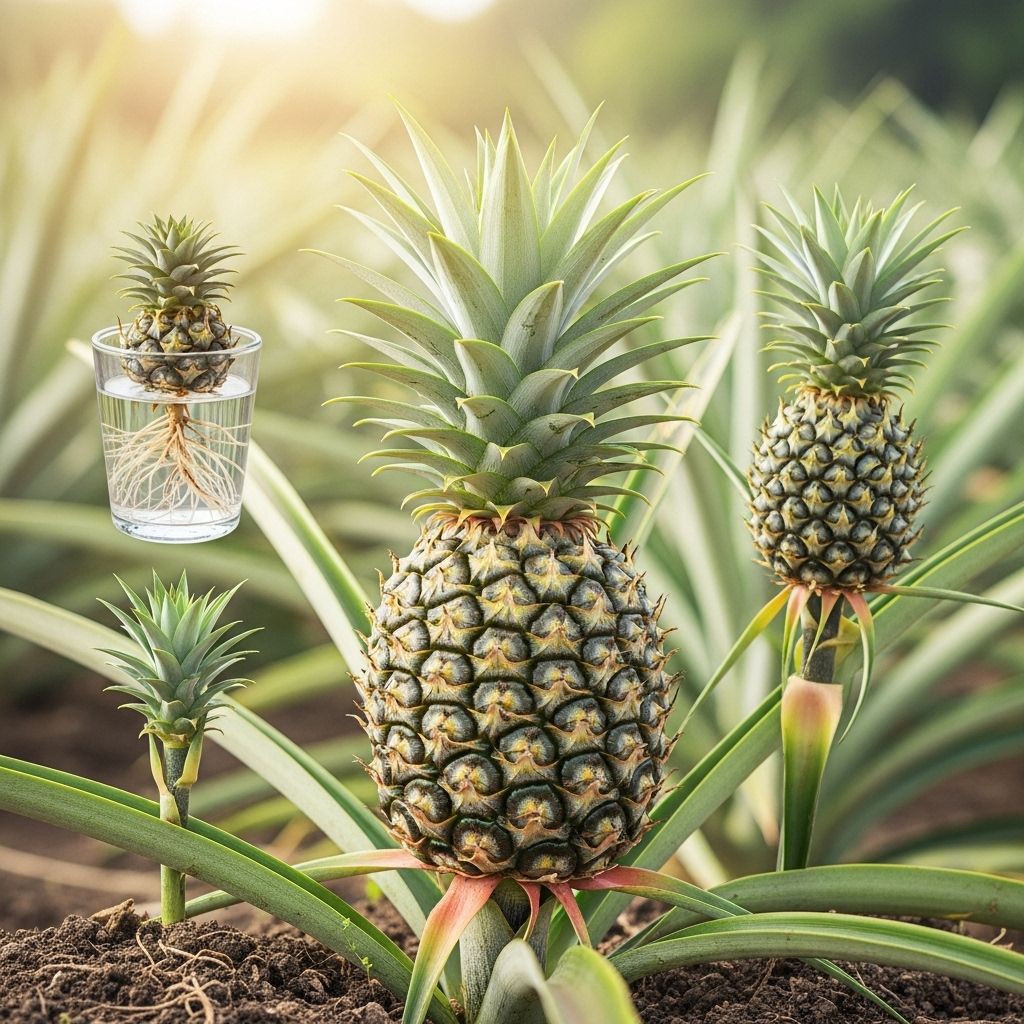
Growing your own pineapple may seem exotic or challenging, but with patience and the right technique, it’s achievable and rewarding. This comprehensive guide walks you through propagation methods, pineapple care, optimal growing conditions, and solutions for common problems. Whether you start from a grocery store pineapple top, a sucker, or a nursery plant, you’ll find all you need to cultivate this delicious tropical fruit at home.
About Pineapples: Basic Botanical Background
Pineapple plants (Ananas comosus) are perennial members of the bromeliad family. These tropical plants are famous for their tough, spiky leaves and their ability to produce one large fruit per cycle. Native to South America, pineapples grow as a low, rosette-type plant with a central stem. Under proper care, even home gardeners can produce juicy, sweet pineapples without a tropical climate.
- Family: Bromeliaceae
- Growth Habit: Short, stem-based, rosette-forming, with sword-like leaves
- Fruit Production: Typically one fruit per mature plant, with potential for sucker growth afterwards
Propagation: Starting Your Pineapple Plant
Pineapples can be started from several parts of the plant. Each method varies in speed and success rate.
1. Propagating from a Pineapple Top (Crown)
This is the most popular way for home gardeners to grow pineapples, especially using store-bought pineapples. The top, or crown, is the cluster of leaves that emerges from the fruit. With careful preparation, you can root and grow a new plant from it.
- Select a ripe, healthy pineapple with green, undamaged leaves.
- Cut off the fruit, leaving about an inch below the leaf cluster.
- Peel away small leaves at the base to expose 0.5 to 1 inch of stem; tiny root bumps may be visible.
- Let the crown dry for 1–2 days to reduce the risk of rot.
- Optional: Root in water or directly in soil. Rooting in water lets you observe root development, while direct planting is less likely to damage roots during transplant.
2. Propagating from Suckers (Slips)
Suckers, also called slips, are small shoots found between the leaves of mature pineapple plants. They can be cut or twisted off and planted directly. Suckers grow faster than crowns because they’re already partially developed and often retain some roots.
- Wait until the sucker is several inches long and has clear leaf growth.
- Use gloves, as leaves can be sharp.
- Gently detach from the main plant, taking care not to damage the roots or parent plant.
3. Using Ratoons or Pups
Ratoons (or pups) are shoots growing at the base of a mature pineapple. These are especially quick to establish because they share a root system with the parent. Like suckers, detach them carefully for replanting.
4. Growing from Seed
Though rare, pineapple seeds can be found embedded in the flesh near the rind. Growing from seed is possible, but it’s the slowest method (up to four years to fruit), and seed availability is sporadic.
- Extract seeds from ripe fruit, rinse, and dry them.
- Place seeds on a damp paper towel inside a sealable bag.
- Maintain warmth and humidity until germination, which may take weeks to months.
Growing Conditions and Potting Instructions
Pineapples are adaptable, but their tropical origin means certain environmental needs must be met for success. Here’s how to provide the perfect environment, whether in pots or garden beds.
Soil Requirements
- Light, loose, and well-draining soil is essential. Bromeliads dislike waterlogged conditions and shallow roots are prone to rot.
- Ideal pH: 4.5 – 6.5 (slightly acidic to neutral).
- Add sand, perlite, or bark to heavy soils for better drainage.
- A cactus or bromeliad potting mix works well for container-grown plants.
Container vs. Garden Bed
Pineapples adapt well to containers. Choose pots at least 3–5 gallons in size with good drainage holes. For garden beds, select a site with full sun and avoid low spots where water collects.
Light
- Full sun is best (6–8 hours per day).
- Indoors: Place near the brightest window or supplement with grow lights if necessary.
Temperature and Humidity
- Pineapples prefer warm temperatures—ideally 65–85°F (18–30°C).
- They tolerate short, cool spells but are not frost-hardy. Bring indoors or protect if frost is possible.
- They enjoy moderate humidity but adapt to drier indoor air with occasional misting.
Planting Your Pineapple Top, Sucker, or Ratoon
Follow these steps to successfully plant your chosen pineapple starter:
- Choose or prepare your container or garden bed. Ensure soil is prepared, loose, and well-draining.
- Plant your top, sucker, or ratoon so the exposed stem is just below the soil line. Firm gently but don’t bury leaves.
- Water lightly after planting. The rootless top or sucker should be kept moist but never soggy.
- Place in bright, indirect light until established, then transition to full sun over a week if outdoors.
Watering, Feeding, and Care
- Water: Allow the soil to dry slightly between waterings. Overwatering is the main killer of pineapple plants. In humid environments, water less frequently.
- Feeding: Use a balanced, slow-release fertilizer, diluted liquid fertilizer, or a bromeliad blend every 4–6 weeks during the growing season.
- Mulching: Use organic mulch to conserve moisture and suppress weeds, but keep away from the base of the plant.
- Cleaning: Occasionally remove old, dead leaves with gloved hands. This prevents pests and disease from hiding in decaying matter.
- Spacing: Leave at least 3–4 feet between plants in the ground to ensure proper airflow and large fruit development.
Growth Timeline: What to Expect
| Stage | Description | Approximate Time |
|---|---|---|
| Root and Establishment | Top/sucker forms roots, begins growing leaves | 1–3 months |
| Vegetative Growth | Active leaf growth, increased size | 12–18 months |
| Flower Formation | Central stalk emerges, small blue or purple flowers | 16–24 months |
| Fruit Development | Flowers fuse, forming a single fruit | Up to 6 months after flowering |
| Harvest | Fruit ripens, turns yellow/golden | 2–3 years from start (top); 1–2 years for suckers/ratoons |
Harvesting Your Pineapple
Pineapples are ready to harvest when the fruit develops a rich, golden color and emits a sweet aroma. Signs of ripeness include:
- Body color changes from green to golden-yellow at the base.
- Fragrant scent even before cutting.
- Leaf in the center may pull out easily (but not always a reliable indicator).
To harvest:
- Use a sharp, clean knife or pruners to cut the fruit stem a few inches below the fruit.
- Avoid twisting or yanking, as this may damage the plant or future suckers/ratoons.
Encouraging Pineapple Fruit Production
If your plant is mature (well over a year old) but not flowering or fruiting, you can encourage blooming with these tips:
- Expose to short periods of cool nighttime temperatures (down to 60°F / 16°C).
- Try ethylene gas inducement: Place a ripe apple near the base of your plant and cover loosely with a plastic bag for about a week. The ethylene gas helps trigger flowering in bromeliads.
- Ensure the plant receives maximum sunlight and is not root-bound.
Pests, Diseases, and Troubleshooting
Pineapples are fairly resilient, but a few issues may arise:
- Root Rot: Result of overwatering or poor drainage. Let soil dry out and avoid standing water.
- Mealybugs, Scales, Mites: Remove manually, rinse with water, or use insecticidal soap.
- Leaf Tip Browning: May indicate salt buildup, underwatering, or cold damage. Flush soil and avoid fertilizer buildup.
- Slow Growth: Usually due to insufficient light, cold temperatures, or nitrogen deficiency. Move to a sunnier spot and feed regularly during the growing season.
Pineapple Plant FAQs
Q: How long does it take for a pineapple plant to fruit?
A: Depending on the propagation method, it takes 2–3 years from a crown/top and 1–2 years from a sucker or pup, as these start with more energy reserves and may already have roots.
Q: Can pineapples be grown indoors?
A: Yes. Pineapples can thrive indoors if you provide bright direct sunlight or supplemental grow lights and maintain warm temperatures.
Q: Is it possible for one plant to grow multiple pineapples?
A: Each mature plant produces a single main fruit. However, after harvesting, the plant often produces suckers and ratoons (side shoots), which can each develop their own fruit, allowing for continuous production from subsequent generations.
Q: What is the best fertilizer for pineapples?
A: Use a balanced, slow-release fertilizer or a fertilizer formulated for bromeliads. During active growth, dilute liquid fertilizer every 4–6 weeks is beneficial. Avoid over-fertilizing, as salts can damage sensitive roots.
Q: My pineapple’s leaves are turning brown at the tips. Why?
A: Brown leaf tips can come from over- or under-watering, fertilizer burn, or exposure to cold drafts. Ensure proper watering, avoid excessive fertilizer, and keep away from cold windows or vents.
Q: Can pineapples grow from seeds?
A: Yes, though it’s rare to find seeds in store-bought pineapples and the process is slow—up to four years to fruit. Seeds can be germinated on damp paper towels and transplanted once sprouts form.
Tips for Success and Final Thoughts
- Patience is key. Pineapple growing requires a long horizon but is highly rewarding with homegrown, fresh fruit.
- Use gloves when handling mature leaves—they are sharp!
- After fruit harvest, keep the mother plant growing. It often produces more suckers or ratoons for future crops.
- Enjoy the tropical beauty—pineapples make attractive houseplants as well as productive food plants.
By following these steps and caring for your plant, you’ll be on your way to producing your very own pineapples at home. With the right environment, attentive care, and a bit of perseverance, anyone can enjoy the satisfaction of growing this delicious fruit—even without a tropical climate!
Similar Articles



Read full bio of Sneha Tete