How to Grow Safflower Plants in Your Garden
Maximize your garden’s potential by cultivating vibrant and versatile safflower plants with ease.
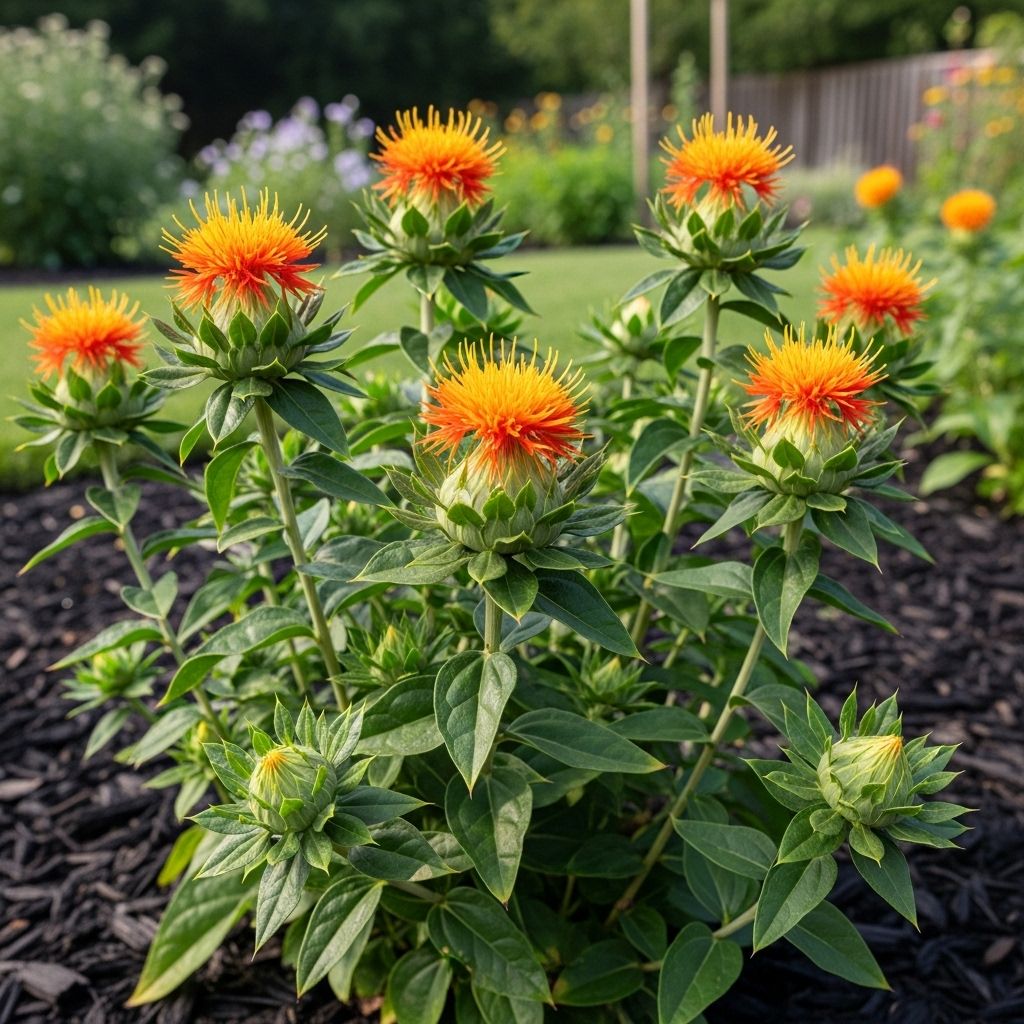
Safflower (Carthamus tinctorius) is a versatile annual plant appreciated for its vibrant blooms and valuable oil-bearing seeds. Grown for centuries, safflower suits both ornamental and commercial gardens, particularly in arid and semi-arid regions. This guide explores all aspects of safflower cultivation—from sowing seeds to harvesting heads—helping gardeners add beauty and function to their plots.
Safflower Information
Safflower is a thistle-like annual native to the Mediterranean. It features sturdy stems, spiny foliage, and globular flower heads in hues of yellow, orange, and sometimes red or white.
Most notably, safflower is cultivated for its seeds, which yield heart-healthy oil commonly used in cooking, cosmetics, and industrial applications. Besides oil production, the petals are prized as a dye and sometimes as a culinary substitute for saffron.
- Botanical Name: Carthamus tinctorius
- Growth Habit: Upright, branching stems reaching 12–36 inches (30–91 cm)
- Bloom Period: Mid to late summer
- Main Uses: Edible oil, natural dye, birdseed, ornamental plant
- Other Benefits: Drought-tolerance due to a deep taproot
Ideal Growing Conditions for Safflower
Safflower thrives in hot, sunny locations and is particularly well-suited to areas with dry summers.
Thanks to its penetrating taproot, the plant can extract water deep from the soil, making it resilient against drought. However, safflower does not tolerate wet, poorly drained soils.
- Sunlight: Full sun (at least 6–8 hours daily)
- Soil Type: Well-drained, light to medium-loamy soil preferred; tolerates sandy and coarse soils, but avoid heavy clay unless amended.
- Soil pH: Neutral to slightly alkaline (pH 6.0 – 7.8)
- Moisture: Requires only moderate moisture; drought-tolerant after establishment
- Spacing: 6–12 inches (15–30 cm) apart in rows, with rows separated by 12–24 inches (30–61 cm)
How to Plant Safflower
Planting safflower is straightforward, but timing and soil preparation are key. Here’s how to start:
- When to Plant: Sow seeds directly outdoors in early to late spring once the soil can be worked and danger of hard frost has passed. Safflower is somewhat frost-tolerant in the rosette stage.
- Indoor Planting: In cool regions, seeds may be started indoors 6–8 weeks before the last frost. However, direct sowing is preferred due to the plant’s sensitive taproot, which is easily disturbed by transplanting.
- Seed Depth: Plant seeds 0.5 inch (1.3 cm) deep. Cover loosely with soil.
- Spacing: Place seeds 6–12 inches (15–30 cm) apart. For larger planting schemes or commercial cultivation, space rows 12–24 inches (30–61 cm) apart.
- Germination: Seeds typically sprout in 7–14 days. Optimal soil temperature for germination is 60–70°F (16–21°C).
Soil Preparation Tips
- Choose a site with loose, well-draining soil. Work the soil to a fine tilth, removing weeds and debris.
- If your soil tends to retain water or is clay-heavy, amend it by mixing in sand or fine gravel to improve drainage.
- In dryland farming, avoid planting where water may accumulate after rain.
Caring for Safflower Plants
Once established, safflower is low-maintenance. Here’s how to ensure healthy growth:
- Watering: Water consistently during germination and early growth. Mature plants require only minimal supplemental watering, unless grown in containers or experiencing prolonged drought.
- Fertilization: Safflower is not a heavy feeder. If desired, incorporate a well-balanced, all-purpose fertilizer at planting. Additional feeding is rarely needed.
- Weed Control: Keep beds weed-free, especially until seedlings are established. Mulching is not generally recommended, as it can keep roots too wet.
- Pest Management: Young safflower plants may be vulnerable to slugs and snails. Delay thinning and monitor closely; physical barriers or organic slug baits may improve survival.
- Support: Generally unnecessary, as mature safflower develops sturdy stems.
Safflower Growth and Life Cycle
Safflower begins in a rosette stage, initially growing close to the ground as it develops its deep taproot. After this stage, the stem elongates and branches, leading to the formation of flower heads.
- Germination: 1–2 weeks after sowing
- Rosette Stage: 3–4 weeks, focused on root development
- Stem Growth: Initiates as temperatures rise and days lengthen
- Flowering: Occurs mid- to late summer, typically 12–16 weeks from sowing. Blooms last about 2–3 weeks.
- Seed Maturation and Harvest: 4–5 months from sowing, heads dry out and become brown
Harvesting Safflower
Safflower is ready for harvest about 16–20 weeks after sowing, when flower heads turn brown and dry and the seeds rattle within the heads.
- Cut flower heads on a dry day using gloves (the plants are thorny).
- Allow heads to cure in a well-ventilated, dry place for 1–2 weeks.
- Once fully dried, thresh by breaking the heads apart and removing the seeds by hand or with a screen.
- Clean and dry seeds thoroughly before storage.
- Store seeds in a cool, dry container for future planting or processing for oil extraction.
Companion Planting with Safflower
Safflower fits nicely in cottage gardens or mixed borders, serving as a colorful focal point or a companion to other drought-tolerant species. Suggested companions:
- Musk thistle (Carduus nutans)
- Chicory (Cichorium intybus)
- Scotch thistle (Onopordum acanthium)
- Viper’s tongue (Echium vulgare)
Safflower as a Crop Plant
Safflower is often grown in crop rotations, especially between stands of winter wheat. Its long taproot accesses residual water and nutrients deep within the soil, making it an effective dryland crop. However, due to its aggressive root system, soil water supplies may take years to recover after a safflower crop, and the lack of post-harvest residue can increase susceptibility to erosion and some diseases.
- Economic Value: High demand as a heart-healthy oil crop
- Crop Rotation Notice: Fields often require 4–6 years of rest following safflower to allow full recovery of soil moisture
- Environmental Caveats: Minimal crop residue left, which can heighten erosion risk in some climates
Uses of Safflower
The unique combination of beauty and utility makes safflower valuable both ornamentally and commercially:
- Oil Extraction: Seeds are pressed for a mild, heart-healthy oil used in cooking and salad dressings.
- Dye: Petals yield a yellow or red dye, historically used for textiles and cosmetics.
- Culinary Uses: Petals are used as a food coloring or a natural substitute for saffron.
- Birdseed: Safflower seeds are favored in wild bird mixes, attracting cardinals and other garden visitors.
Potential Problems and Solutions
- Waterlogging: Avoid poorly drained soils; ensure beds are raised or amended.
- Pests: Slugs and snails can damage seedlings; use organic controls and delay thinning to when plants are stronger.
- Diseases: Safflower is susceptible to some soil-borne fungi and wilts; crop rotation and field rest will reduce incidence.
- Thorns: Wear gloves when handling mature plants and during harvesting.
Growing Safflower in Containers
Safflower is not ideally suited to container culture due to its long taproot, but if attempted, choose a very deep pot and a well-draining, sandy potting mix. Ensure full sun and don’t overwater. Gardeners in cooler climates may start seeds in containers for transplanting, but use biodegradable pots to avoid root disturbance.
Propagation and Seed Saving
- Harvest mature, dry seed heads in autumn.
- Remove seeds and allow to air-dry completely.
- Store in a cool, dry place for up to three years.
- Safflower seeds can survive winter in the ground in some climates (down to -10°C / 14°F) and germinate the following season.
Frequently Asked Questions (FAQs)
Q: What is the best time to plant safflower in the garden?
A: Directly sow safflower seeds from early to late spring when the soil is workable and all danger of severe frost has passed. In mild climates, you may also sow in autumn.
Q: Can safflower grow in poor or dry soils?
A: Yes, safflower is highly adaptable and especially suited to poor, dry, or sandy soils, provided drainage is good. Its deep taproot allows it to access subsoil moisture unavailable to many other crops.
Q: Does safflower need much watering?
A: Safflower requires regular moisture to establish but is very drought-tolerant once mature. Overwatering or waterlogged soil can cause root rot.
Q: How long does it take for safflower to bloom and set seed?
A: Safflower typically blooms around 12–16 weeks from planting, with seed heads maturing for harvest 16–20 weeks after sowing.
Q: Are safflower plants thorny?
A: Yes, mature safflower plants have spiny leaves and bracts. Wear gloves during care and harvesting to avoid pricks.
Q: Can I grow safflower as an ornamental plant?
A: Absolutely! The bold, colorful blooms add visual interest to mixed or cottage garden borders, and the seed heads offer autumn texture. It can also be cut for dried arrangements.
Conclusion
Safflower is an exceptionally tough, striking, and rewarding plant for the gardener seeking both color and usefulness. With minimal input, you can enjoy heart-healthy seeds, natural dyes, and a vibrant floral display. Whether planted for beauty, utility, or as part of a larger crop rotation, safflower makes a distinctive and practical addition to any garden.
Similar Articles


Read full bio of Sneha Tete