How to Make Water Kefir: An Easy Guide to Brewing Probiotic Drinks
Master simple fermentation at home with water kefir—learn to brew, flavor, and store this probiotic-rich, fizzy drink for your gut health.
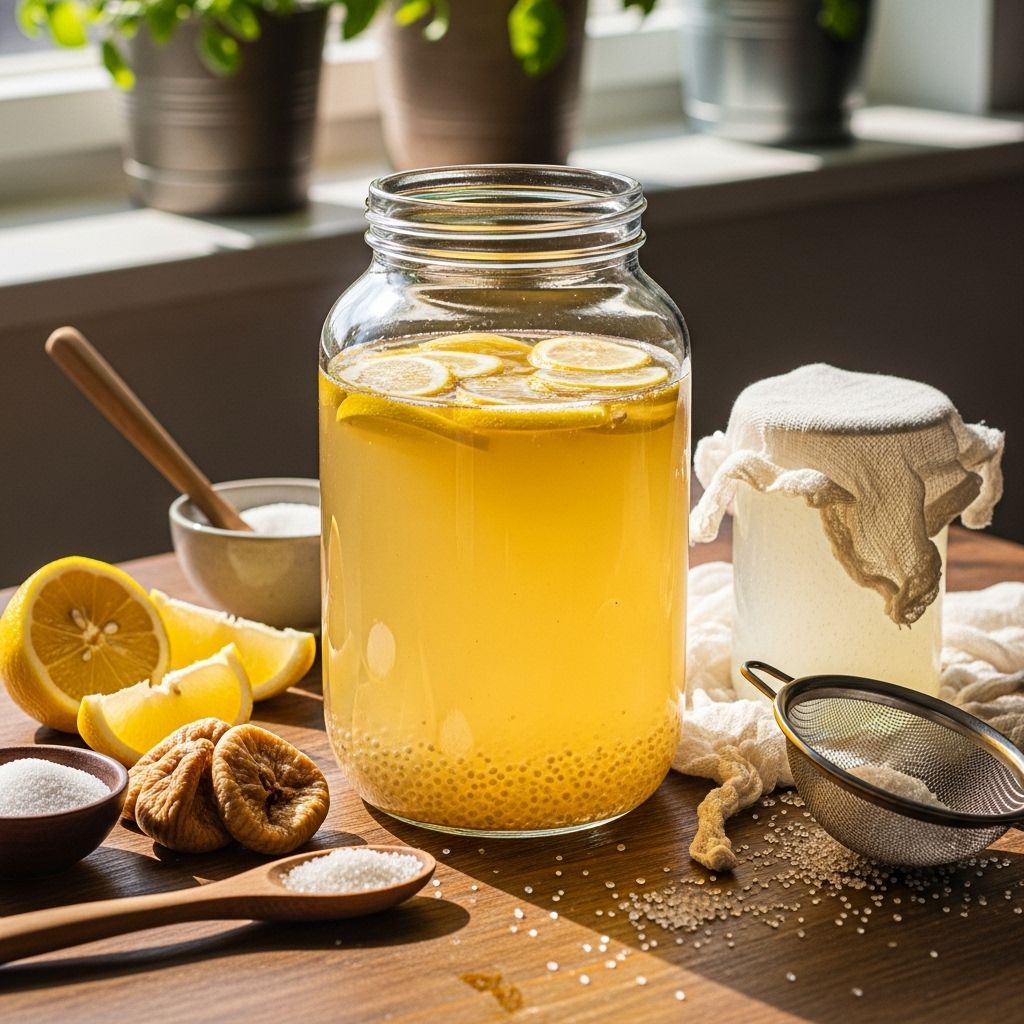
How to Make Water Kefir: A Complete Home Fermentation Guide
Water kefir is a lightly fizzy, fermented drink packed with probiotics. Simple to make and delightfully customizable, water kefir offers a homemade, gut-friendly alternative to sugary sodas and commercial kombucha. This guide will take you through every step, from activating your grains to bottling your finished beverage, and will answer common questions for both beginners and seasoned fermenters alike.
What Is Water Kefir?
Water kefir is a naturally effervescent beverage created through the fermentation of sugar water with water kefir grains—a symbiotic matrix of bacteria and yeast (often abbreviated as WKG). Unlike milk kefir, it is dairy-free, appealing to vegans and those with lactose intolerance. The process results in a probiotic-rich, gently sweet-tart drink that can be enjoyed plain or flavored with fruits and herbs.
Why Make Water Kefir at Home?
- Gut Health: Water kefir is teeming with beneficial bacteria and yeasts, supporting the balance of the intestinal flora.
- Customizable: Add fruits, herbs, or juices for unique flavors.
- Cost-Effective: Homemade batches are far cheaper than buying commercial probiotics or kombucha drinks.
- Quick Fermentation: Water kefir is ready in as little as 24–48 hours, much faster than other fermented drinks.
- Naturally Carbonated: Creates a fizz similar to soda without artificial ingredients.
Equipment You’ll Need
- Glass jar (1–2 quarts or liters)
- Non-metal stirring utensil (wood or plastic)
- Fine mesh strainer or cheesecloth (avoid metal for straining grains)
- Breathable cloth or paper towel and a rubber band
- Funnel (for bottling)
- Pressure-resistant glass bottles or jars with airtight lids
Key Ingredients
- Water kefir grains (active or dehydrated)
- Sugar: White, organic cane, turbinado, or unrefined sugars; avoid honey or artificial sweeteners
- Chlorine-free water (filtered or spring water is best)
- Dried fruit (such as fig or dates) (optional, aids fermentation and flavor)
- Lemon slices or juice (optional, adds brightness and nutrients)
- Flavorings: Fresh herbs, fruit juices, ginger, spices (for secondary fermentation)
Sample Recipe Quantities
| Ingredient | Amount |
|---|---|
| Water kefir grains (active) | 3–5 tablespoons |
| Sugar | 1/4 to 2/3 cup (per quart or liter water) |
| Chlorine-free water | 4 cups (1 quart / 1 liter) |
| Dried fruit | 1–2 figs or 2–3 dates (optional) |
| Lemon juice/slices | 1–2 slices or 2 tbsp juice (optional) |
Step 1: Activating Dehydrated Water Kefir Grains
If your water kefir grains arrive dehydrated, they must be reactivated before you start brewing healthy water kefir. This step is crucial for a successful fermentation process.
- Warm 3–4 cups of chlorine-free water to room temperature (68°F–85°F / 20°C–29°C).
- Dissolve 1/4 cup organic cane sugar in the water, ensuring it’s fully dissolved.
- Pour the solution into a clean glass jar.
- Add your dehydrated water kefir grains to the jar.
- Cover with a breathable cloth and secure with a rubber band.
- Let sit at a warm, draft-free spot (68°F–85°F) for 3–4 days.
- After 3–4 days, grains should look plump and translucent.
- Strain and rinse grains with cool, filtered water. Discard the sugar water.
- Your grains are now ready to brew their first batch of water kefir.
Step 2: Preparing the Sugar Water Base
Water kefir grains need a nutritious environment to thrive. Sugar provides the primary food, but natural minerals from slightly unrefined sugars or a slice of dried fruit enhance fermentation.
- In a clean glass jar, combine 1/4 to 2/3 cup sugar (use organic cane, raw, or turbinado) with just-boiled water (about 1 cup), swirl to dissolve completely.
- Add the rest of the filtered, room-temperature water until you reach the desired volume (1–2 quarts).
- Once the solution is at room temperature, add the kefir grains, dried fruit, and lemon slice/juice (if using).
- Stir gently with a non-metal utensil.
- Cover the jar with the breathable cloth and secure.
Step 3: Primary Fermentation
The magic happens in this step: beneficial microbes convert the sugar into acids, a small amount of alcohol, and carbon dioxide, creating that delicious natural fizz, tang, and probiotic profile.
- Allow the jar to ferment at room temperature (68°F–78°F) for 24 to 48 hours.
- Taste after 24 hours. If it’s too sweet, ferment longer; for a more tart and tangy flavor, 48 hours is often ideal.
- If included, the dried fig may float to the top when the fermentation is done.
- Never ferment for more than 72 hours to avoid stressing the grains and diminishing the finished drink’s flavor.
Step 4: Strain and Reserve
- Pour fermented liquid through a non-metal strainer or cheesecloth into a separate container to remove grains, fruit, and lemon bits.
- Rinse the grains gently under filtered water and reserve them for your next batch.
- Discard used fruit or compost it. The strained liquid is your basic unflavored water kefir, ready to drink or further enhance with secondary fermentation.
Step 5: Optional Second Fermentation & Flavoring
- Pour strained water kefir into pressure-resistant glass bottles, leaving 1–2 inches headspace.
- Add your flavorings—fresh fruit pieces, juices, ginger, herbs, or spices.
- Seal bottles tightly and allow them to ferment at room temperature for another 12–48 hours for added fizz and complexity.
- Important: Open bottles daily to release excess pressure (known as ‘burping’) to avoid bottle explosions.
- Taste occasionally; when you reach your desired flavor and fizz, refrigerate bottles to halt fermentation and preserve carbonation.
Popular Water Kefir Flavor Combinations
- Ginger-lemon
- Mixed berries (fresh or frozen)
- Orange and mint
- Pineapple and basil
- Apple and cinnamon
- Mango and turmeric
Storage and Shelf Life
- Water kefir is best consumed within 7 days if stored in the fridge for maximum probiotic content and best flavor.
- Over time, the flavor develops: sweetness decreases, tang and carbonation increase, and yeast presence becomes more pronounced.
- Bottled water kefir may keep for up to a month refrigerated, but always open bottles with care to avoid overflow.
- If you want to pause brewing, store your grains in a sugar-water solution in the fridge for up to 2–3 weeks, refreshing with fresh sugar water weekly.
Troubleshooting and Tips
- Chlorine or chloramine in water can harm the grains—always use filtered or dechlorinated water.
- Grains that look slimy, smell strongly of yeast, or don’t fizz after proper fermentation may need mineral supplementation (try adding a few raisins, a drop of blackstrap molasses, or a sterilized eggshell).
- Too much or too little sugar can affect fermentation speed. Adjust according to taste and grain performance.
- Never let grains touch metal for extended periods—brief straining is fine, but avoid prolonged contact.
- If not fermenting regularly, periodically feed stored grains to maintain health and activity.
Frequently Asked Questions (FAQs)
Q: What are water kefir grains, and are they reusable?
A: Water kefir grains are living colonies of bacteria and yeast (similar in function to SCOBY for kombucha). They’re completely reusable and will multiply with regular brewing, allowing you to share or store extras.
Q: Can I use tap water?
A: Tap water may contain chlorine or chloramines, which can inhibit or kill kefir grains. Always dechlorinate, filter your water, or use spring water for best results.
Q: Is water kefir alcoholic?
A: Water kefir produces a negligible amount of natural alcohol during fermentation (typically less than 0.75%). This amount can rise slightly with extended fermentation or higher sugar content, but it remains a non-alcoholic beverage by legal standards.
Q: How do I know when it’s ready?
A: Taste your brew. When it’s gently tart, less sweet, and lightly fizzy, it’s ready! Fermentation times vary based on room temperature and sugar type.
Q: What can I do with extra grains?
A: Excess grains can be dried and stored, shared with friends, composted, or even added to smoothies for extra probiotics.
Q: Can I flavor water kefir with herbal or coconut water?
A: Yes! Once your grains are strong, try coconut water kefir or flavor with mint, lavender, sage, or lemon during secondary fermentation. Always return grains to plain sugar water between flavored batches.
Q: Why isn’t my water kefir fizzy?
A: Carbonation depends on sugar content, temperature, and airtight bottling during the second fermentation. Experiment with time and flavoring ingredients, and always refrigerate at the optimal moment to lock in bubbles.
Final Thoughts: The Joy of Homemade Water Kefir
Making water kefir at home is an empowering step toward healthy, mindful living. With just a few basic supplies and some patience, you can brew delicious, probiotic-packed beverages customized to your taste. Experiment with various sugars, dried fruits, and fresh flavorings to discover your own signature water kefir blend. As you cultivate your grains batch after batch, you’ll unlock a world of fizzy, health-supportive drinks for yourself and those you share them with.
Similar Articles




Read full bio of medha deb