How to Grow and Care for Jasmine Indoors: Complete Guide
Unlock the secrets of growing lush, fragrant jasmine indoors with expert care, practical tips, and solutions for common challenges.
How to Grow and Care for Jasmine Indoors
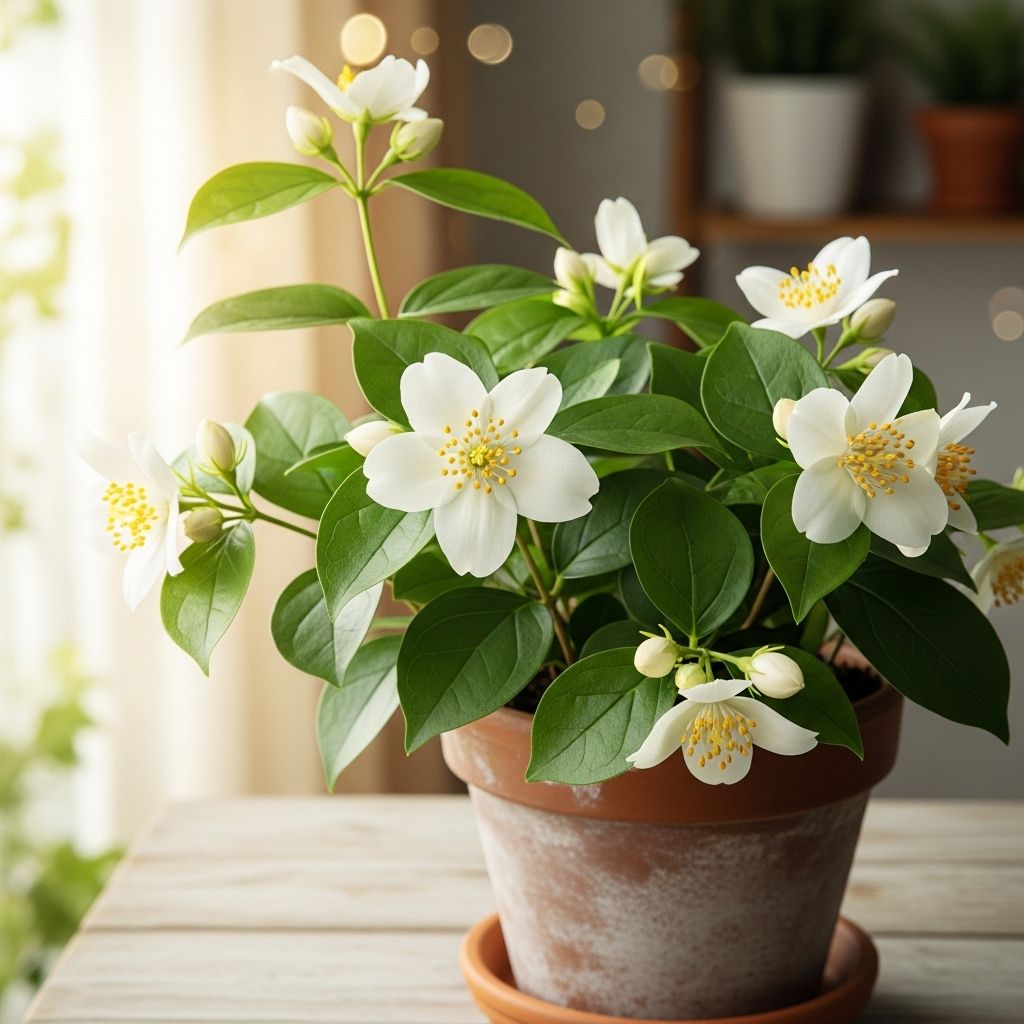
Few indoor plants match the allure of jasmine (Jasminum polyanthum) with its lush greenery and delightfully sweet, romantic fragrance. Adapting this vining plant for your home can be an immensely rewarding journey—if you give it the right care. This comprehensive guide walks you through all key aspects: from species selection and propagation, to precise maintenance, flowering, and troubleshooting common issues indoors.
Table of Contents
- About Indoor Jasmine Plants
- Choosing the Right Jasmine
- How to Start Jasmine Indoors
- Selecting the Best Location & Light
- Watering and Feeding Jasmine
- Temperature & Humidity for Success
- Pruning, Training, and Trellising
- Tips for Getting Jasmine to Flower Indoors
- Propagating Jasmine at Home
- Common Problems and Solutions
- Frequently Asked Questions
About Indoor Jasmine Plants
Jasminum polyanthum, also known as Pink Jasmine or Winter Jasmine, is renowned for its intense, sweet aroma and attractive dark green foliage. Originating from southwest China, this vining plant blooms profusely—from clusters of pink-tipped buds emerge starry, pure white flowers, typically in mid to late winter .
- Flowers are highly fragrant and can fill entire rooms with scent.
- Typically climbs or trails, requiring some type of support to thrive indoors.
- Blooms tend to appear in response to cooler temperatures and shortening days.
Introduced in the early 20th century to the West, Jasmine became popular for its intoxicating fragrance, rapid growth, and striking winter blooms .
Choosing the Right Jasmine for Indoors
While several Jasmine species exist, not all adapt well to life indoors. Among the most suitable:
- Jasminum polyanthum (Pink Jasmine): Famous for robust flowering and vining habit.
- Jasminum sambac (Arabian Jasmine): Compact and also highly fragrant; often grown for tea and perfumery.
- Jasminum officinale (Common Jasmine): Less typical indoors but can acclimate with proper support and strong light.
For beginners, Pink Jasmine is particularly forgiving and rewarding indoors .
How to Start Jasmine Indoors
From Cuttings or Nursery Plants
Most indoor gardeners obtain Jasmine as a vigorous nursery specimen, sometimes trained on a small trellis or ring topiary. However, propagation from cuttings is simple and economical:
- Take semi-woody cuttings about 4-6 inches long from a healthy plant.
- Remove the lower leaves and, if desired, dip the cut end in rooting hormone (optional).
- Pot the cutting in moist seed-starting mix in a small container.
- Keep in bright, indirect light and maintain evenly moist soil. Roots typically develop in 4-8 weeks.
Once established, transplant to a larger container.
Selecting the Best Location and Light for Jasmine Indoors
Jasmine prefers a cool, bright location with abundant indirect sunlight indoors :
- Ideal room temperature: 50–60°F (10–16°C) during the day, slightly cooler at night.
- Place near an east or west-facing window for maximum bright, filtered light. South windows should be protected by sheer curtains to avoid scorching.
- In winter, avoid exposure to radiator or heating vents causing dry, hot drafts.
- If natural light is insufficient, supplement with a grow light for 12–16 hours daily.
Proper light ensures healthy growth and abundant winter blooms.
Watering and Feeding Jasmine
Watering Essentials
- Water thoroughly when the top half inch of soil dries out. Jasmine dislikes soggy or waterlogged soil .
- Use a free-draining potting mix and pots with drainage holes.
- Reduce watering in winter when plant is dormant; increase gradually as growth resumes in spring.
Fertilizer Routine
- Feed Jasmine every 2–4 weeks during the active growing season (spring to early fall).
- Use a balanced, water-soluble fertilizer at half the recommended rate. Switch to a bloom-boosting fertilizer (higher in phosphorus) prior to and during flowering.
- Do not fertilize during late fall and winter when the plant is resting .
Optimizing Temperature and Humidity
Jasmine’s cultural requirements may be simple but are exacting:
- During flower formation, nighttime temperatures between 40–50°F (4–10°C) encourage bud set .
- Keep away from cold drafts and avoid exposure to frost: move indoors before the first autumn chill.
- After blooming, allow warmer temperatures and full sun to promote new growth.
Humidity is crucial for healthy foliage and flower buds:
- Raise humidity by placing the pot on a tray filled with pebbles and water, ensuring the pot sits above the water level.
- Run a humidifier or mist the plant regularly, especially in dry, heated rooms.
- Avoid letting leaves stay consistently wet to prevent fungal issues.
Pruning, Training, and Trellising Jasmine Indoors
Indoors, Jasmine can be trained either as a bush or encouraged to climb with support :
- Use small trellises, hoop rings, or canes to guide vining stems.
- Place supports in the pot at planting time to avoid root disturbance later.
- Prune immediately after flowering to shape the plant and maintain size. Cut back overgrown, leggy stems to encourage bushiness.
- Cease major pruning by August 1 to allow bud formation for the winter bloom.
- Remove faded flowers and any yellowing leaves regularly for tidiness.
Pruning not only controls growth but amplifies flowering by redirecting energy.
Tips for Getting Jasmine to Flower Indoors
Achieving consistent, delightful blooms indoors requires replicating Jasmine’s natural seasonal cues :
- Allow the plant to experience at least 4–5 weeks of nighttime temperatures between 40–50°F in autumn.
- Avoid artificial light at night during bud formation—Jasmine forms buds in response to shorter days.
- Keep the plant in bright, filtered daylight until the buds swell and bloom—often from late January to early March.
- Do not repot or heavily prune while flower buds are forming; disturbance can hinder blooming.
Propagating Jasmine at Home
Jasmine can be easily propagated for indoor enjoyment:
- Stem Cuttings: Take 4–6-inch semi-woody cuttings with a few leaves remaining. Optionally, use rooting hormone.
- Place in moist, sterile seed-starting medium in a small pot.
- Cover loosely with plastic to maintain humidity. Ventilate periodically to prevent mold.
- When roots appear (in about 1–2 months), gradually acclimatize to normal indoor conditions before repotting.
Root division and air layering are also possible, though cuttings are most common for home growers .
Common Problems and Solutions for Indoor Jasmine
| Problem | Symptoms | Solution |
|---|---|---|
| Lack of Blooms | Few or no flowers in winter | Ensure cool autumn temps, bright light, and no artificial light at night. Avoid high-nitrogen fertilizer late in the year. |
| Yellowing or Dropping Leaves | Leaves turn yellow or drop off | Check watering—avoid overwatering/soggy soil. Increase humidity and ensure adequate light. |
| Pests (Aphids, Whiteflies, Caterpillars) | Leaf curling, sticky residue, visible insects | Wipe leaves, use insecticidal soap or neem oil spray as needed. Remove and destroy affected plant parts. |
| Fungal Spots or Mold | Dull, spotted, or white-fuzzy patches on leaves/stems | Improve air circulation, avoid wetting foliage, and trim infected areas. Treat with organic fungicide if chronic. |
Frequently Asked Questions (FAQs)
Q: Can Jasmine be grown in low light?
A: Jasmine prefers bright, indirect light. Low-light conditions lead to poor growth and little or no blooming.
Q: How do I make Jasmine bushier indoors?
A: Prune regularly after flowering, pinching back leggy stems, and provide bright light to encourage full, bushy growth.
Q: How often should I water indoor Jasmine?
A: Water when the top half inch of soil is dry. Avoid letting the potting mix stay soggy. Reduce watering during dormancy in winter.
Q: Does Jasmine need to go outside for summer?
A: It’s beneficial, though not essential. Gradually acclimate the plant to outdoor conditions after frost and provide a partly sunny spot. This boosts growth and flowering potential.
Q: What kind of pots and soil does indoor Jasmine need?
A: Use a pot with drainage holes and a loose, fertile, well-draining potting mix. Amend with sand or perlite if necessary to improve drainage.
Quick Jasmine Indoor Care Reference
- Light: Bright, indirect sun—east or west window.
- Water: When top 1/2 inch of soil is dry—never let soil remain soggy.
- Humidity: High; use pebble trays or humidifiers if room is dry.
- Temperature: 50–60°F for bud set; warmer after bloom finishes. Avoid freezing.
- Fertilizer: Every 2–4 weeks in spring/summer, none during fall/winter dormancy.
- Pruning: Immediately after flowering, stop by August for bud set.
- Pests: Watch for aphids, whiteflies, caterpillars. Treat promptly.
Summary
With its intoxicating fragrance and elegant appearance, Jasmine is a favorite for indoor gardeners eager to brighten winter months. The secrets of success: provide bright light, cool night temperatures in autumn, consistent moisture but not soggy soil, and pruning at the right moment. Use supports or trellises for vining, and supplement humidity if your home is dry. If you replicate Jasmine’s natural rhythm and avoid common pitfalls, you will enjoy beautiful blooms and lush foliage for years to come.
Similar Articles


Read full bio of medha deb