10 Reasons Your Monstera Plant Has Brown Spots
Identify, Prevent, and Treat Brown Spots on Your Monstera for Lush, Healthy Foliage.
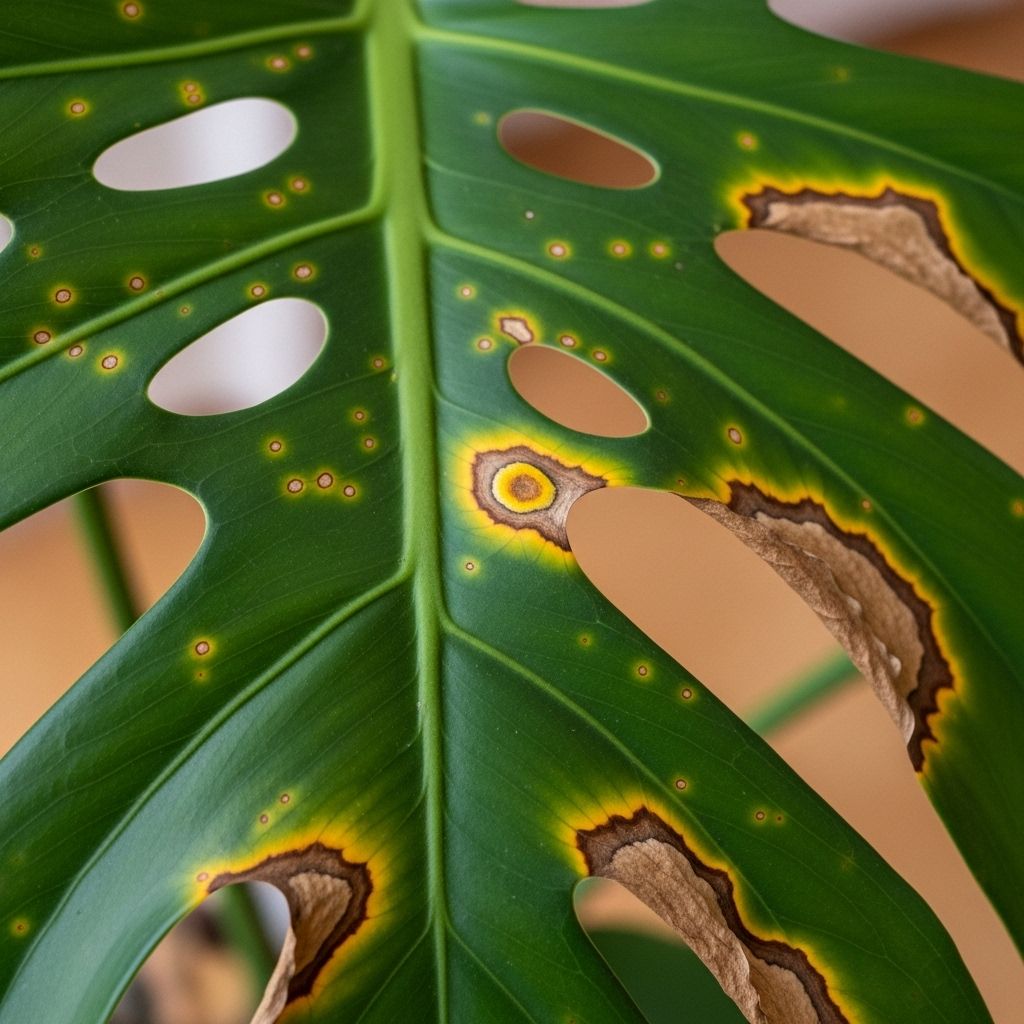
Monsteras (Monstera deliciosa and related species) are admired for their striking leaves and easy-going nature, making them favorite houseplants worldwide. But when brown spots appear on Monstera leaves, it can be a sign of underlying care or environmental problems. Understanding these causes and learning how to fix each issue will help you restore your plant’s signature vibrant foliage.
Contents
- Too Much Sun
- Overwatering
- Tap Water Quality
- Too Much Fertilizer
- Lack of Humidity
- Leaf Spot Disease
- Rust Fungus
- Not Enough Light
- Pests
- Natural Aging
- Frequently Asked Questions
Too Much Sun
Monsteras evolved in tropical rainforests, climbing trees and basking in filtered sunlight under the canopy. When placed indoors, they thrive best in bright, indirect light. Exposing your Monstera to direct sunlight can easily lead to sunburn.
- Brown spots or patches will appear mainly on the areas of the leaves facing the light source.
- Sunburnt portions may also look pale or ghostly white, in addition to brown.
- Leaf edges may become crispy.
- The plant may start turning its leaves away from the light to protect itself.
How to Fix: Move the plant to a spot where it receives bright, indirect light (such as near, but not in, an east or north-facing window). Prune any leaves with extensive sunburn to stimulate healthy regrowth.
Overwatering
Monstera roots need both moisture and air circulation. Constantly soggy soil restricts air flow, fostering fungal growth and root rot, which in turn cause brown spots on the leaves.
- Browning generally starts as dark, soft spots on the leaf surface and stems.
- Severe root rot can cause blackening and gradual wilting of leaves.
- Soil may smell musty or sour.
Prevention and Treatment:
- Water only when the top 1–2 inches of soil feel dry to the touch.
- Ensure pots have adequate drainage holes. Use a chunky, well-draining soil mix.
- If root rot is suspected, repot the plant into fresh soil, trim away mushy or black roots, and wash the pot thoroughly.
- Avoid misting leaves if humidity is already high, and always water at the base.
Tap Water Quality
Monstera roots can be sensitive to chemicals often present in tap water such as chlorine, chloramine, and fluoride. Over time, chemical buildup in the soil can cause root burn and, subsequently, brown and crispy patches on the leaves.
- Leaves may develop large brown or yellowing patches, often at the tips or edges.
- Browning may persist or worsen with repeated watering using unfiltered tap water.
How to Fix:
- Flush the soil thoroughly with distilled or filtered water to remove chemical buildup.
- Switch to using rainwater, filtered, or left-out tap water (let it sit exposed for 24 hours to dissipate chlorine) for future watering.
- Prune any severely affected leaves.
Too Much Fertilizer
While Monsteras benefit from regular feeding during the growing season, over-fertilization is a common cause of brown spots and leaf burn. Excess fertilizer salts accumulate and damage roots, which affects water and nutrient uptake and leads to foliage problems.
- Brown spots may appear anywhere on the leaf but are often accompanied by yellowing edges or black patches.
- Evidence of a white, salty crust on the soil surface can indicate fertilizer buildup.
- Stunted or misshapen new growth is common.
What to Do:
- Flush the soil by slowly watering until excess runs out the bottom, leaching salts away.
- Hold off on fertilizing for at least a month while the plant recovers.
- Repot if chemical damage is severe and roots appear burned or mushy.
Lack of Humidity
Monsteras are native to humid forests but often experience dry indoor air. Insufficient humidity dries out their leaves, resulting in brown spots that start at the leaf tips or edges. Dryness can be especially pronounced during winter or in air-conditioned/heated spaces.
- Papery, brown, or crunchy tips and edges on leaves.
- In severe cases, browning can run down the entire edge, and the leaf may wilt or curl.
- Leaves may feel dry to the touch and lose their characteristic sheen.
How to Fix:
- Mist leaves regularly using a fine spray bottle (aiming for the morning to avoid fungal problems at night).
- Place the plant’s pot on a tray filled with pebbles and water (the pot sits above, not in, the water) to increase humidity around the foliage.
- Consider using a humidifier for larger spaces or grouping humidity-loving plants together.
Leaf Spot Disease
Fungal or bacterial leaf spot diseases can manifest as brown or black spots—often with a ring or halo. These pathogens thrive in warm, humid environments and can spread quickly across leaves, especially if water sits on them overnight.
- Small, round brown or black spots that grow or merge over time.
- A yellow halo or ring might surround spots on some leaves.
- Spots may appear water-soaked or slightly raised.
Prevention and Solutions:
- Avoid getting leaves wet during watering.
- Remove and dispose of affected leaves using clean scissors.
- Increase airflow around the plant and avoid overcrowding.
- In severe cases, apply a suitable fungicide following instructions.
Rust Fungus
Rust fungus (and similar fungal diseases) produces small brown, orange, or even rust-colored spots typically on the leaf underside but can appear on top as well. Overwatering and insufficient air movement heighten susceptibility.
- Spots are often powdery or spore-covered if gently rubbed.
- Leaves may become deformed or yellowed.
How to Address Rust:
- Prune away affected foliage promptly, cleaning pruning shears with alcohol between cuts.
- Improve ventilation by spacing plants apart and using a fan if necessary.
- Reduce frequency and volume of watering until soil is appropriately moist, not wet.
- If problems persist, use a mild fungicide recommended for houseplants.
Not Enough Light
While excessive sunlight burns Monstera leaves, insufficient light can also lead to browning. Without adequate sunlight, photosynthesis drops, causing stress and gradual leaf deterioration.
- Browning begins at leaf tips or edges, progressing to yellowing or entire leaf loss.
- New leaves may be smaller, paler, or miss fenestrations (windows/holes).
Solutions:
- Move the plant to a spot with brighter, indirect sunlight.
- Use a grow light if natural light isn’t sufficient, especially during winter.
Pests
Common household pests such as spider mites, thrips, and scale insects can damage Monstera leaves, causing brown or yellow spots and patches. Their feeding damages plant tissue, and some pests excrete sticky honeydew that encourages fungal infections.
- Small pale or brown dots may appear, sometimes accompanied by webbing or sticky residue.
- Heavily infested leaves may show general yellowing or distortion.
How to Treat:
- Regularly inspect both sides of leaves for pests and wipe them with a damp cloth or swab dipped in insecticidal soap.
- Spray with neem oil or insecticidal soap as a gentle treatment.
- Isolate the plant to prevent spreading if infestation is extensive.
Natural Aging
Not every brown spot is a cause for alarm. As Monstera plants age, older leaves naturally yellow and brown before dropping off to make way for new growth.
- Browning occurs at the tips or edges of mature, lower leaves.
- Leaf drop typically happens after yellowing and browning.
- No need to panic if only one or two of the oldest leaves are affected.
What to Do:
- Simply prune old leaves with clean, sharp shears.
- Focus on ongoing plant care for new, healthy foliage.
Troubleshooting Table: Monstera Brown Spots
| Cause | Symptoms | Solution |
|---|---|---|
| Too Much Sun | Pale, crispy brown patches on sun-exposed leaves | Move to indirect light, prune affected leaves |
| Overwatering/Root Rot | Dark, mushy brown spots; wilting | Let soil dry between waterings; repot if root rot present |
| Tap Water Chemicals | Brown leaf tips/edges, crispy patches | Switch to filtered/distilled water; flush soil |
| Over-fertilization | Random brown/black spots, white crust on soil | Flush soil, withhold fertilizer, repot if severe |
| Lack of Humidity | Papery brown tips/edges, dry leaf texture | Increase humidity, mist leaves, use humidifier |
| Leaf Spot (Disease) | Small brown/black spots with halos | Remove affected leaves, increase airflow, use fungicide |
| Rust Fungus | Powdery orange/brown spots, leaf deformity | Prune, improve ventilation, treat with fungicide |
| Low Light | Browning edges/tips, smaller pale leaves | Move to brighter spot, use grow light |
| Pests | Tiny brown/yellow dots, sticky residue, webbing | Wipe leaves, use neem/insecticidal soap, isolate plant |
| Natural Aging | Browning on lower, oldest leaves | Prune old leaves, encourage new growth |
Frequently Asked Questions (FAQs)
Why do Monstera leaves get brown spots?
Brown spots are commonly caused by improper lighting, over- or under-watering, chemical buildup from tap water or fertilizer, low humidity, pests, or diseases. Aging can also cause lower leaves to brown and fall off naturally.
Should I cut off Monstera leaves with brown spots?
Pruning damaged leaves can redirect the plant’s energy to new growth. If spots are small and the leaf is otherwise healthy, you can wait. Remove leaves that are more than 50% affected, limp, or harboring pests and pathogens.
Can brown spots from overwatering be reversed?
Once a leaf develops brown spots from overwatering, the affected tissue cannot recover, but prompt action (improving drainage, repotting) will save the rest of the plant and prevent new spots.
How often should I water my Monstera?
Water when the top 1-2 inches of soil are dry. Frequency depends on the environment—typically every 7–10 days, but always check soil moisture first.
How can I increase humidity for my Monstera?
- Mist leaves daily or every other day.
- Place on a pebble or humidity tray.
- Group with other houseplants.
- Use a humidifier in very dry rooms.
Are brown spots on Monstera contagious?
If caused by a disease (fungus or bacteria), brown spots can spread to other leaves or plants. Quarantine infected plants and sterilize your pruning tools regularly.
Expert Tips for Monstera Health
- Rotate your Monstera every few weeks to ensure even growth and avoid one-sided lighting issues.
- Inspect leaves and stems regularly for early signs of pests, disease, or environmental stress.
- Fertilize during the main growing season only, diluting to half the recommended strength.
- Support tall Monsteras with moss poles or stakes for healthy vertical growth.
- Repot every 2–3 years to refresh soil and accommodate root growth.
With attentive care and early intervention, your Monstera can recover from brown spots and continue as a showstopper in your indoor garden for years to come.
Similar Articles





Read full bio of medha deb