Perlite vs Vermiculite: Key Differences and Best Uses in Gardening
Discover the essential differences between perlite and vermiculite, and learn how to choose the best soil amendment for your gardening needs.
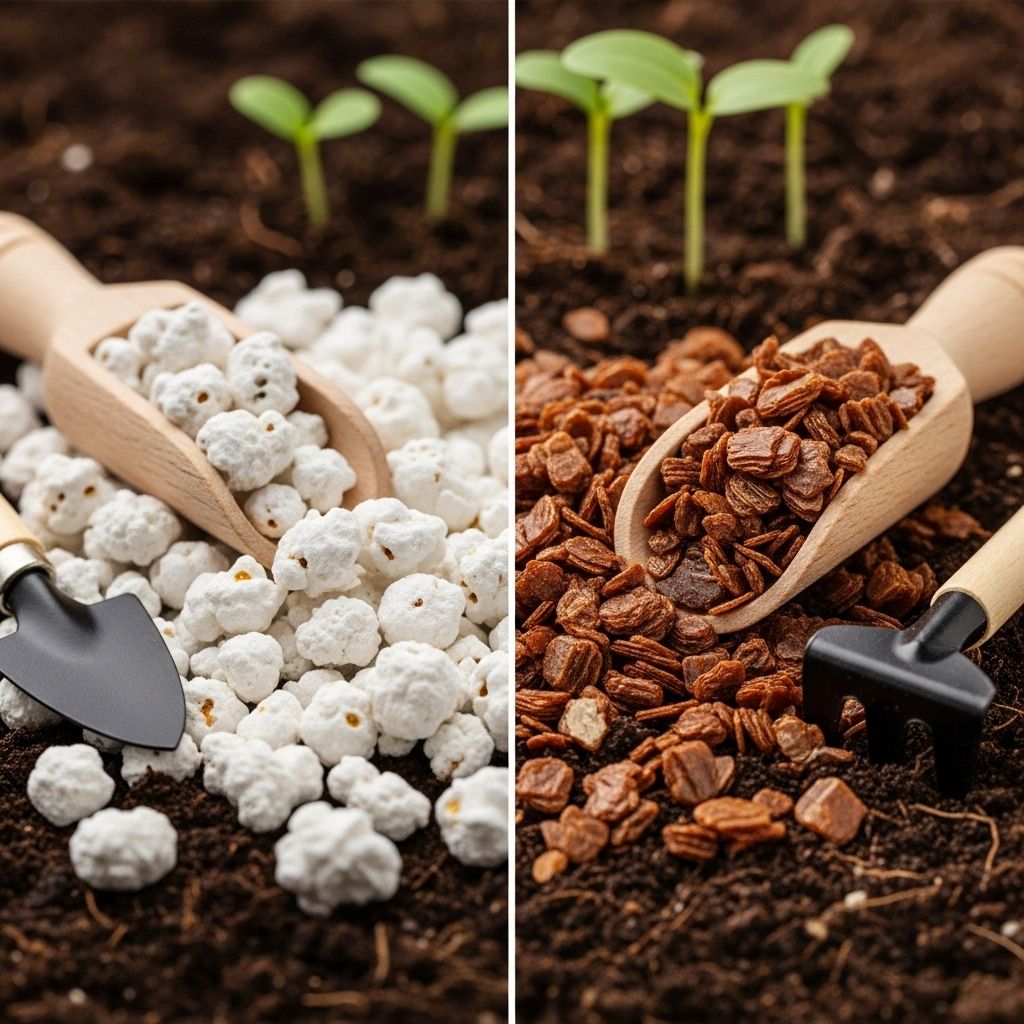
Perlite vs Vermiculite: What’s the Difference?
Understanding the differences between perlite and vermiculite is crucial for gardeners seeking to optimize soil health and plant growth. While both are lightweight, sterile mineral soil amendments, they serve very different purposes in garden and greenhouse environments.
What Is Perlite?
Perlite is a naturally occurring volcanic glass that, when heated, expands to form lightweight, porous particles. Its unique structure enhances soil aeration and drainage, making it especially valuable for plants that dislike soggy roots or require extra oxygen at the root zone.
Key Features of Perlite
- Bright white, granular appearance
- Lightweight and porous
- Improves soil drainage and prevents compaction
- Ideal for succulents, cacti, and other plants that need well-draining soil
- Neutral pH, not affecting soil acidity or alkalinity
Perlite is often mixed into potting soil to create a lighter, fluffier medium that encourages healthy root growth by allowing excess water to escape quickly. This helps reduce the risk of root rot and other moisture-related plant diseases.
What Is Vermiculite?
Vermiculite is a mineral that undergoes expansion when heated, resulting in soft, spongy particles that absorb and retain moisture. Its flaky, layered structure makes it highly effective at holding water and nutrients in the soil, which can be a significant advantage for moisture-loving plants and seed starting.
Key Features of Vermiculite
- Dark brown or black, soft, and flaky in appearance
- Excellent water retention
- Enhances nutrient availability by holding moisture and fertilizers
- Preferred for seed starting and moisture-sensitive plants
- Can help buffer soil from rapid temperature changes
Vermiculite is a staple in seed starting mixes, where consistent moisture is critical for germination and early seedling growth. However, its increased water-holding capacity means it’s less suitable for plants that prefer drier or well-drained conditions.
How Perlite and Vermiculite Affect Soil
Soil quality is a fundamental factor in plant health and productivity. Perlite and vermiculite are both used to improve soil structure, but they do so in different ways:
Soil Aeration and Drainage
Perlite’s primary role is to increase air space within the soil. Its porous particles allow excess water to drain away quickly, preventing waterlogging and promoting healthy root respiration. This makes perlite an excellent choice for plants prone to root rot or those native to arid environments, such as succulents and cacti.
Moisture Retention
Vermiculite, on the other hand, acts like a sponge, soaking up moisture and slowly releasing it to plant roots. This property is especially beneficial for young seedlings, cuttings, and moisture-loving plants that require a consistently damp environment.
Nutrient Availability
While both amendments can help with nutrient retention, vermiculite’s superior moisture-holding capacity means it can also hold onto dissolved nutrients, making them more available to plant roots over time. Perlite does not have the same nutrient-retention capacity but still helps maintain a loose soil structure, which benefits nutrient uptake by preventing compaction.
Choosing Between Perlite and Vermiculite
Selecting the right soil amendment depends on the specific needs of your plants and growing conditions. Here’s a practical guide to help you decide:
| Factor | Perlite | Vermiculite |
|---|---|---|
| Water Retention | Low (improves drainage) | High (retains moisture) |
| Soil Aeration | High | Low |
| Best For | Succulents, cacti, plants needing dry soil | Seedlings, moisture-loving plants, cuttings |
| Appearance | White, porous, lightweight | Dark brown/black, soft, spongy |
| pH Impact | Neutral | Neutral to slightly alkaline |
In many cases, a blend of both materials can provide a balanced growing medium, offering both moisture retention and good drainage. This is especially useful for general-purpose houseplants, vegetables, and herbs that have moderate moisture requirements.
Seed Starting Mixes vs. Potting Mixes
Seed Starting Mixes
Seed starting mixes are designed to provide the perfect environment for germination—consistent moisture, gentle structure, and good contact between the seed and the medium. Vermiculite is a common ingredient in these mixes because it retains moisture, supporting steady hydration during the critical early stages of plant growth. This helps protect young seedlings from the drying out or fluctuating moisture levels that can lead to poor germination or damping-off disease.
Potting Mixes
Once plants are established and transplanted into larger containers, their needs shift. Mature plants benefit from soil that offers better drainage and aeration, allowing roots to breathe and reducing the risk of root rot. Perlite is a key component in potting mixes for this reason, as it creates air pockets that help excess water drain away efficiently.
Other Uses for Perlite and Vermiculite
Rooting Cuttings
Both perlite and vermiculite are excellent for rooting plant cuttings. Perlite provides a loose, airy environment that encourages healthy root development, while vermiculite helps maintain the consistent moisture levels that many cuttings require. Some gardeners prefer to use a 50/50 mix of both to balance moisture retention and aeration.
Outdoor Gardens
While primarily used in containers, both amendments can also be beneficial in outdoor gardens, especially in soils that are heavy, clay-based, or prone to compaction. Incorporating perlite can help break up dense soil, improving drainage and root penetration. Vermiculite, applied to sandy soils, can help increase moisture retention.
Potential Drawbacks
Perlite
- Can float to the surface of the soil over time, especially with frequent watering.
- No nutritional value for plants.
- Lightweight particles can be dusty when dry—handling with a mask is recommended.
Vermiculite
- May compact over time, reducing its aeration benefits.
- Not suitable for plants that prefer dry conditions—excessive moisture retention can lead to root rot or fungal issues.
- Older vermiculite products may contain asbestos, though most modern horticultural vermiculite is asbestos-free.
Environmental Considerations
Both perlite and vermiculite are naturally occurring minerals and are generally considered safe and sustainable for gardening use. They are sterile, weed-free, and disease-free, which helps reduce the risk of introducing pathogens to your garden or greenhouse.
How to Use Perlite and Vermiculite in Your Garden
Here are some practical tips for using these soil amendments effectively:
- For seed starting: Use vermiculite to maintain moisture and support germination.
- For succulents, cacti, or plants prone to root rot: Use perlite to ensure good drainage.
- For general-purpose potting mixes: Consider blending both perlite and vermiculite to balance moisture and aeration.
- For rooting cuttings: Use either perlite, vermiculite, or a mix of both, depending on your plant’s moisture requirements.
- For improving heavy garden soil: Work perlite into the soil to increase aeration and drainage.
- For sandy soil: Mix in vermiculite to improve water and nutrient retention.
FAQs
Q: Can I use perlite and vermiculite together?
A: Yes, combining both can balance drainage and moisture retention, benefiting a wide range of plants.
Q: Is one better than the other?
A: Neither is inherently better—they serve different purposes. Choose based on your plant’s specific needs.
Q: Are perlite and vermiculite safe for organic gardening?
A: Both are mined minerals and are considered safe for organic gardening when used as directed.
Q: Can I reuse perlite and vermiculite?
A: Yes, but effectiveness may decline over time. Sterilize before reuse to avoid introducing pests or pathogens.
Q: Does vermiculite pose any health risks?
A: Most modern horticultural vermiculite is asbestos-free and safe. If concerned, check the product source.
Q: Which is better for seed starting—perlite or vermiculite?
A: Vermiculite is generally preferred for seed starting due to its superior moisture retention.
Q: Can I use perlite or vermiculite in outdoor gardens?
A: Yes, both can improve soil structure, but select based on your climate and plants’ moisture needs.
Conclusion
Perlite and vermiculite are both valuable tools for gardeners seeking to optimize plant health and soil quality. By understanding their unique properties—perlite for improved drainage and aeration, vermiculite for moisture and nutrient retention—you can tailor your soil mixes to the specific needs of your plants. Whether you’re starting seeds, rooting cuttings, potting mature plants, or improving garden beds, choosing the right amendment (or a combination of both) will help your garden thrive. Remember, the best soil amendment is the one that matches your plant’s requirements—so assess your growing conditions and select accordingly.
For further reading, consult garden centers, extension services, and reputable gardening resources to ensure you’re making the most informed choices for your plants and soil.
Similar Articles


Read full bio of Sneha Tete