Understanding Pseudobulbs in Orchids: Structure, Function, and Care
Unlock the secrets of pseudobulbs, vital stem adaptations in orchids that support growth, storage, and survival.
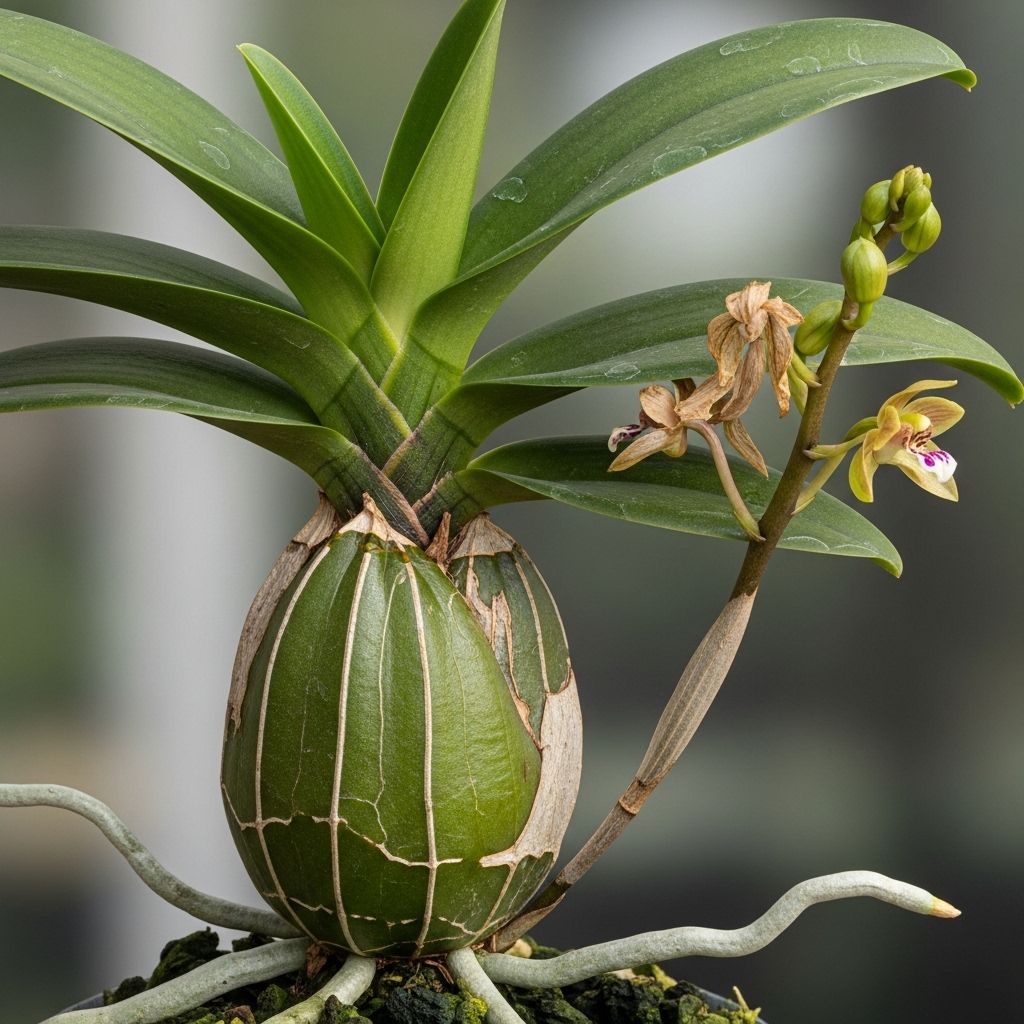
What Is a Pseudobulb in Orchids?
Pseudobulbs are essential storage organs in many orchid species, forming a critical part of their anatomy and survival strategy. Found in both epiphytic and terrestrial sympodial orchids, pseudobulbs are enlarged, above-ground sections of the stem that can take a variety of shapes and sizes. Unlike true bulbs, which grow underground, pseudobulbs are always located above the soil, either resting on or just above the growing medium.
Most orchids grown in home environments—such as popular genera like Cattleya, Oncidium, and Cymbidium—develop from pseudobulbs. These bulbous parts are typically positioned just below the leaf and are responsible for ensuring the orchid’s survival during periods of environmental stress, particularly drought.
Understanding the Structure of Pseudobulbs
To grasp the function of pseudobulbs, it is important to recognize their structure and relation to other orchid parts.
- Origin: Pseudobulbs develop as swellings along the orchid’s rhizome (a creeping, root-bearing stem).
- Appearance: Their size and shape are highly variable—they can be cane-like, round, oval, or flattened. Some appear as slightly thickened stems, while others form large, spherical bulges.
- Sheaths: Each pseudobulb may be partially enveloped in a sheath that starts green and later dries and browns as it ages.
- Internodes: The swelling may involve a single internode (heteroblastic) or multiple internodes (homoblastic), resulting in different shapes and segmentations.
- Lifespan: Although the plant itself may live for decades, individual pseudobulbs usually persist only 1–5 years before they senesce and are replaced.
| Characteristic | True Bulb | Pseudobulb |
|---|---|---|
| Location | Underground | Above ground (or above medium) |
| Botanical Origin | Compressed stem and storage leaves | Thickened portion of stem (internodes) |
| Function | Storage of nutrients for the entire growth cycle | Storage of water and nutrients for drought resistance |
| Presence in Orchids? | No | Yes (common in sympodial species) |
Pseudobulb Functions: Why Are They Important?
Pseudobulbs play a vital survival role for orchids, performing several key functions:
- Water Storage: Their succulent tissues store water, providing a reserve during dry spells or inconsistent watering.
- Nutrient Reservoir: Pseudobulbs accumulate minerals such as nitrogen, which can later be mobilized to support new growth, flowering, or leaf development.
- Photosynthesis: In addition to storing resources, the green surfaces of pseudobulbs also photosynthesize, contributing to the plant’s energy needs.
- Support for Growth: The formation of pseudobulbs is tied to the orchid’s shoot system. They produce roots, leaves, and flower spikes, ensuring ongoing vitality and reproduction.
- Propagation: The development of new pseudobulbs allows the orchid to spread (especially in sympodial types), while older, leafless backbulbs may also serve as sources for propagation.
Key Differences: True Bulbs vs. Pseudobulbs
A common source of confusion in plant care is the difference between a true bulb and a pseudobulb. Although both serve as storage organs, their origins and structures are distinct:
- True Bulbs (as seen in tulips or lilies) are composed of layers of modified leaves (storage leaves) and remain underground.
- Pseudobulbs are derived from thickened stem tissue above ground and are capable of photosynthesis and further shoot/leaf production.
- Unlike true bulbs, pseudobulbs do not store the entirety of the plant’s life cycle requirements—they serve primarily as reservoirs for water and minerals.
Main Types of Pseudobulbs
Pseudobulbs are broadly categorized based on their internal structure and function. The primary distinctions are:
Heteroblastic Pseudobulbs
These pseudobulbs consist of one internode. Leaves and flowers arise only from the apex (top) of the pseudobulb. Examples include genera like Bulbophyllum. Their appearance is often more rounded or spherical.
Homoblastic Pseudobulbs
Comprised of multiple internodes, homoblastic pseudobulbs demonstrate a cane-like form. Leaves may appear at several points along the structure. This type is seen in genera such as Grammatophyllum.
Backbulbs vs. Green Bulbs
- Backbulbs: These are mature but leafless pseudobulbs which have lost their green foliage but may still store reserves. While not actively supporting new shoots, they can serve as propagation material for new orchid plants.
- Green Bulbs: Young or active pseudobulbs that still possess green leaves. These are involved in photosynthesis and remain an integral part of plant growth.
Where Are Pseudobulbs Found?
The presence and morphology of pseudobulbs depend on the orchid’s native habitat and growth habit. They are found in two main types of orchids:
- Epiphytic Orchids: Grow attached to trees or other supports above the ground (e.g., Cattleya, Dendrobium), relying on pseudobulbs to retain water and nutrients due to sporadic moisture availability.
- Terrestrial Orchids: Grow in soil or organic matter (e.g., Cymbidium), where pseudobulbs still serve as crucial storage units.
Regardless of orchid type, it’s important to note that pseudobulbs form above-ground—they should not be buried under the growing medium. Burial often leads to rot and decline.
How Do Pseudobulbs Support Orchid Growth?
Pseudobulbs not only help orchids survive drought, but they also play a central role in new growth cycles:
- Each new pseudobulb emerges as a small swelling (called a “nubbin”) at the base of a mature pseudobulb, eventually producing its own leaves and roots.
- Through storing nutrients, older pseudobulbs can continue to supply developing shoots, especially in periods of stress or low resources.
- Pseudobulbs serve as the origin point for flower spikes, the structures responsible for orchid blooms.
Pseudobulb Lifespan and Plant Longevity
Although the orchid plant itself can live for many years, each individual pseudobulb is relatively temporary, usually lasting between 1 and 5 years. As older structures die off, new pseudobulbs are produced from the rhizome. This ongoing process allows the orchid to adapt to environmental changes and continue growing even after significant setbacks.
Orchid Care Tips: Maintaining Healthy Pseudobulbs
- Proper Placement: Ensure that pseudobulbs stay above the growing medium. Burying them can cause rot and disease.
- Watering: Allow the potting medium to dry slightly between waterings. Overwatering or poor drainage poses a risk for pseudobulb rot.
- Humidity: Maintain moderate humidity levels (typically 40–70%). Pseudobulbs help buffer the plant against low humidity but prolonged dry conditions should be avoided.
- Fertilizing: Use balanced orchid fertilizers regularly during the growing season. Reserve nutrients stored in pseudobulbs are vital during periods of rapid growth or blooming.
- Repotting: Repot orchids every couple of years to refresh the medium and prevent overcrowding or decay of old pseudobulbs.
- Pruning: Remove shriveled, dead, or diseased pseudobulbs with sterilized tools to encourage new growth.
Common Questions and Problems with Orchid Pseudobulbs
- Why is my orchid’s pseudobulb shriveled?
Possible causes include dehydration, root rot, or old age. Assess watering habits and root health. - Can backbulbs be used for propagation?
Yes. Healthy backbulbs can be divided and potted to potentially grow new plantlets, though some species respond better than others. - Is it normal for pseudobulbs to yellow or turn brown?
Yellowing may indicate old age, nutrient deficiencies, or excess moisture. Remove only if dead or diseased. - How often do pseudobulbs produce flowers?
Most orchids produce flower spikes once annually from mature pseudobulbs, depending on species and culture conditions.
Table: Key Differences Between Backbulbs and Green Bulbs
| Type | Leaf Presence | Function | Propagation Potential |
|---|---|---|---|
| Backbulb | No Leaves | Resource storage, propagation | High (if healthy) |
| Green Bulb | Green, Leafy | Photosynthesis, active growth | Typically not divided |
Frequently Asked Questions (FAQs)
Q: What exactly is a pseudobulb?
A: A pseudobulb is a thickened, above-ground section of an orchid’s stem, specialized for storing water and nutrients, and supporting new shoots and roots.
Q: Do all orchids have pseudobulbs?
A: No. Only certain sympodial orchids, especially those adapted to variable moisture environments, have pseudobulbs. Many monopodial species, like Phalaenopsis, lack pseudobulbs entirely.
Q: Can I propagate an orchid from backbulbs?
A: Yes, provided the backbulbs are healthy. Place them in appropriate orchid media under humid conditions, and with patience, new growth may emerge.
Q: What causes pseudobulbs to rot?
A: Rot is often the result of excessive moisture, poor drainage, or deep planting. Always keep pseudobulbs above the growing medium and avoid waterlogging.
Q: How can I tell if a pseudobulb is healthy?
A: Healthy pseudobulbs are firm and green, with plump tissue. Shriveled, yellow, or brown pseudobulbs may signal stress, disease, or old age.
Conclusion
Pseudobulbs are indispensable organs for many orchid species. Their unique adaptation enables orchids to withstand drought, support new growth, and maintain long-term vitality. By understanding pseudobulb structure, function, and care, orchid enthusiasts can help ensure thriving, beautiful plants year after year.
Similar Articles





Read full bio of medha deb