Sunrise and Sunset Times in Los Angeles: Your Complete 2025 Guide
Understand the changing sun and moon cycles in Los Angeles, including sunrise and sunset times, solar noon, twilight phases, and key astronomical events.
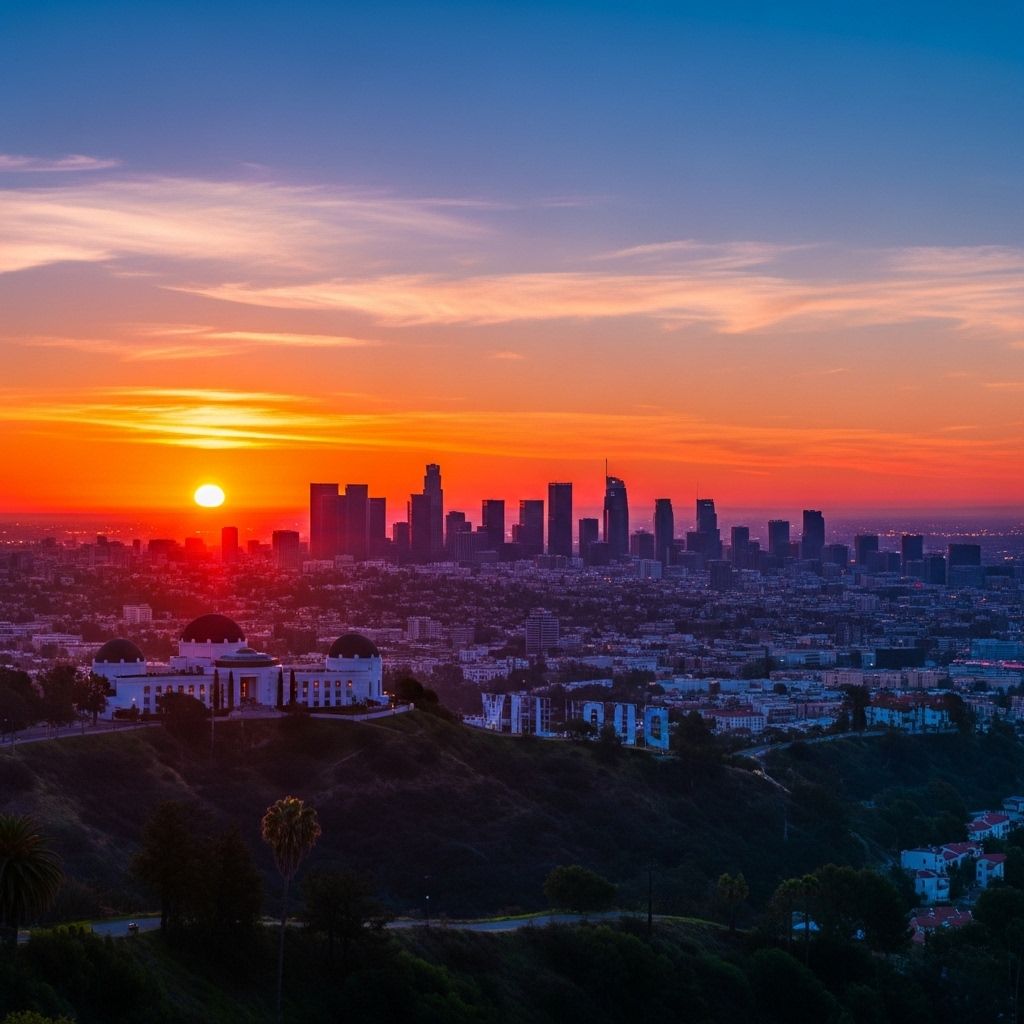
Los Angeles is renowned for its bright days and breathtaking sunsets, but the timing of sunrise and sunset changes throughout the year. Knowing these times is vital for planning outdoor activities, photography, or simply enjoying the natural beauty the city has to offer. This comprehensive guide explores sunrise, sunset, daylight hours, twilight phases, and moon cycles for Los Angeles in 2025, along with explanations of key concepts for those interested in the science behind the sun and moon’s movements.
Annual Sunrise and Sunset Overview for Los Angeles
In Los Angeles, the length of the day and the timing of both sunrise and sunset vary considerably over the course of the year. The chart below summarizes typical sunrise and sunset times by month in 2025, with standard adjustments for Daylight Saving Time (DST).
| Month | Representative Sunrise | Representative Sunset | Approx. Day Length |
|---|---|---|---|
| January | 7:01 am | 5:07 pm | 10h 6m |
| February | 6:46 am | 5:36 pm | 10h 50m |
| March | 7:01 am | 7:04 pm | 12h 3m |
| April | 6:30 am | 7:29 pm | 13h 0m |
| May | 5:56 am | 7:54 pm | 13h 58m |
| June | 5:43 am | 8:07 pm | 14h 24m |
| July | 5:52 am | 8:04 pm | 14h 12m |
| August | 6:14 am | 7:37 pm | 13h 23m |
| September | 6:37 am | 6:56 pm | 12h 19m |
| October | 7:00 am | 6:13 pm | 11h 13m |
| November | 6:24 am | 4:53 pm | 10h 29m |
| December | 6:50 am | 4:44 pm | 9h 54m |
- Note: The exact times shift by a few minutes throughout each month. All times are Pacific Time and adjusted for DST when appropriate.
How Daylight Varies Through the Year
The variation in sunrise and sunset times creates significant changes in the amount of daylight throughout the year, with the longest days around the June solstice and the shortest near the December solstice.
- Longest daylight: Around June 21 (summer solstice), nearly 14 hours and 24 minutes of sunlight.
- Shortest daylight: Around December 21 (winter solstice), just under 10 hours of sunlight.
- Rapid change: Noticeable acceleration in daylight lost or gained near equinoxes (March and September).
Understanding Twilight: Astronomical, Nautical, and Civil
Twilight is the period when the sky is illuminated before sunrise and after sunset, but the Sun is below the horizon. There are three main phases:
- Civil Twilight: The Sun is 0°–6° below the horizon. Enough light for most outdoor activities; streetlights may turn off/on during these times.
- Nautical Twilight: The Sun is 6°–12° below the horizon. The horizon is still visible at sea, aiding navigation.
- Astronomical Twilight: The Sun is 12°–18° below the horizon. Fainter stars become visible; the sky is nearly as dark as true night.
| Month | Civil Twilight | Nautical Twilight | Astronomical Twilight |
|---|---|---|---|
| January | ~25 min | ~25 min | ~25 min |
| June | ~31 min | ~32 min | ~33 min |
| December | ~24 min | ~25 min | ~25 min |
Twilight periods are longer in summer and shortest in winter, due to the Sun’s angle of approach to the horizon.
What is the Difference Between Dusk and Dawn?
Dawn is when morning twilight begins before sunrise.
Dusk is when evening twilight ends after sunset. Both mark the boundaries between daylight and full darkness.
Solar Noon Explained
Solar noon is the moment the Sun reaches its highest point in the sky for the day, typically occurring between 12:00 pm and 1:00 pm local time, depending on your exact location in Los Angeles and on whether Daylight Saving Time is in effect.
- On June 21, solar noon in Los Angeles occurs around 12:56 pm.
- On December 21, solar noon is closer to 11:56 am due to the Sun’s lower apparent arc in winter.
At solar noon, shadows are shortest, and this is usually the warmest part of the day.
Key Astronomical Events for Los Angeles in 2025
- Winter Solstice: December 21 (Shortest day and longest night)
- Summer Solstice: June 21 (Longest day and shortest night)
- Vernal Equinox: March 20 (Day and night nearly equal)
- Autumnal Equinox: September 22 (Day and night nearly equal)
- Daylight Saving Time: Begins March 9, ends November 2 (2025 dates)
Moon Phases and Moonrise/Moonset in Los Angeles
In addition to the Sun, the Moon’s phases and timings are vital for nighttime sky watchers, photographers, and outdoor planners.
- New Moon: Invisible; rises and sets with the Sun.
- First Quarter: Moon visible afternoon/evening; rises around noon, sets around midnight.
- Full Moon: Rises at sunset, sets at sunrise; visible all night.
- Last Quarter: Rises around midnight, sets around noon.
The timing of moonrise and moonset changes daily, shifting about 50 minutes later each day. Major lunar events (supermoons, eclipses) can be found on astronomy calendars specific to 2025.
Why Does Sunrise/Sunset Change?
The changes in sunrise and sunset times are due to Earth’s 23.5° axial tilt and its elliptical orbit around the Sun. This creates the seasonal variations in day length, especially pronounced at higher latitudes—but still observable in Southern California.
- During summer, the Northern Hemisphere is tilted towards the Sun, lengthening days.
- In winter, the hemisphere tilts away, shortening daylight.
Calculating Sunrise and Sunset: Factors and Method
Sunrise and sunset predictions are based on astronomical equations accounting for:
- Exact latitude and longitude for your location
- Altitude above sea level
- Atmospheric refraction, which causes the Sun to appear slightly before or after geometric rise/set
- The Sun’s apparent size (the upper edge is used for calculations, not the center)
- Time zone and daylight saving adjustments
This means there may be slight differences in times reported by various sources, but most reputable calendars stay within 1–2 minutes of each other for a given location.
2025 Los Angeles Sun Graph
The following visual patterns are observed in annual sun graphs for Los Angeles:
- Daylength increases gradually from winter to summer solstice, peaking in late June.
- After the summer solstice, daylight length decreases toward December.
- Transitions are smooth; most rapid change in daylight occurs near equinoxes.
Sample Daily Sunrise and Sunset Calendar for October 2025
| Date | Sunrise | Sunset | Day Length |
|---|---|---|---|
| October 1 | 6:47 am | 6:37 pm | 11h 50m |
| October 10 | 6:55 am | 6:24 pm | 11h 29m |
| October 20 | 7:02 am | 6:11 pm | 11h 9m |
| October 31 | 7:12 am | 6:00 pm | 10h 48m |
Practical Tips for Using Sunrise and Sunset Data
- Outdoor activities: Plan hikes, beach outings, or park visits for daylight hours.
- Photography: Golden hour occurs just after sunrise or before sunset for optimal lighting.
- Astronomy: Use twilight to distinguish best viewing times for stars and planets.
- Mood and health: Exposure to natural daylight is linked to improved well-being and sleep cycles.
Frequently Asked Questions (FAQs)
Q: Does Daylight Saving Time affect sunrise and sunset times?
A: Yes. When DST starts in March, clocks are set one hour ahead, making sunrise and sunset occur one hour later by the clock until standard time resumes in November.
Q: What is the earliest sunrise and latest sunset in Los Angeles?
A: The earliest sunrise usually occurs in early June (around 5:41 am), and the latest sunset is also in June (about 8:07 pm). The exact dates vary slightly each year.
Q: Why don’t day and night hours match exactly on the equinox?
A: Atmospheric refraction bends sunlight, and sunrise/sunset are measured at the Sun’s upper limb, prolonging daylight by a few minutes on each end, resulting in more than 12 hours of day on equinoxes.
Q: Are sunrise and sunset the same everywhere in Los Angeles?
A: No. Times vary by a few minutes within the metropolitan area due to slight changes in latitude/longitude and elevation, but most published times are accurate for central Los Angeles.
Q: Where can I find real-time sunrise, sunset, and moon phase data?
A: The most up-to-date data is provided by reputable astronomical calculators online, local observatories, or detailed almanacs with daily updates covering Sun and Moon movements.
Conclusion
Sunrise and sunset times play a significant role in life and planning across Los Angeles, from outdoor activities to scientific observation. Being aware of daylight length, twilight phases, and moon cycles helps residents and visitors maximize their time under the Southern California sky. Refer to reliable calendars and observatories for the most accurate daily times, and enjoy every moment—from first light to the last glow of dusk!
Similar Articles








Read full bio of medha deb