Tips for Successfully Growing Hollyhocks in Your Garden
Master the essentials of planting, growing, and caring for hollyhocks to achieve vibrant flower displays year after year.
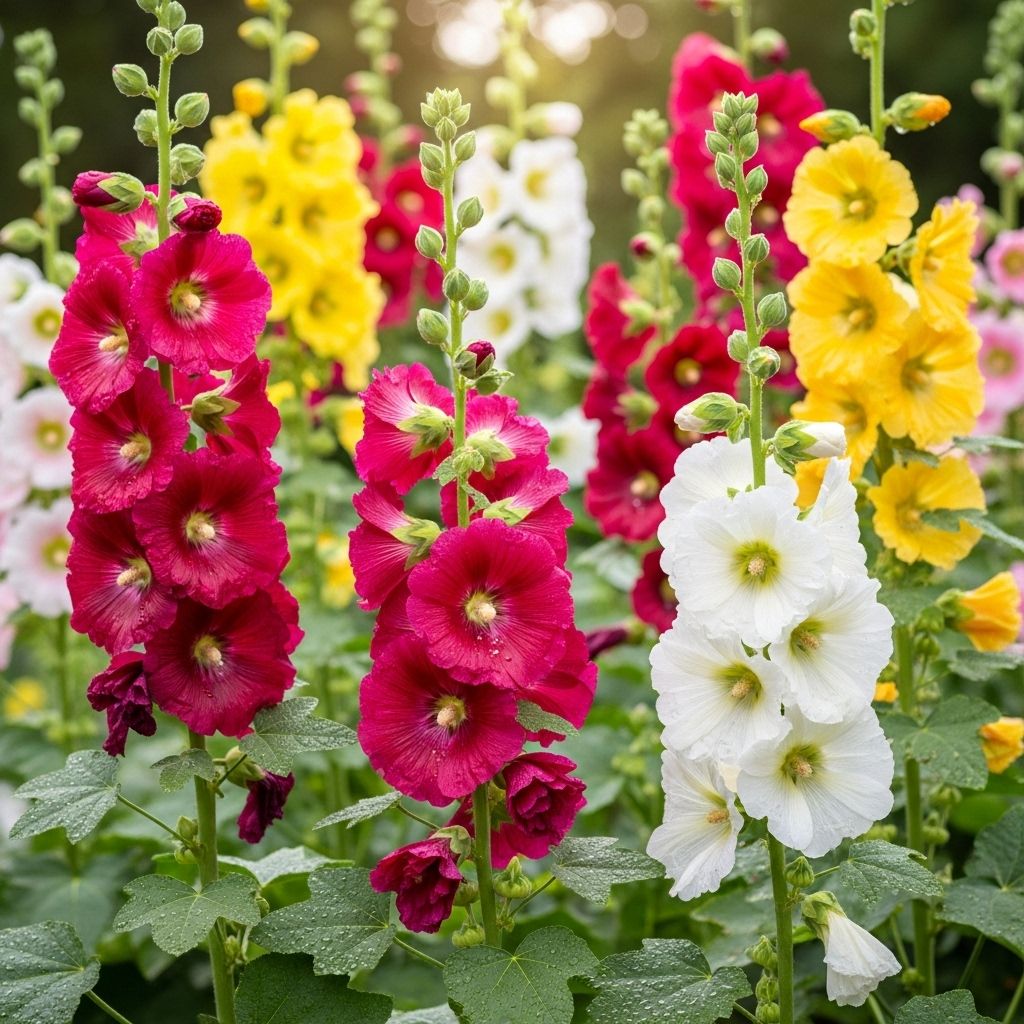
Hollyhocks (Alcea rosea), famed for their towering spires ablaze with vibrant blossoms, create a dramatic vertical accent in any garden. Whether you’re cultivating a cottage garden ambiance or looking to add striking color near walls and fences, hollyhocks have a storied place in ornamental horticulture. This guide presents a comprehensive roadmap for planting, growing, and maintaining hollyhocks, ensuring healthy, floriferous displays season after season. From soil preparation and seed sowing to battling common pests, every key topic is covered to foster successful hollyhock cultivation in diverse garden settings.
Understanding Hollyhocks
Hollyhocks, primarily grown as biennials or short-lived perennials, produce stately flower stalks often reaching up to 8 feet or more. Their classic blossoms, ranging in color from soft pastels to deep saturated tones, attract butterflies, bees, and admiring humans alike. While traditionally considered a cottage garden staple, their versatility makes them suitable for both rustic and formal designs.
- Scientific Name: Alcea rosea
- Plant Type: Biennial (most commonly), with some perennial cultivars
- Height: 5–9 feet, depending on variety and conditions
- Bloom Time: Summer
- Flower Colors: White, pink, yellow, red, purple, near-black
Choosing the Right Site for Hollyhocks
Sunlight: Hollyhocks crave full sun and perform best when they receive at least 6 hours of direct sunlight daily. Position them along south or west-facing borders for maximum exposure.
Soil: Moist yet well-draining soil supports vigorous growth. They prefer loamy or sandy soils, with a pH between 6.0 and 7.5. Avoid heavy, compacted clay, which impedes root development and airflow.
Airflow: Good air circulation minimizes disease risk—especially foliar diseases—so avoid overcrowded spots or tight corners.
Wind Protection: Due to their height, hollyhocks benefit from sheltered positions or nearby structures like fences to prevent wind damage.
Planting Hollyhocks
Sowing and planting hollyhocks is straightforward, but success hinges on proper timing, soil prep, and smart spacing. Here are the core steps for establishing robust hollyhocks.
When to Plant
- Spring Sowing: Direct-sow outdoors after the last frost, or start seeds indoors 6–9 weeks before the last frost date.
- Fall Sowing: Sow seeds in early autumn. Fall sowing often results in earlier flowering the next season.
Starting from Seed
Seed Preparation: While soaking seeds in warm water for 12 hours may hasten germination, it isn’t essential. Hollyhock seeds are large and easy to handle.
Direct Sowing (Outdoors):
- Prepare the bed by removing weeds and enriching with aged compost or well-rotted manure.
- Sow seeds 1/4 inch deep and 18–24 inches apart, lightly covering with fine soil or compost.
- Water gently to avoid disturbing seed placement.
- Maintain moist (but not soggy) soil until germination, usually in 10–14 days.
- Add stakes early on if growing tall varieties to avoid damaging root systems later.
Starting Indoors:
- Use tall individual pots or trays to accommodate long taproots and prevent transplant shock.
- Fill pots with well-draining seed-starting mix. Space seeds evenly; cover lightly with soil.
- Maintain temperatures of 65–70°F (18–21°C) until seedlings emerge.
- Harden off seedlings before transplanting outdoors after the last frost, being careful with the roots.
Site Preparation and Soil Tips
- Use a pH meter to check soil acidity, amending as needed for a near-neutral pH (6.0–7.5).
- Mix in compost, aged manure, or worm castings for fertility and improved structure.
- Ensure soil is not compacted; work it loose to accommodate deep taproots.
Transplanting Hollyhocks
When transplanting seedlings or nursery transplants, dig holes slightly wider than the root balls. Handle seedlings with care to avoid damaging their sensitive taproots, and water deeply to settle the soil around roots.
Caring for Hollyhocks
Once hollyhocks are established, they require modest maintenance but offer spectacular rewards. Regular attention to watering, support, and pest management helps ensure healthy plants and dramatic floral spikes.
Watering
- Water deeply but infrequently, keeping the soil moist but never waterlogged.
- Water at the base of plants rather than overhead to prevent leaf wetness and reduce foliar disease risk.
- Mulch with organic bark or straw after seedlings are settled to suppress weeds and regulate soil moisture—but keep mulch off the stems.
Fertilizing
- Incorporate compost or aged manure before planting for a nutrient boost.
- During the growing season, an all-purpose balanced fertilizer may be applied once or twice for continued vigor and robust blooms.
Staking and Support
- Due to their height, most hollyhocks require support in the form of stakes, bamboo canes, or proximity to fences and walls.
- Insert supports early to avoid root damage, and tie plants loosely as they grow.
Mulching
- Apply a mulch layer after planting and each spring to conserve moisture and keep weeds down.
- Keep mulch several inches away from plant stems to prevent rot.
Deadheading and Pruning
- Remove spent blooms (deadheading) to prolong flowering and tidy appearance.
- Allow several stalks to set seeds if you wish for self-sown plants the following year.
- Cut back stems to the base after blooming to maintain plant health and prevent overwintering of disease.
Propagating Hollyhocks
Hollyhocks are most commonly grown from seed, though propagation from basal cuttings is possible for perennial cultivars. Self-sowing is typical, with dropped seeds giving rise to new shoots the following season.
Propagating by Seed
- Sow fresh seeds from perennial types immediately, as they may require a cold period for germination.
- Store seeds from biennial varieties in a cool, dry place and sow the following spring.
- Let some flowers mature into seed heads after blooming to encourage volunteer seedlings.
Propagation by Basal Cuttings
- In early spring, select a young stem sprouting from the plant’s base.
- Carefully cut the stem as close to the root as possible using a clean, sharp knife.
- Remove lower leaves and plant the cutting in a moist, well-drained potting mix, ideally near the pot’s edge.
- Cover with a plastic bag for humidity; roots should appear in a few weeks.
Common Problems: Pests and Diseases
While generally hardy, hollyhocks can face challenges from pests and in particular, fungal diseases.
Rust Disease
- The most frequent disease issue is hollyhock rust (Phragmidium species), which causes orange-brown pustules on the undersides of leaves, eventually leading to leaf yellowing, premature drop, and weakened plants.
- Management tips:
- Promote good air circulation by spacing plants adequately and avoiding overcrowding.
- Water at the soil level, avoiding wetting foliage.
- Remove and destroy affected leaves promptly.
- In autumn, cut back all stems to ground level and clean away plant debris to overwinter spores.
Other Issues
- Insects: Aphids, caterpillars, and Japanese beetles can occasionally be problematic.
- Treat minor infestations by hand-picking or spraying with a gentle stream of water. Insecticidal soap may be warranted for severe infestations.
- Slugs and snails: Especially problematic on young seedlings. Use barriers or organic slug bait as needed.
Encouraging Reliable Reseeding
Hollyhocks naturally self-seed if left to their own devices. To maintain or expand your hollyhock patch:
- Let some flower stalks mature and drop seeds in late summer.
- The following spring, thin overcrowded seedlings to promote sturdy growth and improve airflow.
Similar Articles


Read full bio of Sneha Tete