Trimming Gladiolus Leaves: The Complete Guide to Pruning, Timing, and Care
Learn the best techniques and crucial timing for cutting and caring for gladiolus leaves to ensure healthier plants and better blooms every season.
Gladiolus, commonly called ‘glads’, are renowned for their stunning, upright flower spikes that adorn summer gardens with vibrant color. While they require relatively little maintenance compared to many flowering plants, knowing how and when to trim gladiolus leaves is vital. Proper pruning supports plant health, maximizes bloom quality, and ensures more vigorous bulbs for future seasons.
Understanding Gladiolus Growth and Leaf Function
Before diving into trimming techniques, it’s essential to appreciate the vital role of gladiolus foliage. Each leaf is a photosynthetic powerhouse, channeling energy into the corm (the bulb-like base of the plant). This stored energy is precisely what enables the plant to regenerate and bloom year after year. Cutting back foliage too soon disrupts this nutrient cycle, resulting in weaker bulbs and fewer flowers the following season.
Why Trimming Gladiolus Leaves Matters
- Maintains plant health by eliminating disease or pest-prone decaying tissue.
- Promotes stronger corm development since foliage feeds the next year’s plant.
- Improves garden appearance by removing unsightly, dying material.
- Makes overwintering and lifting bulbs easier.
When to Trim Gladiolus Leaves
The golden rule: Only trim leaves after they have yellowed and died back naturally. Even if foliage looks unsightly, avoid early removal. In most regions, this is late summer or early fall, after blooming has ended and just before the first frost.
Timeline for Trimming
| Stage | Action | Best Time |
|---|---|---|
| Buds/Blooms Opening | Pinch off individual faded blooms | Throughout blooming season |
| All buds faded | Prune flowering stem near ground, leave foliage | Immediately after all flowers fade |
| Leaves yellow and withered | Cut foliage down to ground level | Late summer to early fall |
| Before first frost (in cold climates) | Lift corms, dry, and store (if overwintering indoors) | Early to mid-fall |
Pruning Back Gladiolus via Pinching
Pinching refers to the simple task of removing faded blooms, either by hand or with shears, during the blooming phase. This regular maintenance:
- Prevents seed formation, so energy remains in the bulb.
- Encourages remaining buds to open fully.
- Keeps the stalk looking neat.
Some gardeners take this a step further by removing the top, unopened bud to stimulate synchronous blooming of lower buds. Always avoid removing any leaves during this phase.
How to Prune Gladiolus by Cutting Blooming Stems
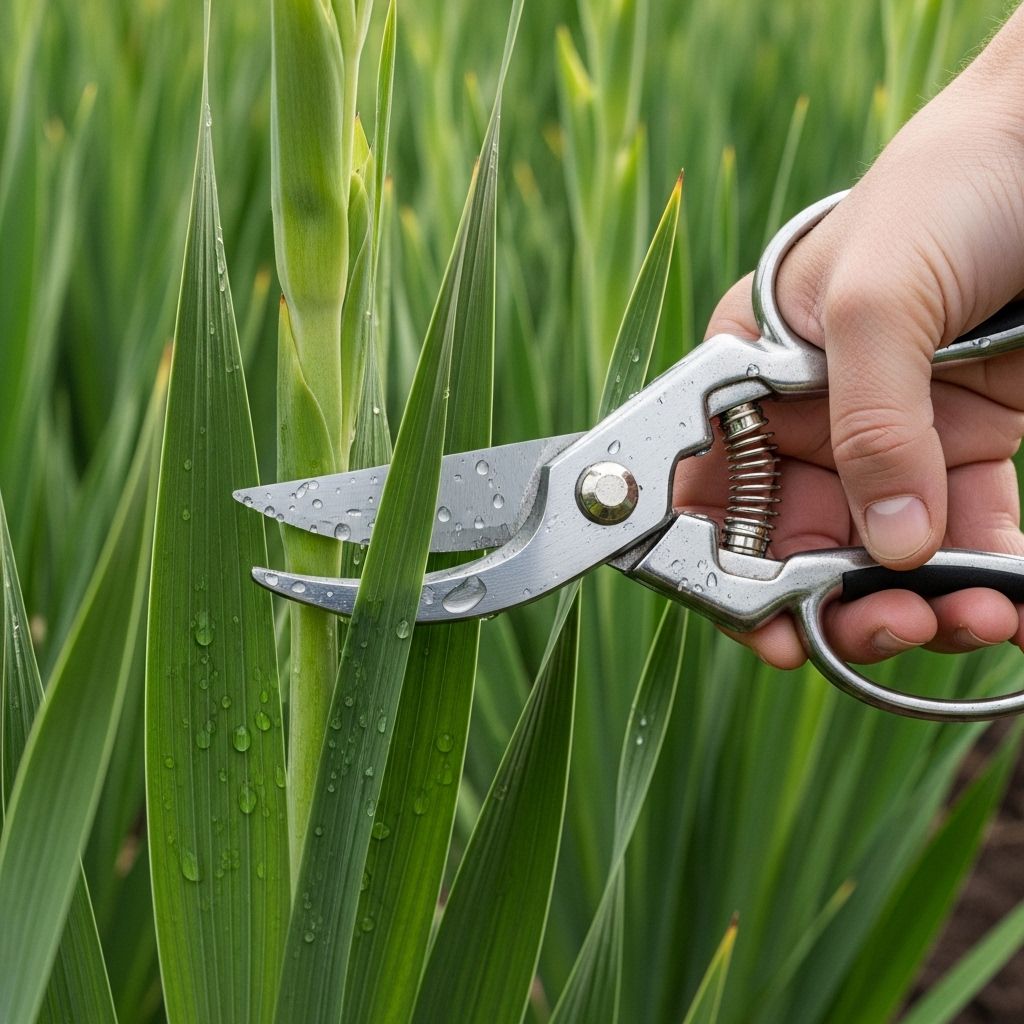
Once all the flowers on a spike have faded, it’s time to remove the entire blooming stem. Use sharp, clean garden shears or pruners and cut the stalk near the base, close to the ground but above the healthy leaves. This method prevents resources from going into seed production, but leaves all foliage intact for continued corm development.
Step-by-Step: Cutting a Gladiolus Blooming Stem
- Ensure all flower buds are bloomed and faded.
- Sanitize your pruning shears to prevent disease spread.
- Identify the main stalk; trace it down to just above the first leaf cluster.
- Snip cleanly and remove the entire flower stalk.
- Leave all leaves untouched.
Trimming Leaves on Gladiolus: Key Rules
The most critical aspect of gladiolus care is delaying leaf removal until absolutely necessary. Cut the leaves to the ground only when they:
- Are fully yellow or brown
- Feel dry or are easily pulled away
- No longer contribute to photosynthesis
Early cutting, even if the leaves look droopy or partially faded, will rob the corms of nutrients, risking reduced vigor and bloom production next season.
How to Trim Gladiolus Leaves Correctly
- Wait for the foliage to turn yellow and die back naturally (late summer/fall).
- Use sharp clippers or shears to cut leaves at ground level.
- Monitor for any remaining green; delay cutting these portions until they fade.
- Dispose of trimmed foliage to prevent fungal disease buildup in beds.
Overwintering and Storage After Trimming
Proper end-of-season trimming is crucial if you intend to lift and store your gladiolus corms in colder climates. Here’s what to do next:
- After trimming, carefully dig up corms with a fork or spade.
- Gently shake off excess soil; allow corms to air-dry in a warm, dry place for several days.
- Remove any additional roots or loose skin once dry.
- Store corms in a cool, dry, frost-free environment—never let them freeze.
If you garden in zones 8 or warmer, gladiolus corms can usually be left in the ground, though a layer of mulch helps insulate against surprise cold snaps.
Common Mistakes in Pruning Gladiolus Leaves
- Cutting foliage too early: Removes essential nutrients and weakens future growth.
- Cutting too high above the ground: Can leave behind unsightly stubs; always cut at ground level unless instructed otherwise for specific storage prep.
- Leaving decaying leaves on the ground: This can attract pests and disease.
Expert Tip:
Never remove all leaves before autumn. Gladiolus corms stop storing nutrients as soon as foliage is cut, so patience is rewarded with better blooms next season.
General Care Tips for Thriving Gladiolus
- Water regularly, especially in midsummer or hot climates, but ensure soil drains well to avoid bulb rot.
- Fertilize with a balanced formula, or add compost before planting bulbs for healthier growth.
- Stay on top of weeds to minimize nutrient competition.
- Use mulch after leaf trimming to retain soil moisture and protect remaining bulbs in-ground.
Table: Quick Reference for Gladiolus Trimming
| Action | Timing | Purpose |
|---|---|---|
| Pinch faded blooms | During blooming | Encourage remaining buds, maintain appearance |
| Remove entire flower stalk | After final flower fades | Conserve energy in bulb, prep for leaf nutrition |
| Trim leaves to ground | After yellowing/dying back in late summer/fall | Cease photosynthesis, prep for dormancy or overwintering |
Frequently Asked Questions (FAQs)
Q: Should I cut back gladiolus leaves immediately after flowering?
A: No. Only cut gladiolus leaves once they are fully yellow or brown at the end of the season. The leaves supply energy for next year’s growth.
Q: How far down should leaves and stems be cut?
A: Stems can be cut near ground level after flowers have faded but leaves should only be cut to the base after yellowing. Cut foliage down to within 1–2 inches above the corm if overwintering indoors.
Q: Is it necessary to cut gladiolus back for winter?
A: In mild climates (USDA zones 8+), it’s often safe to leave corms in the ground with mulch. In colder zones, dig, dry, and store corms after leaf trimming to prevent freeze damage.
Q: What tools work best for trimming?
A: Use sharp, sanitized pruners or scissors for clean, disease-free cuts. For heavy stalks, garden shears may be easier.
Q: Why do my gladiolus flowers dwindle each season?
A: Premature leaf trimming, inadequate watering, nutrient depletion, or corm rot can all lead to fewer, smaller blooms. Following best trimming and care practices restores vigor.
Conclusion: Enjoying Healthier Gladiolus Year After Year
Trimming gladiolus leaves and stems at the right time is fundamental to their long-term health and abundant flowering. Remember: patience in allowing leaves to naturally wither rewards you with robust corms and glorious spikes season after season. Whether you lift corms or leave them in the ground, following the trimming timeline, pruning with care, and providing the right aftercare will help your gladiolus thrive.
Similar Articles



Read full bio of Sneha Tete