12 Common Yard Mushrooms: Identification, Benefits, and Safety
Uncover the most common mushrooms found in yards, learn their key characteristics, identify toxic species, and discover their effects on your garden.
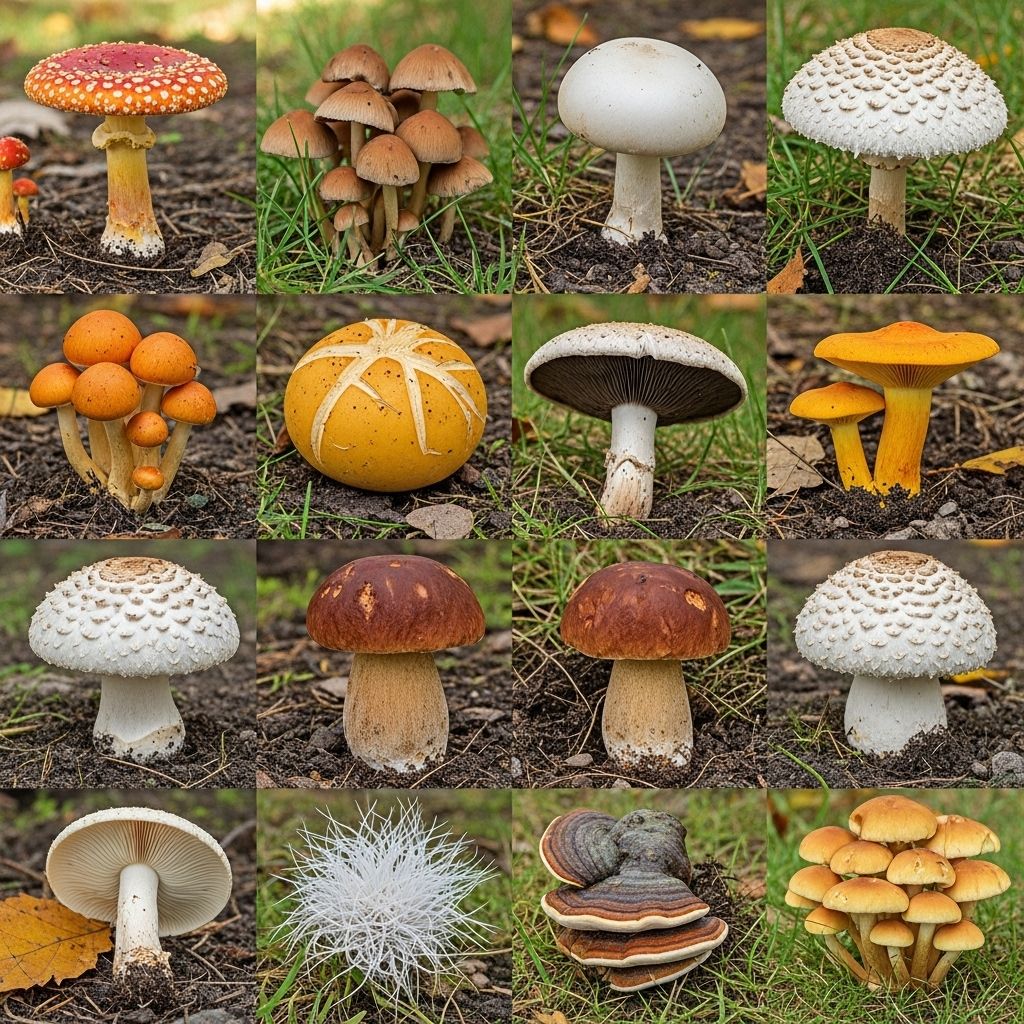
From vibrant fly agarics to peculiar stinkhorns, mushrooms frequently appear in yards, especially after rain or during specific seasons. While some species add visual interest and even help your lawn, others can pose hazards if ingested by pets or children. This comprehensive guide covers the most common mushrooms you’re likely to encounter in your yard, provides identification tips, outlines their impact on your garden, and shares crucial safety advice for families and pet owners.
Why Do Mushrooms Grow in Yards?
Mushrooms, the visible fruiting bodies of underground fungi, thrive in yards under certain conditions:
- Moisture: Over-watering, recent rainfall, or shaded, damp areas promote fungal growth.
- Organic Matter: Decaying wood, leaves, mulch, or even old tree roots underground serve as nutrition for fungi.
- Well-Aerated Soils: Lawns that are aerated or naturally loose make it easier for mushrooms to emerge.
Sometimes, the appearance of mushrooms signals healthy soil life and an active ecosystem, but it can also indicate underlying organic decay that may need attention if excessive.
Are Yard Mushrooms Bad for My Lawn?
Most yard mushrooms are harmless to lawns. They do not damage your grass or landscape plants, as they typically feed on decaying organic material beneath the surface. In fact, their presence often means beneficial fungal networks (mycorrhizae) are supporting the overall health of your yard.
However, certain mushrooms can be hazardous if ingested, making identification and proper management important for pet- and child-safe gardens.
12 Common Mushrooms You Might Find in Your Yard
Here are a dozen common mushrooms, their identifying features, habitats, and any safety notes you need to know.
1. Inky Cap (Coprinopsis atramentaria)
- Appearance: Small clusters, gray domed caps flatten as they open; caps exude black, inky liquid as they decompose.
- Size: Usually a few inches tall, up to half a foot.
- Habitat: Grassy areas, even breaking through hard surfaces; appear late spring to early fall.
- Additional Facts: The black ink was historically used for writing. Fragile and fleeting—often disappear within 24 hours.
- Safety: Harmless to lawns and safe to touch. Not considered edible; avoid ingestion as some inky caps can be toxic with alcohol.
2. Meadow Mushroom (Agaricus campestris)
- Appearance: White caps (expand to 4 inches wide), pinkish gills, partial veil with a skirt-like ring on the stem.
- Habitat: Meadows, grass around homes; can form fairy rings. Found worldwide, especially from May to November in the US.
- Safety: Edible foragers prize them, but very similar to deadly lookalikes such as destroying angels (Amanita bisporigera). Extreme caution required; safest to avoid eating unless 100% sure of identification.
3. Green-Spored Parasol (Chlorophyllum molybdites)
- Appearance: Large, white with brown scales, wide, flat parasol-shaped caps and a double-edged ring on the stem.
- Size: Each can reach nearly a foot tall and a foot across.
- Habitat: Common in lawns, mainly in summer and fall, especially east of the Great Plains and in California.
- Safety: Extremely toxic if consumed (nicknamed “the vomiter”); safe to touch but never eat. No harm to lawns.
4. Fly Agaric (Amanita muscaria)
- Appearance: Iconic red cap with white spots (warty patches), thick white stem with a ring near the top.
- Habitat: Common in shaded, moist areas near trees.
- Safety: Highly toxic if ingested; known for hallucinogenic compounds. Do not eat or allow pets or children to handle.
5. Stinkhorn (Phallus impudicus and relatives)
- Appearance: Tall, slender, white to orange stem with a slimy, foul-smelling tip that attracts flies.
- Habitat: Gardens with wood chip mulch or decaying wood. Most common in warm, moist seasons.
- Safety: Odorous but not toxic to touch. Generally regarded as a curiosity and not a threat to garden health.
6. Fairy Ring Mushroom (Marasmius oreades)
- Appearance: Small, tan-colored mushrooms that may create perfect circles (“fairy rings”) in grass.
- Habitat: Lawns and grassy fields, especially in compacted or sandy soils.
- Safety: Edible, but easily confused with toxic species. Non-toxic to lawns, but fairy ring fungi can sometimes cause the grass in the ring to grow better or worse due to soil changes beneath.
7. Puffball Mushrooms (Lycoperdon, Calvatia spp.)
- Appearance: Round, white or brown balls, some as small as golf balls, others as large as soccer balls. Older puffballs release a cloud of brown spores when stepped on.
- Habitat: Lawns, gardens, or old wood mulch.
- Safety: Some young puffballs are edible if they are pure white inside. Older or misidentified puffballs may be toxic. No harm to grass.
8. Dog Stinkhorn (Mutinus caninus)
- Appearance: Phallic-shaped, orange to brown tip with a slimy dark mass; smells strongly of decay.
- Habitat: Mulched flower beds or decomposing wood areas.
- Safety: Not edible. Smell may be unpleasant, but not a threat to lawns.
9. Ringless Honey Mushroom (Armillaria tabescens)
- Appearance: Clusters of tan to honey-colored mushrooms, gills run down the stem, no ring.
- Habitat: Near tree bases or stumps, especially where wood is decaying below ground.
- Safety: Can be edible for knowledgeable foragers, but some species are toxic. May indicate underground wood decay and could eventually harm stressed trees.
10. Shaggy Parasol (Chlorophyllum rhacodes)
- Appearance: White, scaly, shaggy cap with a bulbous base and a prominent movable ring.
- Habitat: Compost-rich gardens and shaded lawns.
- Safety: Sometimes edible, but easily confused with toxic green-spored parasol. Do not eat unless expertly identified.
11. Mower’s Mushroom (Panaeolus foenisecii)
- Appearance: Small, brown, conical caps; stems are thin and fragile.
- Habitat: Very common in recently mowed, well-watered lawns.
- Safety: Generally non-toxic, but not recommended for consumption. No harm to lawns.
12. Bird’s Nest Fungus (Crucibulum laeve)
- Appearance: Tiny cup-shaped structures resembling bird nests with “eggs” (spore capsules) inside.
- Habitat: Appears in mulch, decaying wood, and organic debris.
- Safety: Harmless and even helpful in breaking down organic matter.
Are Lawn Mushrooms Dangerous to People and Pets?
Most yard mushrooms are not harmful to lawns, but many are unsafe to eat. Children and pets are at higher risk of accidental ingestion, as several toxic species can cause severe illness—or worse. Never eat wild yard mushrooms without expert identification.
- Touch vs. Ingestion: Most mushrooms are safe to the touch but can be highly poisonous when ingested.
- Dangerous Species: Species like green-spored parasol, destroying angel, or fly agaric can cause nausea, organ failure, or hallucinations.
- If Ingested: Seek immediate medical assistance or veterinary care if a child or pet ingests an unknown mushroom.
What Should I Do If I Find Mushrooms in My Yard?
- Identification: Use reputable guides and photographs to ID mushrooms. When in doubt, assume they are toxic.
- Physical Removal: Pick mushrooms by hand while wearing gloves, especially in high-traffic areas for children or pets. Place them in sealed bags before discarding with trash—do not compost toxic species.
- Prevention: Regularly rake grass clippings and remove excess organic debris to reduce food sources for fungi. Improve sunlight penetration and drainage where possible.
- Lawn Health: Mushrooms signal breakdown of organic matter, so ensure lawn is not overwatered and soil is not excessively compacted.
Can I Eat Mushrooms Growing in My Yard?
Never eat yard mushrooms unless you are an experienced mycologist or have a reliable expert confirming identification. Many edible species have toxic lookalikes, and even small mistakes can be deadly. For those interested in mushroom foraging, seek out reputable regional guides and local mycological societies—never rely solely on photographs.
Mushrooms and Lawn Aesthetics: Should I Remove Them?
Mushrooms are temporary and often disappear on their own within days. If you find their appearance unsightly or are concerned for safety, manual removal is best. Do not use chemical fungicides—these harm soil microorganisms and are largely ineffective against mushrooms arising from deep decaying organic material.
Benefits of Mushrooms in the Yard
- Soil Health: Mushrooms indicate rich microbial life and the active breakdown of organic material—both support better grass and plant growth.
- Nutrient Cycling: Fungi help decompose tough materials like wood, making nutrients accessible for garden plants.
- Wildlife Support: Some mushrooms are important for insects or provide food for small mammals.
Frequently Asked Questions (FAQs)
Q: Why are mushrooms growing in my lawn after rain?
A: Mushrooms grow when moisture levels are high, organic material is present, and temperatures are suitable. Rain triggers fruiting in many fungal species.
Q: Are all yard mushrooms poisonous?
A: No, but many have toxic lookalikes. Always assume wild yard mushrooms could be dangerous unless confidently identified by an expert.
Q: Will mushrooms kill my lawn or plants?
A: No. Mushrooms feed on decaying organic matter and generally do not harm live grasses or plants. They actually benefit soil health by recycling nutrients.
Q: What’s the safest way to remove lawn mushrooms?
A: Use gloves, hand pick fruiting bodies, and seal them in a bag before placing in the trash—especially important for yards with children or pets.
Q: Can I prevent mushrooms from returning?
A: You can reduce mushrooms by removing buried wood, improving drainage, and limiting excessive wetness. However, some fungi will persist as long as food sources exist underground.
Summary Table: Yard Mushroom Quick Reference
| Mushroom | Key Features | Toxicity | Threat to Lawn |
|---|---|---|---|
| Inky Cap | Gray, dripping inky caps, short-lived | Low (avoid with alcohol) | None |
| Meadow Mushroom | White cap, pink gills, partial veil | Edible, but dangerous lookalikes | None |
| Green-Spored Parasol | Large, flat, white with brown scales | Highly toxic | None |
| Fly Agaric | Bright red with white spots | Highly toxic, hallucinogenic | None |
| Stinkhorn | Foul-smelling, tall, slimy tip | Low | None |
| Fairy Ring | Tan, forms circles | Generally safe, but not recommended unless ID’d | Rarely, may affect grass growth |
| Puffball | Round, spore-puffing when mature | Some safe when young | None |
| Ringless Honey | Clusters near trees, no ring | Edible or toxic, identification key | Possible sign of wood decay, not grass |
Final Thoughts
Mushrooms in your yard are a sign of a thriving, living landscape. While some add charm and organic benefits to gardens, always prioritize safety and err on the side of caution when it comes to unknown fungi—especially with children and pets around. Armed with proper identification knowledge and basic precautions, you can enjoy the fascinating world of yard mushrooms without worry.
Similar Articles


Read full bio of medha deb