Understanding Carotid Endarterectomy: Procedure, Benefits, and Recovery
A thorough guide to carotid endarterectomy—why it's done, what to expect, risks, and how it can help prevent stroke.
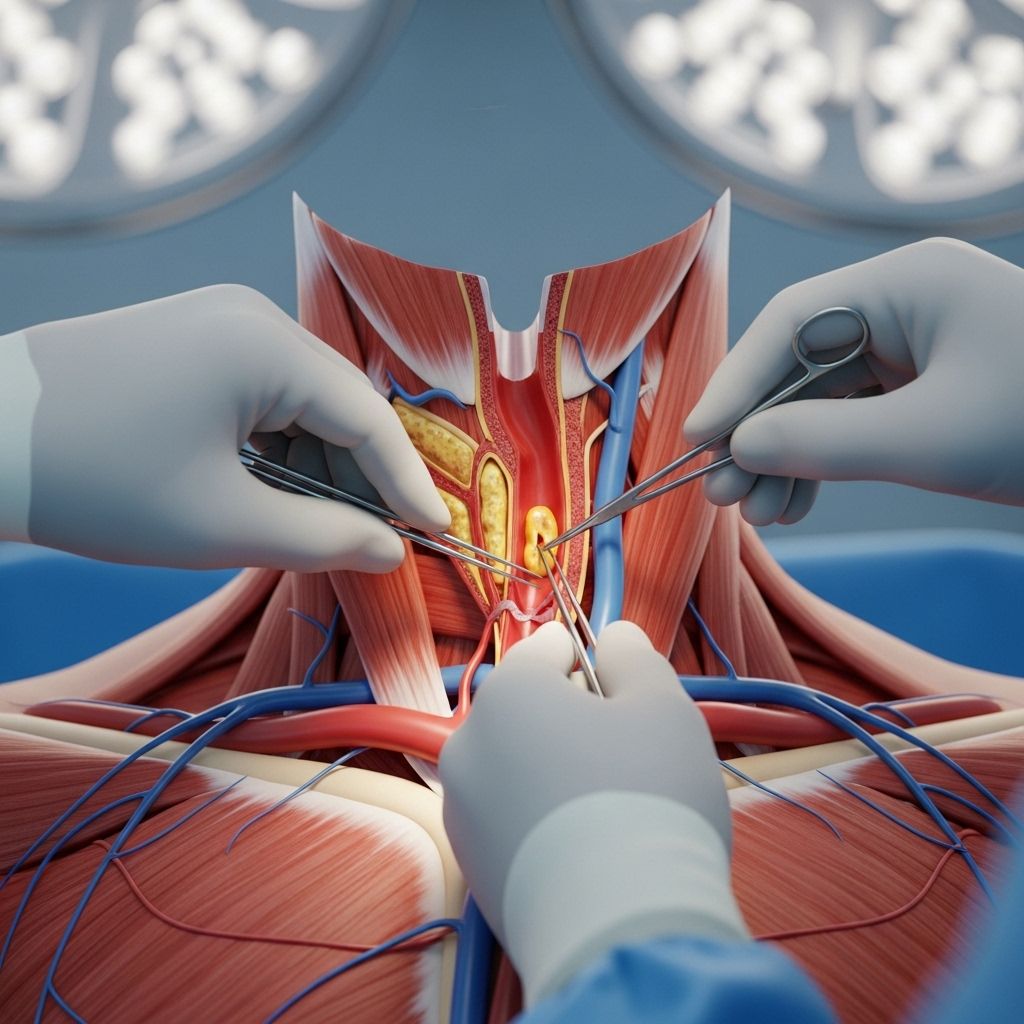
Carotid Endarterectomy
Carotid endarterectomy is a surgical procedure performed to restore normal blood flow to the brain by removing plaque buildup from the carotid arteries in the neck. This operation is a key preventive measure against strokes in patients with carotid artery disease. Understanding the rationale, process, benefits, risks, and recovery associated with carotid endarterectomy can help patients make informed decisions about their vascular health.
Overview
Carotid artery disease develops when fatty deposits (plaques) accumulate in the carotid arteries, which are the main blood vessels on either side of the neck supplying blood to the brain. This process, known as atherosclerosis, can gradually narrow or block the arteries, restricting brain blood flow and greatly increasing the risk of stroke. Carotid endarterectomy is a surgical method to remove these plaques, ultimately reducing the risk of brain ischemia and stroke.
- Carotid arteries are located on each side of your neck.
- Plaque buildup restricts or blocks blood flow to the brain.
- Removing plaque through endarterectomy improves blood flow and reduces stroke risk.
Why Carotid Endarterectomy Is Done
The primary indication for carotid endarterectomy is to reduce the risk of stroke due to severe carotid artery narrowing. Candidates are typically individuals with moderate to severe stenosis, particularly if they have experienced stroke-like symptoms (such as a transient ischemic attack or minor stroke) or if the stenosis is found to be severe even without symptoms. The procedure may be considered when:
- Carotid artery stenosis is greater than 70%, even with no symptoms.
- There are symptoms such as sudden weakness, numbness, confusion, trouble speaking, or vision problems (suggesting mini-stroke or TIA).
- There is evidence from imaging studies showing critical narrowing of carotid arteries.
- Alternative treatments (like medication or lifestyle change) do not sufficiently reduce stroke risk.
By clearing the blockage, the operation helps prevent future strokes, which can be life-threatening or disabling.
Benefits of Carotid Endarterectomy
- Reduces risk of future stroke: Especially impactful for those with significant narrowing or previous symptoms.
- Improves blood flow to the brain, potentially relieving symptoms.
- Offers long-term protection compared to medical therapy alone in selected patients.
Risks and Potential Complications
While carotid endarterectomy is generally safe and effective, all surgeries carry some risks. Possible complications specific to this operation include:
- Stroke: The procedure itself can dislodge plaque or cause a blood clot, leading to a stroke, although the rate is low (generally less than 3-5% in experienced centers).
- Heart attack: Especially in those with underlying cardiac conditions.
- Nerve injury: Temporary or rarely permanent damage to the nerves near the surgical site, potentially leading to hoarseness, swallowing changes, or facial muscle weakness.
- Bleeding: At the surgical site.
- Infection: Risk at the incision or artery repair site.
- Re-narrowing: Scar tissue or subsequent plaque buildup can cause restenosis, though this is less common with improved techniques.
Surgeons balance these risks with the individual patient’s health, the degree of carotid narrowing, symptoms, and overall stroke risk. The overall major morbidity and mortality rates in experienced centers are low, reflecting the high training of vascular teams.
Alternatives to Carotid Endarterectomy
Patients who are not candidates for surgery due to medical comorbidities, anatomical concerns, or personal preferences might be considered for alternatives, including:
- Carotid angioplasty and stenting: A minimally invasive technique using a balloon and stent to open the artery. A filter system may be used to catch dislodged debris.
- Medical management: Aggressive control with medications for blood pressure, cholesterol, and antiplatelet agents, along with lifestyle modifications (diet, exercise, avoiding tobacco).
- Transcarotid artery revascularization (TCAR): A newer minimally invasive approach combining elements of open and endovascular techniques, often suited to high-risk surgical patients.
What to Expect: The Procedure
Preparation, steps during the operation, and what happens afterward are all important for patients undergoing carotid endarterectomy.
Preparation
- Preoperative evaluation often includes blood tests, imaging (such as ultrasound, CT angiography, or MRI), and review of medical history.
- Instructions may be given about which medications to continue or stop prior to surgery.
- Fasting and standardized checks are done before entering the operating room.
Surgical Steps
Depending on the specifics, the operation may involve either general anesthesia (complete sleep) or local anesthesia (numbing with the patient awake but relaxed). The main steps include:
- Making an incision along the front of the neck to expose the carotid artery.
- Clamping the artery above and below the plaque to temporarily stop blood flow (sometimes, a temporary shunt is inserted to maintain flow to the brain during the procedure).
- Opening the artery lengthwise and carefully removing the plaque using precise instruments.
- Repairing the artery with stitches or sometimes a patch (using a vein from your leg or a synthetic material) to widen the artery and reduce risk of recurrence.
- For eversion carotid endarterectomy, instead of a lengthwise slit, the artery is cut, turned inside out, the plaque is peeled out, and then the artery is reattached.
- Once the repair is complete, the incision is closed and dressed.
Variations of the Operation
- Standard endarterectomy: Linear opening and cleaning of the artery.
- Eversion technique: Turning the artery inside out for plaque removal, may lower recurrence risk in some cases.
Recovery and Aftercare
After surgery, most patients stay in the hospital for observation, usually overnight or up to two days. Key points about recovery:
- Most people are up and moving within 24 hours following the operation.
- Incision site care is important to prevent infection.
- Resumption of daily activities usually within a week, but strenuous activity or heavy lifting may be restricted for several weeks.
- Medications continue post-operatively (typically blood pressure, cholesterol, and antiplatelet drugs).
- Regular follow-up visits and carotid imaging (like ultrasound) to ensure patency and check for re-narrowing.
Potential Signs Requiring Immediate Attention
- Signs of stroke: sudden difficulty speaking, weakness or numbness of face or limbs, loss of coordination.
- Severe headache, vision changes, or confusion.
- Red, swollen, or draining incision.
- Rapid heartbeat, chest pain, or shortness of breath.
Clinical Trials and Research
Ongoing clinical trials focus on determining the best candidates for the procedure and comparing endarterectomy against newer, less invasive alternatives. Participation in clinical research may be an option for some patients, contributing to advancing medical knowledge and improving outcomes for future patients.
- Current studies may randomize patients to surgery, stenting, or best medical care, aiming to define long-term stroke prevention strategies.
Frequently Asked Questions (FAQs)
How does carotid endarterectomy reduce stroke risk?
By physically removing the obstructive plaque from the carotid artery, blood flow is improved and the likelihood of a clot blocking flow to the brain—which causes a stroke—is reduced.
Is the procedure painful?
The surgery is performed under local or general anesthesia, meaning you will feel no pain during the operation itself. Mild discomfort near the incision is typical during recovery.
What are the alternatives if I am not a good surgical candidate?
Alternatives include carotid artery stenting, transcarotid artery revascularization (TCAR), or intensive medical therapy to control cardiovascular risk factors.
How long is the hospital stay?
Most patients spend one to two days in the hospital for monitoring after the procedure, especially to watch for signs of stroke or other complications.
What are the long-term results?
In appropriately selected patients, carotid endarterectomy offers significant and lasting stroke risk reduction, especially when combined with continued medical management of blood pressure, cholesterol, and diabetes.
Summary Table: Carotid Endarterectomy vs. Carotid Stenting
| Aspect | Carotid Endarterectomy | Carotid Stenting |
|---|---|---|
| Invasiveness | Open surgery (neck incision) | Minimally invasive (via blood vessel) |
| Anesthesia | General or local | Usually local |
| Recovery Time | 1-2 days in hospital; return to activity in 1-2 weeks | Usually shorter hospital stay |
| Who is best suited? | Most patients with suitable health and anatomy | High-risk surgical patients; anatomy favorable for stenting |
| Main Risks | Stroke, nerve injury, infection, restenosis | Stroke (from emboli), vessel injury, restenosis |
| Long-term Results | Established efficacy in stroke risk reduction | Non-inferior in select patients, but requires long-term data |
Conclusion
Carotid endarterectomy is a proven surgical technique for preventing stroke in individuals with significant carotid artery narrowing. It is most beneficial for those with moderate to severe stenosis, especially if symptomatic, but advancements in less invasive procedures mean that treatment can now be better tailored to individual patient needs. The decision to proceed with endarterectomy involves careful assessment of the risks, benefits, and alternatives by an expert vascular team.
Additional Resources
- Discuss any questions or concerns with your vascular surgeon.
- Stay informed about clinical trials for carotid interventions.
- Maintain regular follow-up and healthy lifestyle habits to maximize your results and prevent further vascular disease.
Similar Articles





Read full bio of Sneha Tete