ADHD and ADD: Understanding Symptoms, Types, and Treatment
A comprehensive overview of ADHD and ADD symptoms, their differences, diagnosis, and management across lifespan.
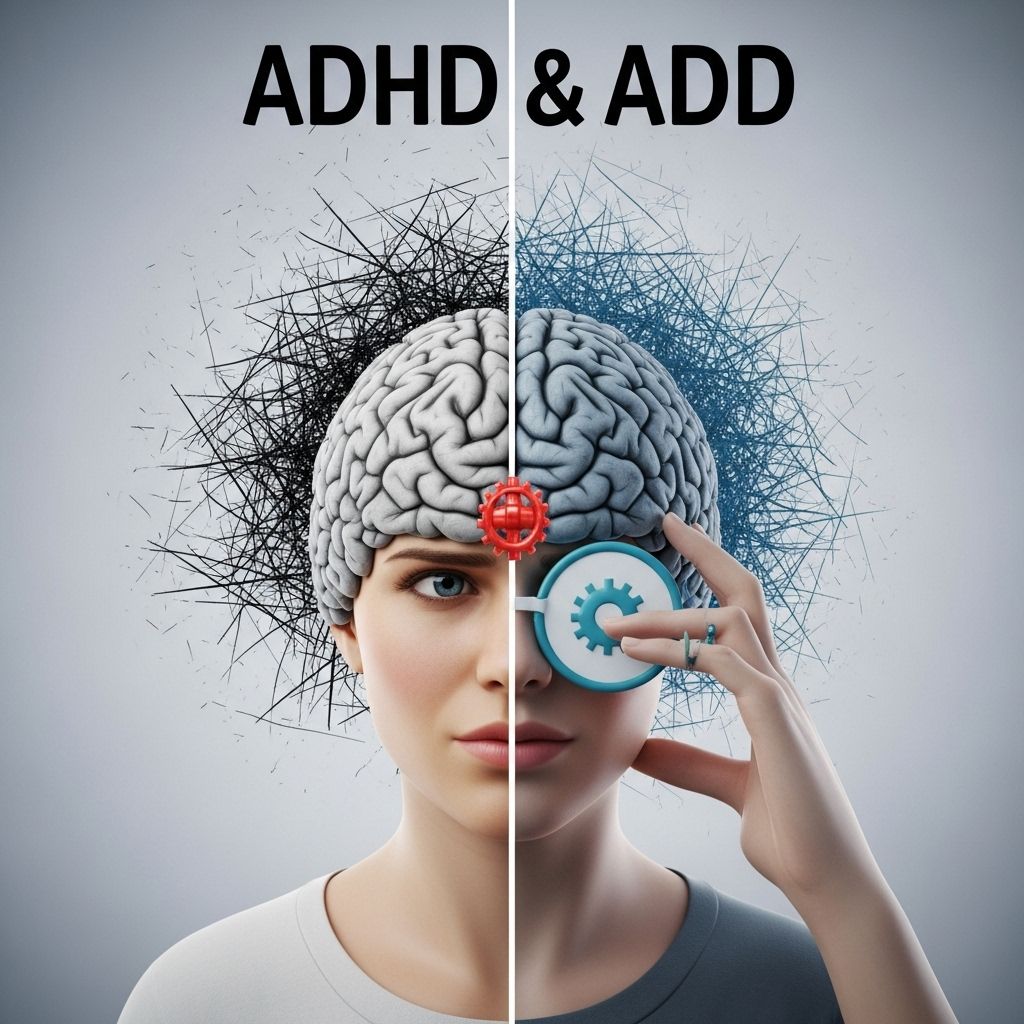
ADHD and ADD: What You Need to Know
Attention-deficit/hyperactivity disorder (ADHD) is a neurodevelopmental condition that affects millions of children and adults worldwide. Visitors frequently encounter the term ADD (Attention-Deficit Disorder), particularly when discussing symptoms of inattention, but the current medical community classifies both under the broader term ADHD. This article provides a thorough look at both ADHD and ADD, outlining their definitions, symptoms, causes, risk factors, diagnosis, complications, and treatment strategies, as well as addressing common questions.
Understanding ADHD and ADD
The terminology and understanding of ADHD and ADD have evolved significantly over time. While both terms are used interchangeably by many, there are important distinctions in current clinical diagnosis.
- ADHD (Attention-Deficit/Hyperactivity Disorder): A condition marked by persistent symptoms of inattention, hyperactivity, and impulsivity. Diagnosed according to criteria outlined in the Diagnostic and Statistical Manual of Mental Disorders (DSM-5).
- ADD (Attention-Deficit Disorder): Previously used to describe individuals with primarily inattentive symptoms, without significant hyperactivity or impulsivity. This term is now considered outdated but is still widely used colloquially to refer to the inattentive presentation of ADHD.
Today, clinicians refer to three presentations of ADHD:
- Predominantly Inattentive Presentation (formerly called ADD)
- Predominantly Hyperactive-Impulsive Presentation
- Combined Presentation (features of both)
Symptoms of ADHD
ADHD symptoms can present differently depending on age, gender, and the specific presentation.
| Presentation | Core Symptoms |
|---|---|
| Predominantly Inattentive (ADD) |
|
| Predominantly Hyperactive-Impulsive |
|
| Combined Presentation |
|
Symptoms in Children
- Difficulties at school, including trouble sitting still, following instructions, or waiting their turn
- Frequent talking, interrupting others, losing items, or being forgetful
- May be mischaracterized as apathetic or lazy, especially in girls
Symptoms in Adults
- Difficulty prioritizing tasks and meeting deadlines
- Trouble organizing work or household responsibilities
- Problems in relationships due to impulsivity or forgetfulness
- May struggle with job performance and time management
Key Differences Between ADHD and ADD
While both terms describe challenges with attention, the key difference is the presence or absence of hyperactivity and impulsiveness:
- ADD is marked primarily by inattention, distractibility, and forgetfulness, without hyperactivity.
- ADHD includes all features of ADD but also hyperactivity and impulsive behaviors.
It is important to note that ADD as a separate diagnosis is no longer officially used, having been replaced with the Inattentive type of ADHD.
Causes and Risk Factors for ADHD
The exact causes of ADHD are complex and not completely understood, but several factors are known to contribute to its development:
- Genetics: ADHD tends to run in families, suggesting a strong genetic link.
- Brain structure and function: Differences in brain anatomy, neurotransmitter activity, and connectivity are associated with ADHD.
- Environmental factors: Low birth weight, exposure to tobacco smoke, alcohol, or drugs during pregnancy, or lead exposure may increase risk.
- Premature birth: Being born prematurely or experiencing complications during pregnancy or birth increases risk.
No evidence shows that parenting style or eating too much sugar causes ADHD.
Diagnosis
Diagnosing ADHD is a comprehensive process performed by qualified professionals such as psychologists, psychiatrists, or pediatricians.
Diagnostic Criteria
- Review of symptoms and medical history (usually requiring symptoms to be present before age 12, be consistent for at least 6 months, and cause functional impairment).
- Use of standardized rating scales and interviews with parents, teachers, or adults themselves.
- Assessment of symptoms across different settings (such as home, school, or work).
- Evaluation to rule out other conditions, such as learning disabilities, mood disorders, or sleep problems.
ADHD Subtypes Defined by the DSM-5
- Predominantly Inattentive Presentation: Difficulties mainly with attention, not hyperactivity.
- Predominantly Hyperactive-Impulsive Presentation: Problems mostly with hyperactivity and impulsive actions.
- Combined Presentation: Combination of inattentive and hyperactive-impulsive features.
Complications and Coexisting Conditions
- Academic difficulties: Children with ADHD may struggle to keep up with classroom demands, leading to poor grades.
- Behavioral problems: Hyperactivity and impulsivity can result in conflicts with peers, teachers, or authority figures.
- Mental health conditions: Increased risk for anxiety, depression, low self-esteem, and substance abuse.
- Relationship problems: Difficult relationships with family members or coworkers are common due to impulsive or inattentive behaviors.
Treatment and Management of ADHD
A combination of strategies often yields the best results in managing ADHD, tailored to each individual’s needs and severity of symptoms.
- Medications
- Stimulant medications (such as methylphenidate and amphetamine derivatives) are highly effective for most individuals, helping to improve attention, focus, and behavioral control.
- Non-stimulant medications, like atomoxetine or certain antidepressants, may be used when stimulants are ineffective or not tolerated.
- Behavioral Therapy and Counseling
- Behavioral therapy helps children and adults develop coping skills, manage impulsiveness, and improve organizational strategies.
- Parental training and education enable caregivers to support children with ADHD effectively.
- Cognitive-behavioral therapy (CBT) can address issues of self-esteem, anxiety, or depression linked to ADHD.
- Educational Support
- Individualized Education Programs (IEPs) and Section 504 plans in schools may provide classroom modifications and accommodations.
- Examples include extra time on tests, seating near the teacher, or the use of organizational tools.
- Lifestyle Modifications
- Establish consistent routines and schedules at home.
- Encourage physical activity and healthy sleep habits.
- Minimize distractions during study or work time.
Prognosis and Living with ADHD
With proper diagnosis and ongoing support, individuals with ADHD can achieve success in school, work, and relationships. Symptoms can change over the lifespan, and management strategies may need to be adapted accordingly. Early identification and intervention help mitigate educational and emotional impacts, promoting long-term positive outcomes.
Frequently Asked Questions (FAQs)
Q: Is there a difference between ADD and ADHD?
A: While ADD was once used to describe individuals with mainly inattentive symptoms and without hyperactivity, the term ADHD now covers three presentations, including inattentive type (formerly called ADD), hyperactive-impulsive type, and combined type.
Q: What causes ADHD?
A: ADHD is caused by a combination of genetic, neurological, and environmental factors. It is not the result of poor parenting or diet.
Q: How is ADHD diagnosed?
A: Diagnosis is based on clinical evaluation of behavior across different settings, ruling out other causes, and may include input from family members, teachers, and standardized tools.
Q: Can ADHD go away with age?
A: Some children may outgrow certain symptoms, but ADHD frequently persists into adolescence and adulthood, though symptoms can evolve over time.
Q: Are there non-medication treatments for ADHD?
A: Yes, behavioral therapy, counseling, educational accommodations, lifestyle modifications, and parental education are important forms of non-medication support.
Q: Does ADHD affect only children?
A: No. Though ADHD is often diagnosed in childhood, many adults have the condition, either undiagnosed from childhood or with symptoms persisting into adulthood.
Resources for Patients and Families
- National Institute of Mental Health (NIMH)
- Centers for Disease Control and Prevention (CDC)
- CHADD (Children and Adults with Attention-Deficit/Hyperactivity Disorder)
- Educational and mental health professionals
When to Seek Help
If you or your child display symptoms of ADHD or ADD that disrupt daily life, academic or work performance, or relationships, consult a qualified healthcare provider. Early support can make a significant difference in managing symptoms and supporting long-term wellbeing.
Similar Articles






Read full bio of Sneha Tete