Febrile Seizures in Children: Causes, Symptoms, and Care
Comprehensive guidance for parents on recognizing, managing, and preventing febrile seizures in children aged 6 months to 6 years.
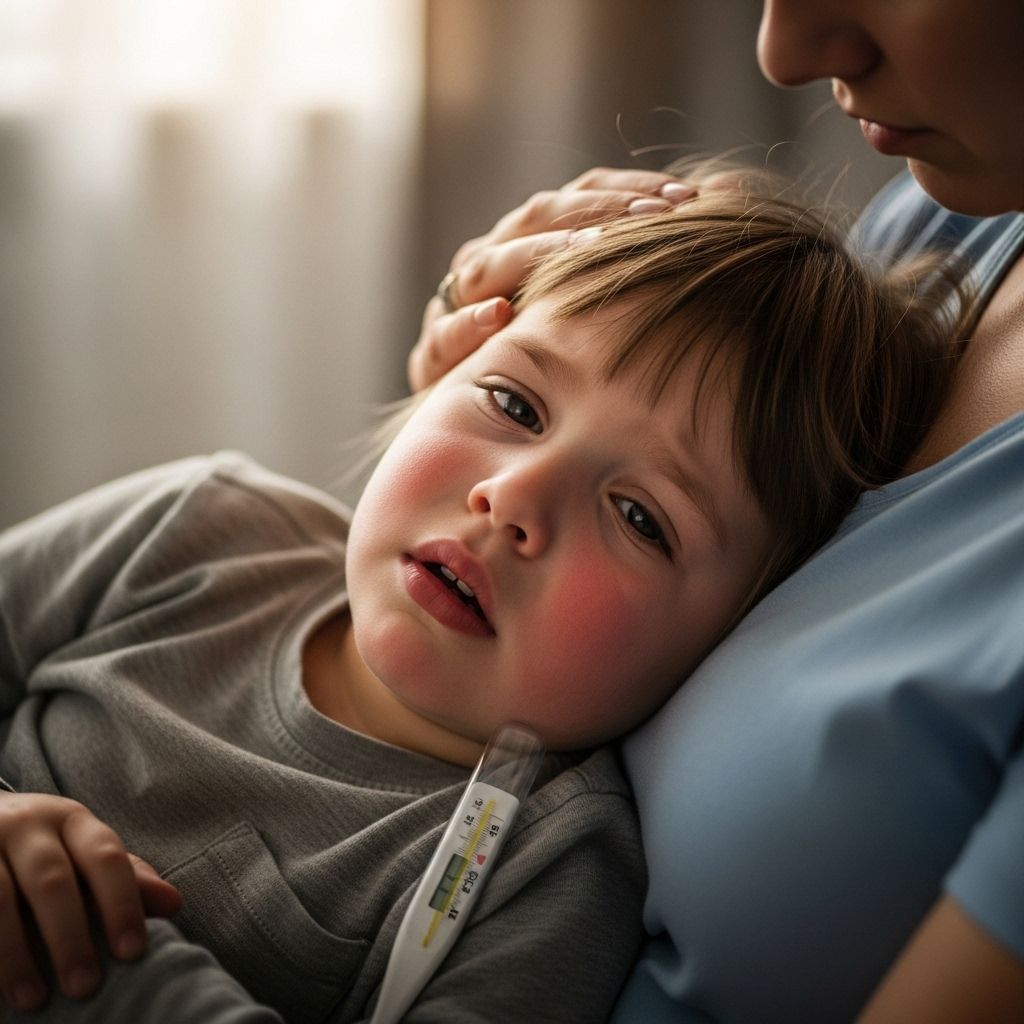
Febrile Seizures in Children
Febrile seizures—also known as febrile convulsions or fever fits—are brief episodes of involuntary muscle contractions and loss of consciousness that occur in young children with high fevers. They are a common concern for parents, typically affecting children between 6 months and 6 years of age. Understanding febrile seizures can help caregivers respond calmly and appropriately when they occur.
What Are Febrile Seizures?
Febrile seizures are convulsions triggered by a sudden rise in body temperature, usually in response to infections like colds or other illnesses. Unlike epilepsy, febrile seizures only happen during febrile (fever-related) episodes and do not reflect chronic neurological issues.
Most febrile seizures are not dangerous, though their appearance can be alarming for parents.
- Age group: Primarily affects children aged 6 months to 6 years.
- Frequency: Occurs in about 1 in 20 children in this age range.
- Common triggers: Rapid increase in body temperature due to infection.
Symptoms of Febrile Seizures
During a febrile seizure, you may observe some or all of the following:
- Sudden loss of consciousness.
- Stiffening of the body followed by rhythmic jerking or twitching of arms and legs.
- Rolling back of the eyes.
- Foaming at the mouth, possible drooling or biting of the tongue.
- May wet themselves or soil clothing.
- Clenched teeth; child may not respond during the episode.
Most febrile seizures last less than 5 minutes, with children usually returning to normal within an hour after the seizure ends.
Types of Febrile Seizures
| Type | Description | Common Features |
|---|---|---|
| Simple Febrile Seizure | Generalised, lasts less than 15 minutes, does not recur within 24 hours. | Full recovery within 1 hour, affects 75% of cases. |
| Complex Febrile Seizure | Lasts longer than 15 minutes, focal onset or features, may recur within same illness in 24 hours, incomplete recovery in 1 hour. | More likely to require specialist assessment. |
| Febrile Status Epilepticus | Episode lasting 30 minutes or more, or clustering of seizures without full recovery between. | Requires emergency medical attention. |
When to Seek Medical Help
While most febrile seizures are not harmful, some situations require urgent evaluation:
- Seizure lasts more than 5 minutes.
- Child does not regain alertness or normal behaviour within an hour.
- Seizure recurs within same illness episode.
- Focal (affecting only certain parts of the body) features are present.
- Child is under 6 months old, or has other worrying symptoms (e.g., stiff neck, rash, difficulty breathing).
- History of developmental delay, neurological problems, or abnormal physical findings after the event.
- Signs of serious infection like meningitis (e.g., persistent vomiting, trouble breathing, unresponsive, rash that doesn’t fade under pressure).
Causes and Triggers of Febrile Seizures
The exact mechanism behind febrile seizures is not fully understood, but several risk factors and triggers are recognized:
- Genetic factors: Family history of febrile seizures or epilepsy increases risk.
- Infections: Viral infections are common precipitants, including upper respiratory infections, ear infections (otitis media), tonsillitis, urinary tract infections, and gastroenteritis.
- Post-vaccination fever: Rarely, fever after immunization may trigger seizures; this is not a contraindication to future vaccinations.
Risk Factors
- Child’s age (most common between 6 months and 3 years).
- Rapid increase, rather than absolute height, of fever.
- Personal or family history of febrile seizures.
- Low iron levels (less commonly implicated).
Diagnosing Febrile Seizures
No specific test confirms febrile seizures. Diagnosis is based on:
- History of sudden seizure in the context of fever in a child aged 6 months to 6 years.
- Exclusion of other causes such as epilepsy and brain infection.
Medical professionals may conduct a thorough physical and neurological examination, assess for signs of serious infection, and review seizure characteristics. In most simple cases, further investigations (such as blood tests, EEG, or imaging) are not needed. Specific tests may be advised if the child is very young, has atypical seizures, does not recover promptly, or when the cause of fever is unclear.
What To Do During a Febrile Seizure
- Stay calm and do not restrain the child.
- Lay the child on their side in a safe location (preferably on the floor, away from furniture).
- Remove nearby objects to prevent injury.
- Do not put anything in the child’s mouth.
- Note the length and features of the seizure.
- Loosen clothing around their neck.
- Check for breathing—if absent, seek emergency help immediately.
- When seizure stops, wait for child to regain full consciousness and remain with them.
When to Call Emergency Services
- Seizure lasts longer than 5 minutes.
- Child is not waking up, remains confused, or behaves abnormally after more than 1 hour.
- Child has difficulty breathing, turns blue or very pale, or develops a non-blanching rash.
- Shows signs of meningitis (such as stiff neck, photophobia, or persistent vomiting).
- Recurrence of seizure during same illness episode.
Treatment and Management of Febrile Seizures
Most simple febrile seizures resolve spontaneously and do not require specific medical treatment.
- During seizure: Supportive care, maintain safety, observe for improvement.
- After seizure: Monitor for return to normal alertness and behaviour. Medical evaluation may be advised, especially for first episode or if atypical features.
- Antipyretics (e.g., paracetamol or ibuprofen) may help lower fever but do not reliably prevent seizures.
Admission to hospital is rarely necessary except under specific conditions—such as prolonged, recurrent, or complex seizures, abnormal recovery, or suspicion of serious underlying illness.
Prevention Strategies
- Promptly treat high fevers with paracetamol or ibuprofen as directed.
- Keep child hydrated and cool (not cold).
- Ensure completion of childhood vaccinations.
- Monitor for early signs of infection.
- Routine use of anti-seizure medicines or preventive drugs is not recommended for simple febrile seizures.
Long-term Outlook and Recurrence
The majority of children recover fully after febrile seizures, with no increased risk of developmental delay or epilepsy in most cases:
- About 1 in 3 children who have a febrile seizure will experience another episode during future illnesses.
- Risk of developing epilepsy later in life is similar to the rest of the population for simple febrile seizures; slightly higher for complex cases (up to 5%).
- Febrile seizures do not usually affect intelligence or long-term brain function.
Living with Febrile Seizures: Parental Advice and Support
Febrile seizures can be distressing to witness, but most children recover quickly. Reassure yourself and your child, and know that the risk of long-term complications is low.
- Keep a record of seizure events and circumstances to share with your healthcare provider.
- Have a plan in place for fever management and seizure care.
- Seek support groups or resources for additional guidance.
Frequently Asked Questions (FAQs)
What should I do if my child has another febrile seizure?
Follow the same first-aid steps: keep the child safe, monitor breathing and duration, and seek medical advice if the seizure lasts longer than 5 minutes or if recovery is abnormal.
Are febrile seizures harmful to my child?
For most children, febrile seizures are not harmful and do not cause brain damage or affect development. Complex or recurrent seizures may require specialist assessment.
Can febrile seizures be prevented?
While lowering fever can help, it does not guarantee prevention. No medication has proven reliable in preventing febrile seizures.
Will my child develop epilepsy?
The risk is low for simple febrile seizures, about 1%, which is similar to the general population. The risk is higher with complex features or family history of epilepsy.
Do vaccinations increase risk of febrile seizures?
Some children may have a seizure following fever after vaccination, but this is rare and not a reason to avoid future vaccines.
Summary Table: Febrile Seizures Quick Facts
| Aspect | Details |
|---|---|
| Typical age range | 6 months to 6 years |
| Duration | Less than 5 minutes (simple), over 15 minutes (complex) |
| Triggers | Sudden fever rise, viral infections |
| Recurrence rate | About 1 in 3 children |
| Long-term risk of epilepsy | 1%-5% depending on complexity/family history |
| Prevention | Treat fever, monitor illness, finish vaccinations |
When to Contact Your Doctor
- First seizure episode.
- Prolonged or atypical seizures.
- Slowed or abnormal recovery.
- Associated concerning symptoms (e.g., vomiting, rash, photophobia).
- Persistent or recurrent febrile convulsions in the same illness episode.
- Child is under one year or has underlying health concerns.
Useful Resources for Parents
- Local NHS Paediatric Services
- NHS 111 (non-emergency advice)
- Support groups for families of children with febrile seizures
- Reliable health websites and your GP for further questions or advice
Similar Articles





Read full bio of medha deb