What to Eat During an Ulcerative Colitis Flare: Safe Foods, Tips, and FAQs
Discover which foods soothe ulcerative colitis flares, how to build a gentle, nutritious diet, and practical meal ideas for symptom relief.
What to Eat During an Ulcerative Colitis Flare
Ulcerative colitis (UC) is a chronic inflammatory bowel disease that causes inflammation and ulcers in the colon and rectum. Managing symptoms, especially during a flare-up, involves careful attention to diet. While there is no universal dietary plan for every person with UC, choosing foods that are gentle on the digestive system and rich in essential nutrients can make a significant difference in symptom control and overall well-being.
Why Diet Matters in Ulcerative Colitis
While food isn’t the cause of ulcerative colitis, it can influence symptom severity, nutritional status, and healing. During a flare-up, the colon is especially sensitive to irritation, so certain foods can cause more gas, cramping, and bowel movements. Conversely, other foods can provide energy, nutrients, and comfort, without worsening symptoms. Managing your diet, especially during flares, helps minimize discomfort, reduce complications like malnutrition, and support remission.
General Dietary Principles for UC Flares
- Prioritize low-fiber, easy-to-digest foods when symptoms are severe to reduce stool bulk and colon irritation.
- Try small, frequent meals to ensure nutritional intake despite decreased appetite.
- Stay well-hydrated since diarrhea and inflammation can cause dehydration and electrolyte loss.
- Reintroduce foods slowly after symptoms subside to identify specific triggers.
- Consult a registered dietitian for personalized guidance if you experience frequent flares or difficulty maintaining weight.
Important Nutrients to Focus On
People with ulcerative colitis are at risk of certain deficiencies, especially during long or frequent flares. Make sure to include or supplement essential nutrients such as:
- Protein: aids in healing and tissue repair.
- Iron: replaces what’s lost from intestinal bleeding.
- Calcium and vitamin D: important for bone health, especially if taking corticosteroids.
- Vitamin B12 and folic acid: essential for red blood cell health.
- Electrolytes: sodium, potassium, and magnesium may need to be replenished.
Best Foods to Eat During an Ulcerative Colitis Flare
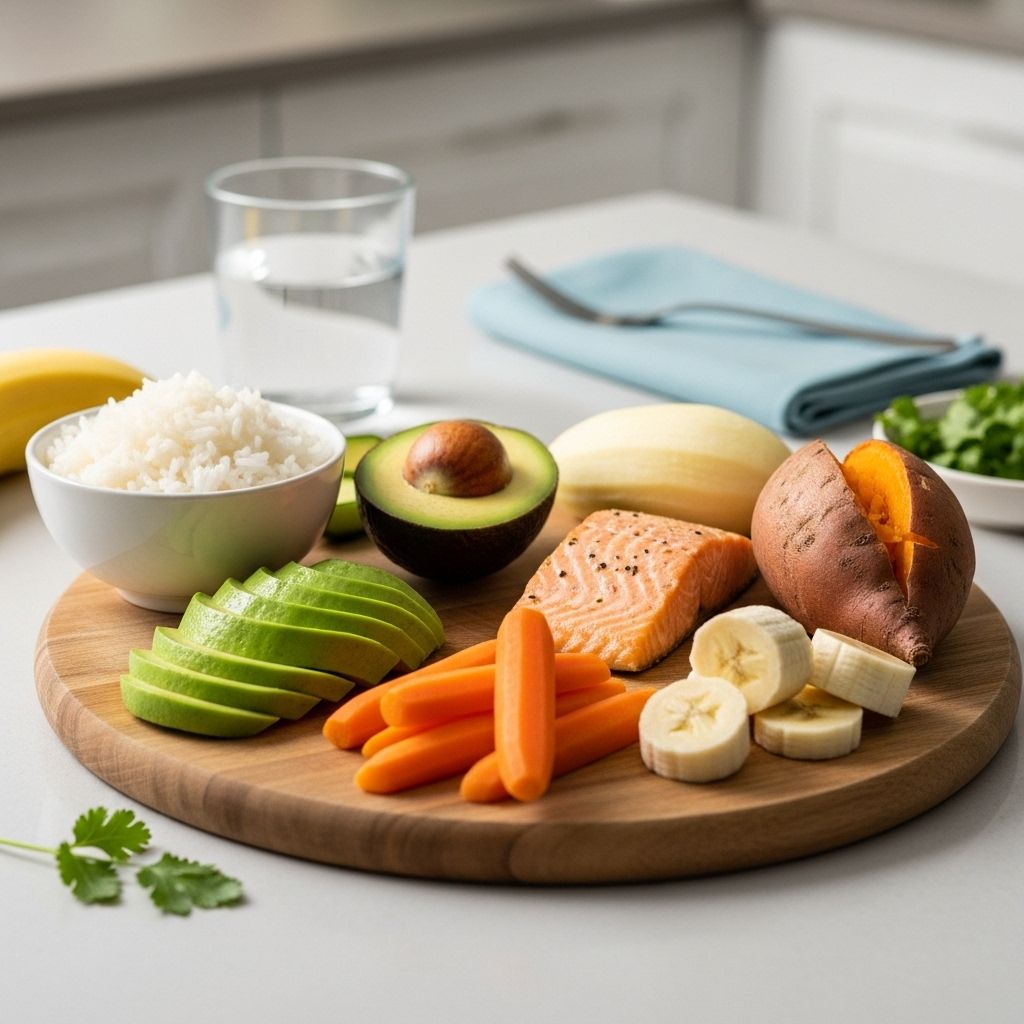
It’s crucial to maintain nutrition even if you don’t feel like eating. The best foods are easy to digest, low in insoluble fiber, and provide energy and nutrients to support healing.
Refined Grains & Low-Fiber Carbohydrates
- White rice
- Potatoes (peeled, mashed, or boiled)
- White pasta or noodles
- Low-fiber bread or gluten-free bread (enriched, if possible)
- Oatmeal or oat bran (cooked very soft)
- Cream of wheat, farina, or grits
- Corn tortillas, semolina, or couscous
Lean Protein Sources
- Skinless chicken or turkey (steamed, poached, or shredded)
- White fish (cod, tilapia) or omega-3-rich fish (salmon, mackerel) cooked gently
- Eggs (boiled or scrambled)
- Tofu or smooth nut butters (peanut, almond, or sunflower, as tolerated)
- Greek yogurt (lactose-free or plain low-fat, with live cultures)
Cooked or Canned Vegetables (Non-Cruciferous)
- Carrots (peeled and well cooked)
- Pumpkin or squash
- Green beans (cooked until soft)
- Asparagus tips (not woody stems, well cooked)
- Zucchini or cucumber (peeled and cooked)
Low-Fiber Fruits
- Bananas (ripe, mashed if needed)
- Cantaloupe or honeydew melon (without seeds or rind)
- Peeled apples (cooked into applesauce)
- Ripe pears (peeled and canned in juice)
- Papaya or peeled peaches
Healthy Fats
- Olive oil, avocado (mashed or blended)
- Nut and seed butters (smooth texture, small amounts)
- Omega-3 rich foods: salmon, walnuts, flaxseed, chia seed
Probiotic-Rich Foods
- Yogurt with live active cultures (lactose-free if sensitive)
- Kefir or fermented non-dairy alternatives
Broth-Based Soups, Smoothies & Meal Blends
- Clear or bone broths help hydration and gentle nutrition
- Smoothies with cooked fruits and lactose-free yogurt
- Pureed soups: squash, pumpkin, or carrot with broth
Recommended Fluids
- Water, clear broths, oral rehydration solutions
- Diluted juices, electrolyte drinks without artificial sweeteners
Foods and Drinks to Avoid During a Flare
Some foods can irritate the already inflamed bowel lining and increase symptoms. Common triggers include:
- High-fiber foods: raw vegetables, whole grains, unpeeled fruits
- Nuts, seeds, and popcorn
- Fatty, fried, or greasy foods
- Red meat and processed meats
- Dairy products (if lactose intolerant)
- Spicy foods and sauces
- Caffeinated beverages and chocolate
- Alcohol (beer, wine, spirits)
- Sugar-free gum, candy, or drinks with sorbitol
- Artificial sweeteners and foods with emulsifiers (found in many processed foods)
- Cruciferous vegetables (broccoli, cauliflower, cabbage – especially raw)
Sample Meal Ideas for a UC Flare
| Meal | Examples |
|---|---|
| Breakfast |
|
| Lunch |
|
| Snack |
|
| Dinner |
|
Tips for Eating Well During a Flare
- Opt for softer textures: blend, mash or puree foods as needed.
- Peel fruits and cook all vegetables to reduce fiber and ease digestion.
- Eat slowly and chew thoroughly to minimize irritation.
- Keep a food and symptom diary to help identify personal triggers.
- Consider small, frequent meals—every 2-3 hours—rather than large meals.
- Avoid skipping meals if possible, as this may worsen fatigue or aggravate symptoms.
- If weight loss is a concern, add calorie-dense, easy-to-digest foods such as nut butters, avocado, and oils in small amounts.
- Supplements like protein shakes may help; always discuss with your doctor before starting new supplements.
Frequently Asked Questions (FAQs)
What are the safest fruits to eat during a UC flare?
Ripe bananas, canned peaches (in juice), peeled apples cooked into applesauce, and seedless melon are usually well-tolerated. Avoid skins and seeds, and opt for soft, cooked, or pureed fruit.
Can I have dairy during a flare?
Dairy may worsen symptoms in people with lactose intolerance. Try lactose-free milk, almond milk, or cultured yogurt with live probiotics to see if your body tolerates these options.
Are high-fiber foods always bad for UC?
High-fiber foods can aggravate symptoms during a flare, but some soluble fiber (such as that found in oatmeal) can be soothing. After a flare, gradually reintroduce fiber as tolerated.
Should I avoid gluten during a flare?
Gluten isn’t a universal trigger, but refined grains (like white bread and rice) are often easier to digest than whole grains. If you notice gluten worsens your symptoms, try gluten-free products.
How can I prevent dehydration?
Drink plenty of water and include clear fluids like broth or oral rehydration solutions, especially if diarrhea is frequent. Monitor for signs of dehydration such as dizziness, dark urine, or dry mouth, and seek medical advice if needed.
When to See Your Doctor or Dietitian
- If you experience unintentional weight loss, persistent diarrhea, or difficulty maintaining nutrition, contact a healthcare professional promptly.
- Dietary changes should always be discussed with your care team, especially before using supplements or making significant adjustments.
Bottom Line: Building Your Gentle Flare Diet
While every individual with ulcerative colitis has unique triggers and tolerances, a gentle, low-fiber, easy-to-digest diet is often best during flares. Focus on hydration, nutrient-rich comfort foods, and avoid well-known irritants. As symptoms improve, slowly reintroduce more foods and pay attention to individual responses. Good nutrition supports healing, helps prevent complications, and optimizes overall health for people with UC.
Similar Articles






Read full bio of Sneha Tete