Photons vs Protons: Advanced Cancer Treatment Options
Understanding the differences between photon and proton radiation therapy for cancer treatment
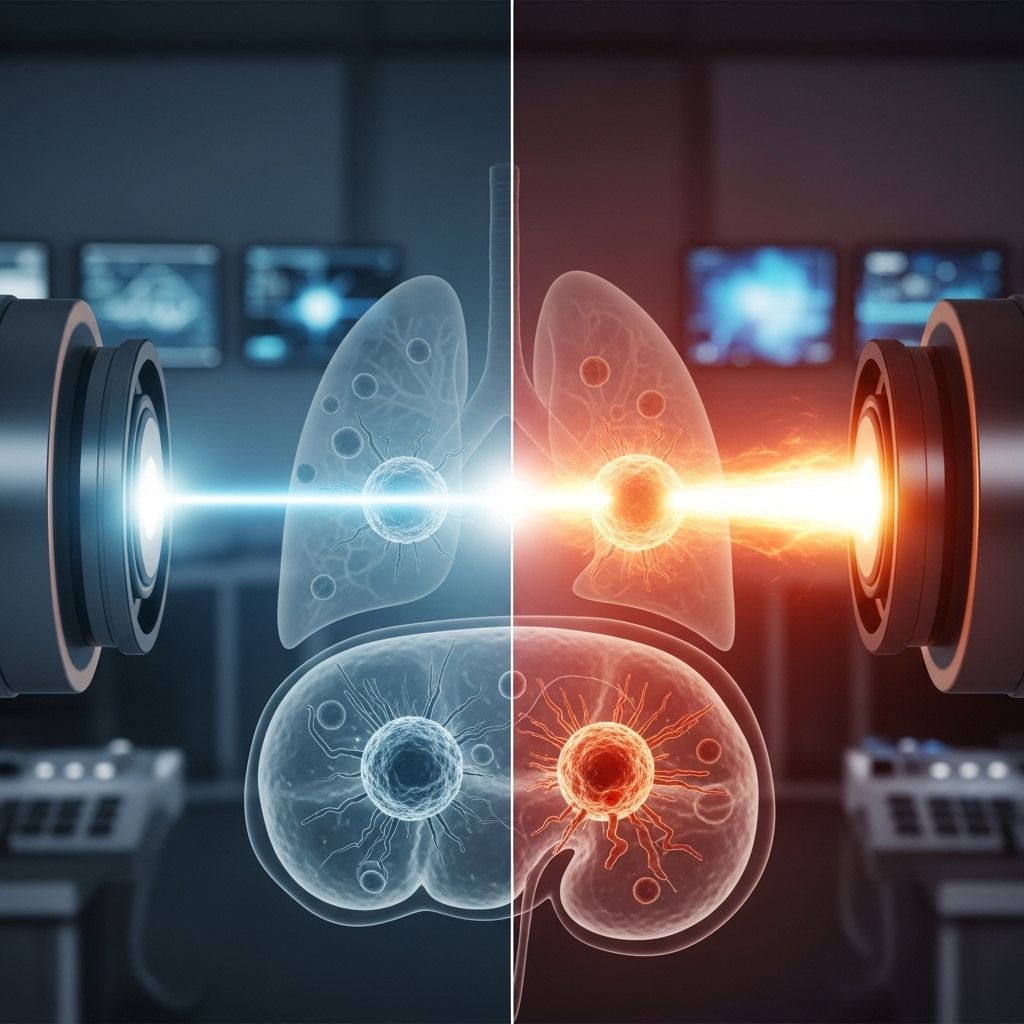
Radiation therapy has been a cornerstone of cancer treatment for decades, offering hope and healing to millions of patients worldwide. As medical technology advances, the precision and effectiveness of these treatments continue to improve dramatically. Two primary forms of radiation therapy1hoton therapy and proton therapy1represent the cutting edge of cancer care, each with unique characteristics that make them suitable for different clinical situations. Understanding the fundamental differences between these two approaches is crucial for patients, families, and healthcare providers as they navigate complex treatment decisions.
The Johns Hopkins National Proton Therapy Center at Sibley Memorial Hospital represents a significant milestone in cancer care, combining state-of-the-art technology with world-class research capabilities. This facility exemplifies the commitment to advancing cancer treatment through innovative approaches that minimize harm to healthy tissue while maximizing therapeutic effectiveness against cancerous cells. The center opened its doors in fall 2019, marking a new era in precision oncology for the Washington, D.C. region and beyond.
Understanding Radiation Therapy Fundamentals
Radiation therapy works by damaging the DNA of cancer cells, preventing them from dividing and growing. Both photon and proton therapies achieve this goal, but they do so through fundamentally different physical mechanisms. The choice between these two treatment modalities depends on numerous factors, including tumor location, size, type, and the patient’s overall health status and age.
Photon therapy, also known as conventional radiation therapy, has been the standard treatment for many decades. It uses high-energy X-rays or gamma rays to destroy cancer cells. These photons travel through the body, depositing energy along their entire path1before reaching the tumor, within the tumor itself, and after exiting the tumor. This characteristic means that healthy tissue both in front of and behind the tumor receives radiation exposure, which can lead to side effects.
Proton therapy represents an advanced form of radiation treatment that uses positively charged particles called protons instead of X-rays. Protons are extracted from hydrogen atoms and accelerated to approximately 70% of the speed of light. The unique physical property of protons is their ability to deposit most of their energy at a specific depth within the body, known as the Bragg peak. After reaching this point, the proton beam stops, delivering virtually no radiation beyond the tumor. This precision is particularly advantageous when treating tumors near critical structures or in pediatric patients where minimizing radiation exposure to developing tissues is paramount.
The Precision Advantage of Proton Therapy
The fundamental advantage of proton therapy lies in its exceptional precision. Advanced imaging techniques allow radiation oncologists to monitor treatment changes in real time and adapt radiotherapy treatment plans accordingly. Tools like optical surface imaging and real-time fluoroscopic gating further improve the precision of proton therapy by limiting the movement of organs during treatment, ensuring that the radiation beam targets only the intended area.
This precision translates into significant clinical benefits, especially for tumors located near sensitive organs or critical structures. For example, when treating tumors near the heart, proton therapy can spare cardiac tissue from radiation exposure that might otherwise lead to long-term cardiovascular complications. Similarly, when treating brain tumors, proton therapy can protect cognitive function by minimizing radiation to healthy brain tissue.
The technology enables radiation to be delivered precisely to cancer tissue, providing a significant advantage compared to conventional radiation therapy. This is especially important in children, where sparing the healthy tissue that surrounds the tumor may be critical for normal growth and development. Proton therapy shows great promise to reduce long-term side effects of radiation treatment, potentially preventing complications such as cognitive or developmental impairments, heart disorders, secondary cancers, and growth abnormalities.
Clinical Applications and Cancer Types
Proton beam therapy has demonstrated effectiveness across a wide range of cancer types. The Johns Hopkins National Proton Therapy Center focuses on several key areas where proton therapy offers particular advantages. Sarcomas, particularly those located in the base of the skull, spine, or retroperitoneum, benefit significantly from proton therapy’s precision. These tumors often grow in locations where surrounding tissue includes critical nerves, blood vessels, or organs that must be protected.
Breast cancer treatment represents another important application of proton therapy. By directing radiation precisely at the tumor bed or chest wall while sparing the heart and lungs, proton therapy can reduce the risk of cardiac complications and lung damage that sometimes occur with conventional radiation. This is particularly valuable for left-sided breast cancers, where the heart is in closer proximity to the treatment area.
Prostate cancer, one of the most common cancers in men, can be effectively treated with proton therapy. The precision of the proton beam allows for delivery of high doses to the prostate while minimizing exposure to the rectum and bladder, potentially reducing urinary and bowel side effects that can impact quality of life.
Eye cancers, including rhabdomyosarcoma and melanoma, require extremely precise treatment to preserve vision and eye function. Proton therapy’s ability to conform to the exact shape of these tumors while sparing the delicate structures of the eye makes it an ideal treatment option.
Thoracic cancers, including lung cancer, lymphoma, and thymoma, present unique challenges due to organ movement with breathing and proximity to the heart and spinal cord. Proton therapy’s precision, combined with motion management techniques, allows for effective treatment while protecting these critical structures.
Head and neck cancers often occur near vital structures such as the brainstem, optic nerves, and salivary glands. Proton therapy can target these tumors while minimizing damage to surrounding tissue, potentially preserving important functions like vision, swallowing, and saliva production.
Liver and pancreatic cancers, notoriously difficult to treat due to their location near multiple organs, can benefit from the dose-sparing capabilities of proton therapy. The treatment can deliver therapeutic doses to the tumor while protecting the stomach, intestines, kidneys, and spinal cord.
Even benign tumors, which are not cancerous but may cause problems due to their size or location, can be treated effectively with proton therapy. The precise nature of the treatment minimizes the risk of transforming benign tissue into malignant tissue through radiation exposure.
Pediatric Cancer Care Advantages
Perhaps nowhere is the advantage of proton therapy more evident than in pediatric oncology. Children with cancer face unique challenges because their bodies are still growing and developing. Radiation exposure to healthy tissue can lead to serious long-term complications, including growth abnormalities, cognitive impairments, hormonal deficiencies, and an increased risk of secondary cancers later in life.
The collaboration between Johns Hopkins and Children’s National Hospital ensures that children with cancer have access to the highest level of care from specialists dedicated to pediatric oncology. This partnership brings together national and international leaders in academic research and clinical medicine to collaborate on advancing pediatric oncology treatment. The care continuum is centered on pediatric oncology patients and their families, recognizing that treating childhood cancer requires not just advanced technology but also specialized expertise in caring for young patients.
Proton therapy is particularly valuable for treating pediatric brain tumors, where protecting developing brain tissue is crucial for maintaining cognitive function and enabling normal childhood development. Similarly, when treating tumors in children’s bodies, proton therapy can spare growing bones, organs, and tissues from unnecessary radiation exposure, reducing the risk of growth abnormalities and organ dysfunction.
Research and Innovation at the Forefront
The Johns Hopkins National Proton Therapy Center is distinguished by its commitment to advancing the science of radiation oncology through rigorous research. The facility includes a fully integrated research room, which allows clinical, basic science, and medical physics faculty to advance clinical trial research, translational research, and technology development research in proton therapy.
One of only a few academic programs in the country with a team conducting biologic research to improve proton therapy, Johns Hopkins researchers are examining how cancer cell-killing proton energy interacts with the cells and tissue surrounding tumors. This research is critical to determining which type of treatment—proton or photon—is best for each individual situation. Through this work, researchers provide the knowledge necessary to make cancer treatment more personal, precise, and effective.
Clinical trials comparing proton and traditional photon therapy help establish evidence-based guidelines for treatment selection. These studies examine outcomes for various cancer types, including sarcomas, gynecological tumors, pancreatic and liver tumors, lymph node cancers, and tumors located near the heart and major blood vessels such as lung or breast cancers.
Advanced neuroimaging research aims to improve image guidance and better direct how to safely increase the strength of radiotherapy in high-grade gliomas to improve effectiveness. Biomarker studies seek to predict a patient’s response to proton treatment earlier in the course of therapy, allowing for more timely adjustments to treatment plans and better prediction of patient outcomes.
The research also focuses on understanding the effects of radiation on both the tumor and its surrounding environment, as well as its effect on normal tissues. This knowledge is essential for finding ways to improve the effectiveness of novel therapies, including immunotherapy, which harnesses the body’s immune system to fight cancer. The combination of proton therapy with immunotherapy represents a promising frontier in cancer treatment that may yield even better outcomes for patients.
Treatment Planning and Technology
The Johns Hopkins Proton Therapy Center utilizes state-of-the-art equipment, including a ProBeat compact-gantry pencil beam scanning proton therapy system with a gantry-mounted cone beam CT. This advanced technology enables highly precise treatment delivery with real-time imaging verification.
Treatment planning involves sophisticated computer modeling to optimize the proton beam’s path and energy. Plans are created using two to three beams with robust optimization accounting for setup uncertainty and range uncertainty. Single-field optimization planning approaches are preferred, but multifield optimization may be employed to achieve improved normal tissue sparing when clinically beneficial.
The final dose is computed using Monte Carlo calculations with high statistical accuracy, ensuring that the treatment plan delivers the intended radiation dose to the tumor while minimizing exposure to surrounding healthy tissue. This level of computational precision, combined with advanced delivery technology, enables the exceptional accuracy that defines modern proton therapy.
Collaboration and Education
The Johns Hopkins National Proton Therapy Center exemplifies the power of collaboration in advancing cancer care. Through a strategic partnership with Howard University, the proton center serves as an educational and training site for students enrolled in Howard’s medical physics program. This partnership helps develop the next generation of medical physicists who will continue to advance the field of radiation oncology.
The center also collaborates with the NCI Center for Cancer Research’s Neuro-Oncology Branch, referring patients to participate in natural history studies that collect and analyze tissue to discover mutations and learn more about each type of rare brain and spine tumor. These collaborative efforts accelerate scientific discovery and translate research findings into improved patient care more quickly.
Phased Opening and Expansion
The Johns Hopkins National Proton Therapy Center opened in phases to ensure optimal implementation of this complex technology. The first treatment room opened in October 2019, followed by the second room in spring 2020. The third treatment room and fixed beam research room were scheduled to open in fall 2020, creating a comprehensive facility capable of treating numerous patients while simultaneously conducting cutting-edge research.
This phased approach allowed the clinical team to gain experience with the technology, refine treatment protocols, and ensure that every aspect of patient care met the highest standards of quality and safety. As each treatment room came online, the center’s capacity to serve patients increased, making this advanced treatment option available to more individuals who could benefit from proton therapy’s unique advantages.
Frequently Asked Questions
Q: What is the main difference between photon and proton therapy?
A: The main difference lies in how radiation is deposited in the body. Photons travel through the entire body, depositing energy before, during, and after passing through the tumor. Protons deposit most of their energy at a specific depth (the Bragg peak) and stop, delivering virtually no radiation beyond the tumor, which better protects healthy tissue.
Q: Is proton therapy suitable for all types of cancer?
A: While proton therapy offers advantages for many cancer types, it is not always the best choice for every patient. The decision depends on factors such as tumor location, size, type, proximity to critical structures, and individual patient characteristics. Radiation oncologists carefully evaluate each case to determine the most appropriate treatment approach.
Q: Why is proton therapy particularly beneficial for children?
A: Children’s bodies are still growing and developing, making them more vulnerable to radiation’s long-term effects. Proton therapy’s precision minimizes radiation exposure to healthy tissue, reducing the risk of growth abnormalities, cognitive impairments, hormonal problems, and secondary cancers that can occur years after treatment.
Q: Does proton therapy have fewer side effects than conventional radiation?
A: Proton therapy typically results in fewer side effects because it delivers less radiation to healthy tissue surrounding the tumor. However, the tumor itself still receives a therapeutic dose of radiation, so some side effects related to treating the cancer may still occur. The overall impact on quality of life is often reduced compared to conventional radiation.
Q: How long does proton therapy treatment take?
A: The actual proton beam delivery typically takes only a few minutes per session. However, setup and positioning to ensure precise targeting may take 15-30 minutes. Most patients receive treatment five days per week for several weeks, with the total duration depending on the cancer type, location, and treatment plan.
Q: What kind of research is being conducted at proton therapy centers?
A: Research includes clinical trials comparing proton and photon therapy outcomes, studies examining how proton energy interacts with tumor cells and surrounding tissue, biomarker research to predict treatment response, development of combination therapies with immunotherapy, and advanced imaging techniques to improve treatment precision and monitoring.
Similar Articles





Read full bio of Sneha Tete