Understanding Supraventricular Tachycardia (SVT): Causes, Symptoms, Diagnosis, and Treatment
A comprehensive guide to SVT: causes, symptoms, diagnosis, management, and common queries answered for patients and families.
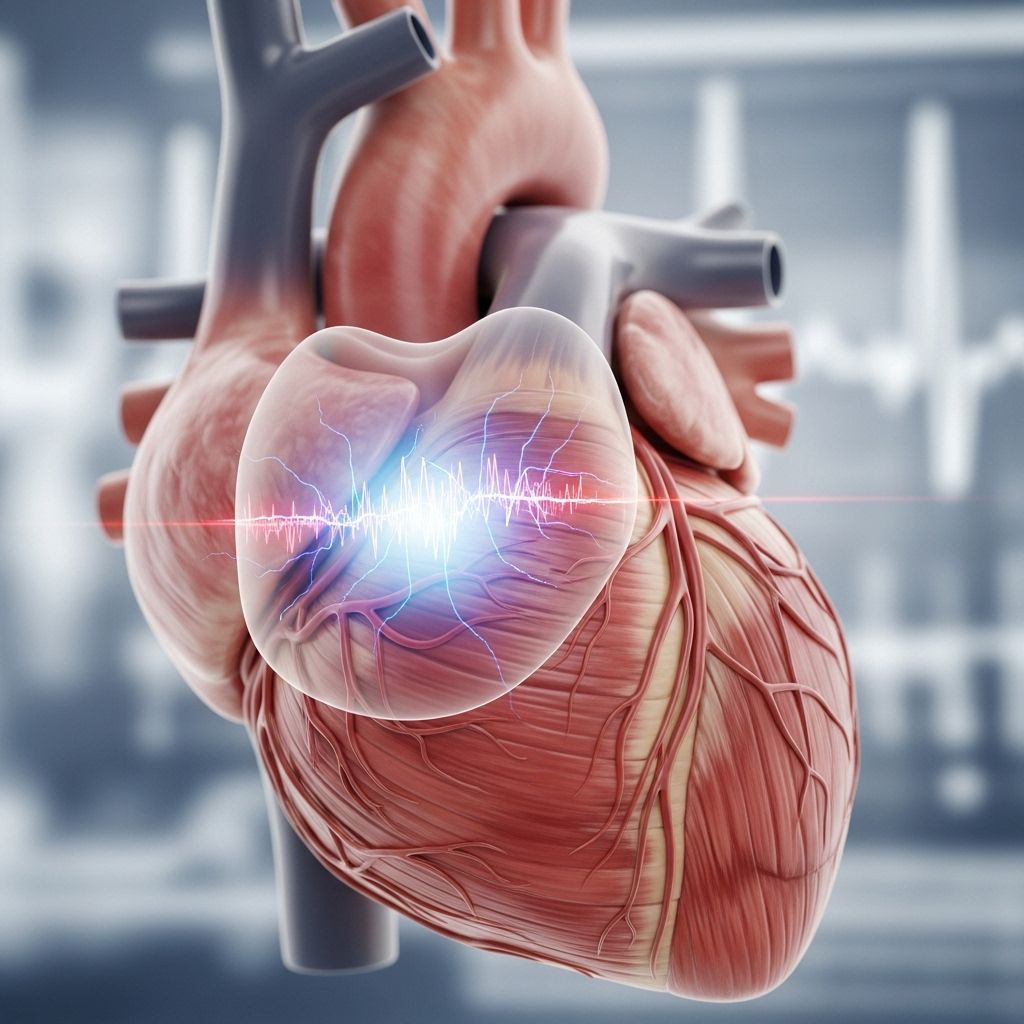
Supraventricular Tachycardia (SVT): What Is It?
Supraventricular tachycardia (SVT) is a condition in which the heart experiences episodes of abnormally fast, regular beating, typically caused by misrouted electrical signals arising from areas above the heart’s ventricles. SVT is one of the most common heart rhythm problems, but it is rarely life-threatening for the majority of patients. Episodes can be short or last several hours and may happen suddenly at any age, though often first appear in childhood or young adulthood.
The term “supraventricular” refers to the origin of the abnormal electrical impulses as being above (supra-) the ventricles, mainly in the atria. “Tachycardia” means a heart rate that is faster than normal, usually over 100 beats per minute.
Types of SVT
- Atrioventricular nodal re-entrant tachycardia (AVNRT): The most common type, originating at the atrioventricular (AV) node, often due to extra abnormal electrical pathways.
- Atrioventricular re-entrant tachycardia (AVRT): Caused by an extra connection between the atria and ventricles, such as in Wolff–Parkinson–White (WPW) syndrome.
- Atrial tachycardia: Starts in the atria and is less common in children and young adults.
Who Is Affected by SVT?
SVT can affect anyone, occurring in otherwise healthy children, teenagers, adults, and older people. The first episode often appears in childhood or early adulthood, though it can happen at any age. Some individuals experience only one episode in their life, while others have frequent or recurrent symptoms. Certain factors can increase SVT risk or trigger episodes:
- Medications: Some asthma inhalers, herbal supplements, and cold remedies.
- High intake of caffeine or alcohol.
- Stress or emotional upset.
- Smoking.
Avoiding these triggers can help reduce SVT episode frequency.
Symptoms of SVT
Symptoms typically occur during an SVT episode and may last from seconds to hours. Possible symptoms include:
- Palpitations – feeling your heart pounding, fluttering, or racing.
- Fast pulse rate (usually 140–200 beats per minute; normal adult pulse: 60–100 bpm).
- Chest pain or pressure.
- Shortness of breath.
- Light-headedness or dizziness.
- Fatigue.
- Loss of consciousness (“syncope”) – rare, but can happen if blood flow to the brain drops significantly.
Some people have no symptoms and discover SVT incidentally during routine medical tests.
Causes of SVT
SVT is caused by abnormal electrical activity in the heart. Normally, the heart’s rhythm is controlled by the sinoatrial (SA) node—the natural timer located in the right atrium. In SVT, another area of the heart outside the SA node takes control, sending rapid electrical signals that override the normal rhythm. SVT’s origins may be:
- Congenital: Abnormal electrical pathways present from birth, such as accessory fibers in WPW syndrome.
- Developed after illnesses: Damage from infections, inflammation, or heart surgery.
- Triggers: Stress, medications, caffeine/alcohol, and stimulants can provoke SVT in susceptible individuals.
Diagnosing SVT
Diagnosing SVT involves recording heart activity and identifying abnormal rhythms. Key diagnostic tools include:
- Electrocardiogram (ECG): Detects fast rhythms and abnormal electrical patterns.
- 24-hour ECG (Holter Monitor): Records heart activity continuously to catch fleeting or infrequent episodes.
- Event recorders: Devices patients use when they notice symptoms.
- Clinical assessment: Evaluation of symptoms and medical history.
If SVT is present during recording, diagnosis is straightforward. Otherwise, your doctor may order longer-term monitoring.
How SVT Differs from Sinus Tachycardia
| Feature | Sinus Tachycardia | SVT |
|---|---|---|
| P-wave appearance | Usually upright in leads I and AVF | Often invisible or negative in II, III, AVF |
| Heart rate variability | Varies beat-to-beat, responds to stimulation | No beat-to-beat variability |
| Onset/termination | Gradual | Abrupt |
| Associated illness | Present (e.g., fever, shock) | Typically absent |
Treatment for SVT
There are several management strategies for SVT, depending on the frequency, severity, and impact of symptoms. Many SVT episodes stop spontaneously and require no intervention. However, if symptoms persist or cause problems, treatments include:
- Vagal manoeuvres: Simple physical actions that stimulate the vagus nerve, slowing the heart rate. Techniques include holding your breath and bearing down, coughing, or immersing your face in cold water.
- Medications: In hospital settings, rapid-acting drugs like adenosine are delivered by injection to interrupt abnormal electrical pathways and restore normal rhythm. Other anti-arrhythmic drugs may be used if adenosine is unsuitable.
- Cardioversion: An electric shock given to the heart in a controlled hospital setting, used in rare cases when medications fail or if symptoms are severe.
- Regular medication: Daily tablets (such as beta-blockers or calcium channel blockers) may help prevent SVT episodes in those with frequent problems.
- Catheter ablation: A minimally invasive procedure using radiofrequency energy to destroy the tiny area responsible for the abnormal impulses. Ablation offers a permanent cure in many cases for patients with recurrent or troublesome SVT.
Many people with SVT lead normal lives with little interference from their condition. Some require no treatment, while others need regular medications or interventions. In severe or chronic cases, ablation may be recommended.
Managing SVT Episodes at Home
- Rest and relaxation: Sit down, stay calm, and avoid strenuous activity during an SVT attack.
- Try vagal manoeuvres: As advised by your healthcare provider, physical techniques may abort an episode safely.
- Monitor symptoms: Note the duration and severity, and seek medical help if you feel unwell.
- Avoid triggers: Reduce caffeine, alcohol, smoking, and stress where possible.
Possible Complications of SVT
- Heart failure: Rare in adults, but sustained SVT in infants and children can cause cardiac failure, especially if episodes last many hours.
- Reduced blood pressure: Rapid heart rates may decrease cardiac output, causing dizziness or even fainting in some cases.
- Social or psychological impact: Anxiety about unpredictable episodes or fear of recurrence.
Most episodes resolve without lasting damage, but persistent or very rapid SVT warrants urgent medical assessment.
Driving and SVT
- Group 1 license holders (cars/motorcycles): You must not drive if SVT has caused, or is likely to cause, incapacity. Resume driving only after an underlying cause is diagnosed and SVT is controlled for at least four weeks—report to the DVLA if required.
- Group 2 license holders (lorries/buses): You must notify the DVLA and refrain from driving if SVT has caused or may cause incapacity. Driving may be allowed only after an underlying cause is found and SVT is controlled for at least three months, with heart function assessed as adequate.
SVT in Children
SVT can occur in babies, children, and young people. In infants, SVT is usually well tolerated, but episodes lasting more than six hours can cause heart failure symptoms, including poor feeding, rapid breathing, or swelling. Older children may experience classic symptoms like chest pain, palpitations, and dizziness. Treatment follows principles similar to adults, with careful monitoring and, if necessary, tailored medications or ablation procedures.
- Diagnosis: ECG recording, heart monitoring, and symptom assessment.
- Treatment options: Vagal manoeuvres, medications, and in rare cases, ablation.
Living with SVT: Advice and Support
- Maintain regular check-ups: Attend appointments as advised by your cardiologist or GP.
- Live a healthy lifestyle: Eat well, manage stress, avoid excessive caffeine and alcohol.
- Inform your doctor: about any new or worsening symptoms, side effects from medications, or impact on your daily life.
- Support: Patient associations and healthcare teams can provide educational resources and emotional support.
Frequently Asked Questions (FAQs)
Q: Is SVT dangerous?
A: For most people, SVT is not life-threatening, though symptoms can be distressing. Rarely, SVT leads to fainting or, in infants, cardiac failure. Always seek urgent help if you feel unwell during an episode.
Q: Can SVT go away by itself?
A: Many SVT episodes stop spontaneously or with simple physical techniques (vagal manoeuvres). Some patients only ever experience one episode.
Q: Can SVT be cured?
A: Catheter ablation offers a permanent cure for many people with recurrent SVT. Medications can also help prevent further episodes.
Q: How is SVT different from other arrhythmias?
A: SVT causes a very fast but regular heart rhythm originating above the ventricles, while other arrhythmias like atrial fibrillation and ventricular tachycardia have different causes, symptoms, and risks。
Q: Should I avoid exercise or certain activities?
A: Most people with SVT can exercise normally and participate in daily activities. Talk to your doctor about any individual precautions, especially if SVT is not well-controlled。
Q: What should I do if I have an SVT episode?
A: Sit down, stay calm, try vagal manoeuvres if advised by your healthcare provider, and seek medical attention if symptoms are severe or prolonged。
Resources and Further Reading
- Patient organizations:Arrhythmia Alliance, British Heart Foundation for support and information。
- Specialist clinics:Cardiology and electrophysiology clinics offer tailored advice and advanced treatments。
- Online resources:Reliable medical websites for patient leaflets and guidelines。
Key Points to Remember about SVT
- SVT is an abnormally rapid, regular heart rhythm arising from above the ventricles。
- Most episodes are not dangerous and stop spontaneously or with simple techniques。
- Symptoms include palpitations, chest pain, breathlessness, dizziness, or fainting。
- Treatment options range from vagal manoeuvres and medication to catheter ablation。
- SVT can affect children and adults and often causes no lasting harm。
- If episodes are frequent, severe, or accompanied by fainting, seek medical advice promptly。
Similar Articles





Read full bio of Sneha Tete