What to Eat (and Avoid) When You Have Diarrhea: A Practical Guide
Learn exactly what to eat, drink, and avoid to recover from diarrhea and restore digestive balance safely.
Diarrhea is a common digestive issue that can disrupt your daily routine and deplete your body’s essential fluids and nutrients. Knowing what to eat—and what to avoid—during a bout of diarrhea is crucial for recovery, symptom relief, and preventing dehydration. This guide explores the best dietary strategies, safe foods, potential triggers, and warning signs indicating when it’s time to consult a healthcare provider.
Understanding Diarrhea: Causes and Why Diet Matters
Diarrhea is defined as frequent, loose, or watery stools. Most cases are short-lived and can resolve on their own within a few days, but what you eat and drink plays a significant role in managing symptoms, supporting recovery, and preventing complications like dehydration.*
Some common causes of diarrhea include:
- Infections (viral, bacterial, or parasitic)
- Food intolerances, such as lactose intolerance
- Medications or supplements (e.g., antibiotics, magnesium-containing antacids)
- Dietary factors (excess fats, sugar, artificial sweeteners)
- Chronic digestive conditions (like irritable bowel syndrome, or IBS)
No matter the cause, making the right dietary choices is a key part of easing symptoms and supporting gut recovery.
Foods to Eat When You Have Diarrhea
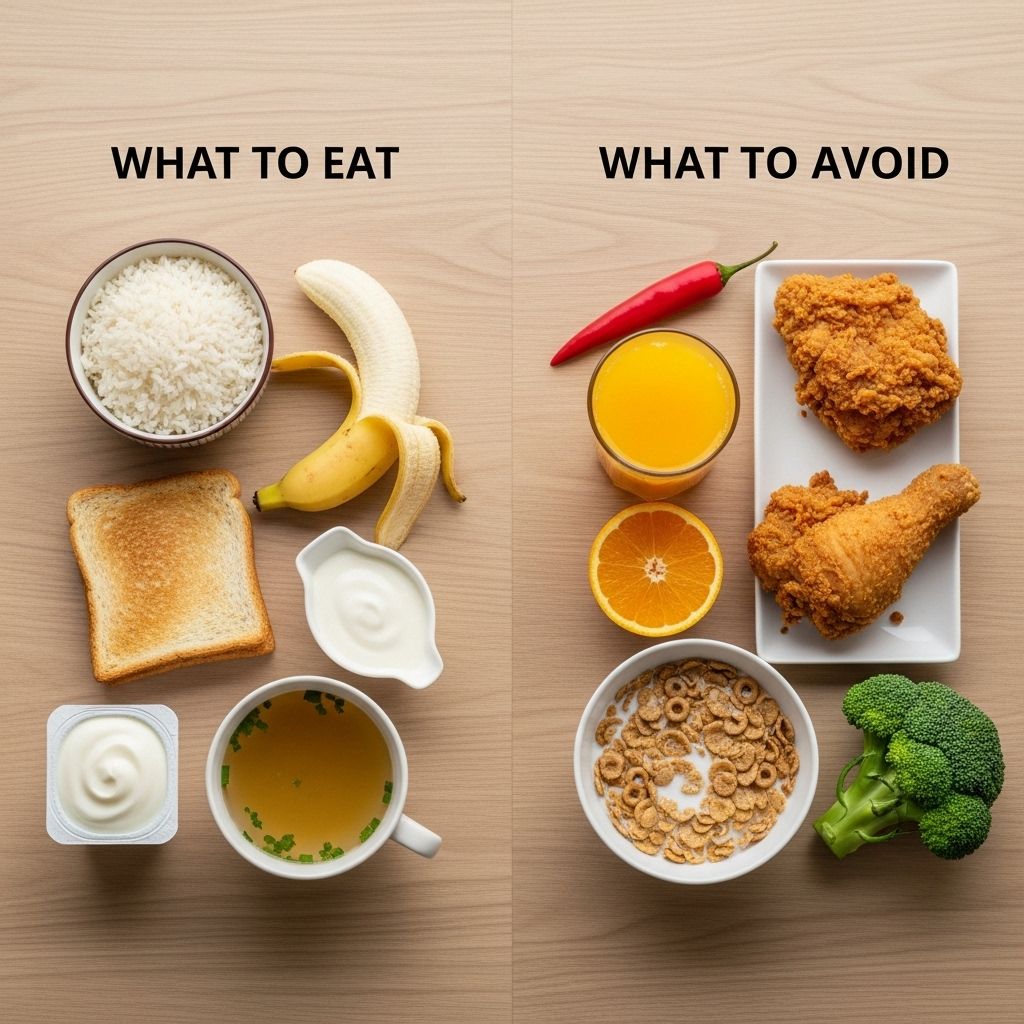
When your digestive system is irritated, stick with foods that are bland, easy to digest, and can help bulk up your stool. Your best bets include the BRAT diet and other simple, low-fiber options.
The BRAT Diet
The BRAT diet is a time-tested approach for digestive woes. It includes:
- Bananas: Easy to digest, provide potassium, and contain pectin, a type of soluble fiber that can help absorb liquid in the intestines.
- Rice (white): Low-fiber and starchy, rice helps bulk up stool.
- Applesauce: Contains pectin and is gentle on the stomach.
- Toast (white bread): Low in fiber and unlikely to upset your digestion.
Other Gentle Foods
Beyond the BRAT diet, the following foods can also be helpful:
- Boiled potatoes (without skin or seasoning)
- Plain crackers (unsalted, unflavored)
- Oatmeal, cream of wheat, or rice porridge
- Cooked carrots and other soft, non-cruciferous vegetables
- Lean proteins like boiled or baked chicken (no skin or heavy seasoning)
- Soups and broths (clear, with minimal fat)
Why These Foods?
These options are bland and low in insoluble fiber, making it easier for your digestive tract to process and absorb nutrients. Soluble fiber (the kind found in bananas and applesauce) absorbs excess moisture in the intestines and can help form firmer stools.
Fluids: Staying Hydrated During Diarrhea
One of the biggest risks with diarrhea is dehydration, as your body rapidly loses fluids and electrolytes. It is essential to replenish these losses to support recovery and prevent complications.
To stay hydrated, focus on:
- Water: Sip small amounts frequently if you can’t tolerate larger volumes.
- Clear broths and soups: Add salt and potassium (but avoid heavy, fatty soups).
- Oral rehydration solutions (commercial or homemade): Provide the right balance of fluids and electrolytes.
- Sports drinks (in moderation): These can replenish electrolytes but avoid those high in sugar.
Continue sipping fluids even if your appetite is low, and avoid dehydration signs such as dry mouth, severe thirst, minimal urination, or dizziness.
Foods and Drinks to Avoid With Diarrhea
Certain foods and drinks can worsen diarrhea or further irritate your digestive system. Steering clear of them during your recovery is just as important as choosing the right foods to eat.
High-Fat and Fried Foods
- Fried, greasy, or fatty foods slow digestion and can stimulate further bowel movements.
- Examples: French fries, fried chicken, cheeseburgers, pizza, creamy gravies.
Sugary Foods and Artificial Sweeteners
- High-sugar foods (candy, soda, sweet baked treats) draw extra water into the bowel, worsening diarrhea.
- Fruit juices—especially those containing fructose—can upset the digestive tract.
- Artificial sweeteners (especially sorbitol, mannitol, xylitol) have a laxative effect.
Dairy Products
- Milk, cheese, ice cream, and other dairy foods contain lactose. Diarrhea can disrupt your body’s ability to digest lactose, even in people who normally tolerate it.
- Lactose intolerance can worsen symptoms until your gut heals.
Spicy Foods
- Spicy seasonings and sauces can further inflame your digestive tract.
High-Fiber Foods (Especially Insoluble Fiber)
- Whole grains, brown rice, bran, raw vegetables (especially cruciferous like broccoli, cabbage), seeds, and nuts.
- These foods add bulk to stool and can intensify bowel movements when you have diarrhea.
Caffeinated and Carbonated Drinks
- Coffee, cola, and energy drinks contain caffeine, which can stimulate the gut and encourage more loose stools.
- Sparkling water and sodas introduce excess gas and may worsen bloating or abdominal cramping.
| Foods to Eat | Foods to Avoid |
|---|---|
| Bananas | Fried foods |
| White rice | Fatty meats, gravies |
| Applesauce | Spicy foods |
| Toast (white bread) | Sweets, candy, fruit juice |
| Boiled potatoes | Dairy products |
| Plain crackers | Nuts, raw vegetables |
| Oatmeal, rice porridge | Caffeinated drinks, soda |
| Broth-based soups | Artificial sweeteners |
How to Eat (Not Just What to Eat): Helpful Tips for Recovery
- Eat small, frequent meals throughout the day instead of a few large meals. This reduces stress on your digestive system.
- Keep foods bland and free from added spices or strong flavors.
- Focus on foods served warm or at room temperature—very hot or cold foods may irritate your gut further.
- Gradually return to regular foods after 1–2 days, as symptoms improve.
Special Considerations: Food Sensitivities and Chronic Diarrhea
For some, persistent diarrhea may be linked to underlying issues like food intolerances or sensitivities. Key triggers include:
- Lactose intolerance: May require avoiding all dairy until symptoms resolve, then reintroducing low-lactose foods slowly.
- Fructose malabsorption: Many fruits, sweeteners, and processed foods contain fructose, which can lead to loose stools in sensitive individuals.
- High FODMAP foods: Certain carbohydrates (found in wheat, onions, beans, etc.) can cause digestive upset in susceptible people. A FODMAP-restricted diet, preferably guided by a registered dietitian, may help identify your triggers.
When to Seek Medical Care
Most diarrhea clears up within a few days, but prolonged or severe cases can be dangerous and may signal a more serious underlying issue. Call your doctor if you experience:
- Diarrhea lasting more than 2 days (adults) or 24 hours (children)
- Severe dehydration (very little urination, excess thirst, dry mouth, dizziness)
- High fever (over 102°F/39°C)
- Blood or pus in your stool, or black/tarry stools
- Severe abdominal pain, cramping, or persistent vomiting
- Unintentional weight loss or signs of malnutrition
Persistent or chronic diarrhea deserves medical evaluation, especially if accompanied by warning symptoms or significant impact on daily life.
Frequently Asked Questions About Diarrhea and Diet
What is the BRAT diet and why is it recommended for diarrhea?
The BRAT diet includes bananas, rice, applesauce, and toast. These bland, low-fiber foods help firm up stools and are gentle on an irritated digestive system.
Can I eat eggs when I have diarrhea?
Yes, eggs are generally well tolerated if boiled or cooked without butter or oil. Avoid fried or heavily seasoned eggs.
Should I avoid all fruits and vegetables?
Not all. Stick to bananas, applesauce, and well-cooked, non-cruciferous vegetables (like carrots or potatoes without skin). Avoid raw, high-fiber, or cruciferous vegetables while symptoms persist.
Is yogurt okay to eat during diarrhea?
Plain yogurt with live, active cultures may actually help restore gut bacteria, unless you are lactose-intolerant. Avoid sweetened or flavored varieties.
What drinks should be avoided?
Avoid caffeinated, alcoholic, and carbonated beverages, as well as fruit juices and sports drinks high in sugar. Focus on water, clear broths, and oral rehydration solutions.
Key Takeaways for Eating With Diarrhea
- Choose bland, low-fiber foods—mainly the BRAT diet and gentle options like mashed potatoes, plain crackers, and broths.
- Stay hydrated by sipping water, clear soups, or oral rehydration solutions throughout the day.
- Avoid fatty, fried, sugary, caffeinated, and high-fiber foods that could worsen symptoms.
- Seek medical advice for diarrhea lasting more than a couple days or if you show signs of dehydration or serious illness.
Your diet is one of your best tools for managing diarrhea, recovering quickly, and minimizing complications. Know your triggers, eat consciously during illness, and don’t hesitate to seek help if symptoms are severe or unrelenting.
Similar Articles






Read full bio of medha deb