Cat Breeds With Big Ears: Unique Felines With Striking Features
From Oriental Shorthairs to Sphynx, meet the most distinctive and charming cat breeds known for their prominent, expressive ears.
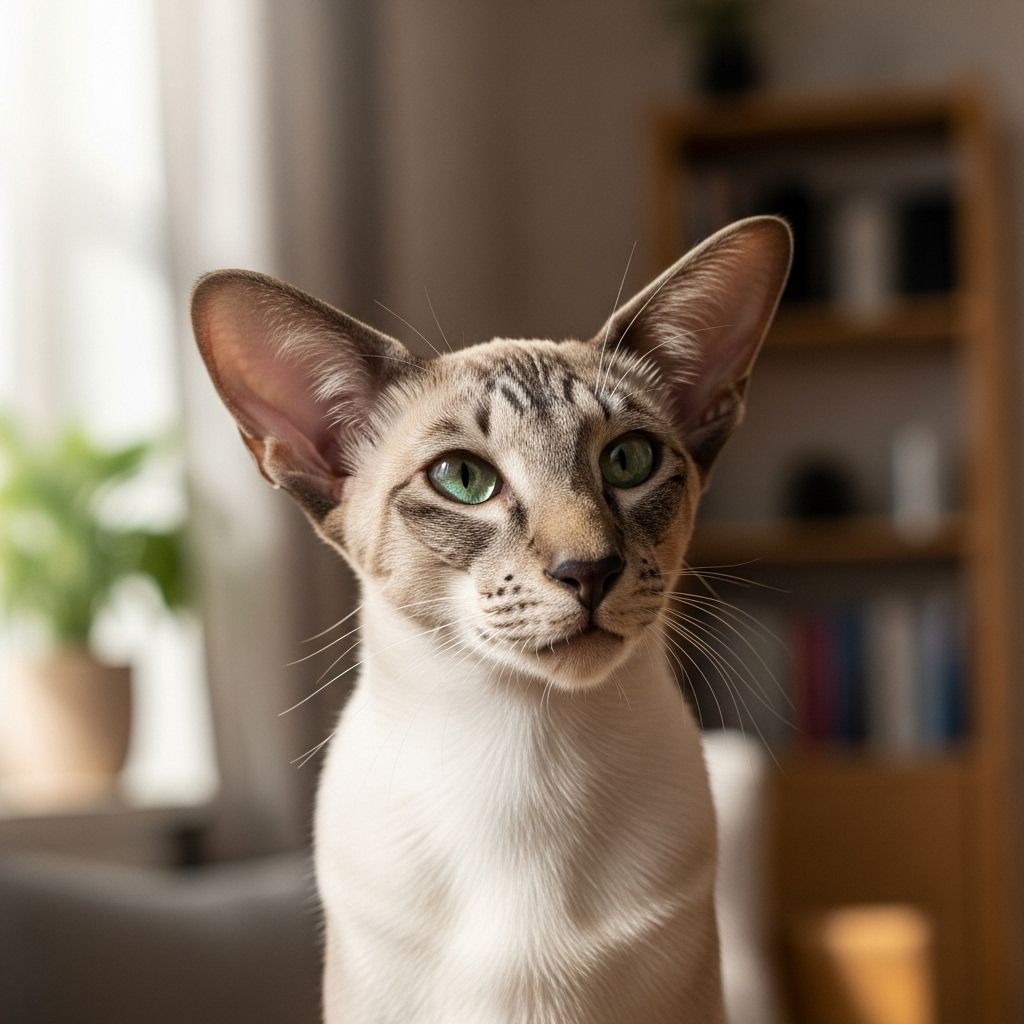
Cats come in a remarkable array of sizes, shapes, and personalities. While some are celebrated for their majestic fur or eye-catching markings, others stand out for having especially large and expressive ears. These breeds not only fascinate with their appearance but also tend to have lively, engaging temperaments. If you’re drawn to cats with noticeable ears, whether for their aesthetic or the hint of wild ancestry, this guide highlights the most prominent big-eared breeds, their histories, physical traits, and what you can expect as a guardian of these unique felines.
Why Do Some Cats Have Big Ears?
Big ears aren’t just an adorable fashion statement. In many cases, large ears evolved as an advantage. The pinna (the outer part of a cat’s ear) acts like a funnel, amplifying and directing sound into the ear canal. Cats with big ears may be better attuned to the subtlest sounds in their environment, a trait crucial for nocturnal hunters.
- Historical adaptation: Breeds originating in warmer climates developed larger ears to help with heat regulation and improved predator detection.
- Wild ancestry: Some domestic breeds retain this feature from wild cat ancestors.
- Regardless of size, all domestic cats have exceptionally sensitive hearing.
Top Cat Breeds With Big Ears
The following breeds are celebrated for their noticeably large ears. Each brings its own origin story, physical attributes, and temperament.
Oriental Shorthair
With arguably the biggest ears among domestic cats, the Oriental Shorthair is admired for its elongated features and wedge-shaped head. Their wide-set ears give them an alert, almost alien look that sets them apart in the feline world.
- Origin: England, bred as a variant of the Siamese.
- Coat: Sleek, short, comes in over 300 color combinations.
- Personality: Intelligent, social, playful, and vocal.
- Ears: Extremely large, broad at base and pointed, set to create a dramatic appearance.
- Ideal for: Families seeking an interactive, communicative companion.
Siamese
Renowned for their striking appearance, Siamese cats have large, pointed ears that accentuate their wedge-shaped heads and blue almond eyes. Their ears’ contrast against their pale coats and dark “points” is a hallmark of the breed.
- Origin: Thailand (formerly Siam).
- Coat: Short, fine, with darker mask, ears, tail, and legs.
- Personality: Extremely vocal, affectionate, deeply bonded to their humans.
- Ears: Broad-based, forward-facing, forming an alert silhouette.
Abyssinian
The Abyssinian is one of the oldest domestic breeds and is easily recognized by its bold, inquisitive gaze and prominent ears angled forward. Abyssinians have a ticked, agouti coat and are celebrated for their outgoing nature.
- Origin: Likely Southeast Asia or Egypt; developed in the UK.
- Coat: Short, fine, “ticked” tabby effect.
- Personality: Energetic, curious, playful, and people-oriented.
- Ears: Large, upright, slightly cupped, lending a fox-like appearance.
Sphynx
The famously hairless Sphynx is instantly recognizable for its wrinkled skin, strong cheekbones, and, of course, its enormous ears. The lack of fur emphasizes the size and expressive nature of these cats’ ears.
- Origin: Canada, through natural mutation.
- Coat: Hairless or coated with fine fuzz; warm and soft to the touch.
- Personality: Outgoing, affectionate, active, enjoys warmth and cuddling.
- Ears: Wide at base, open, standing erect, add to their distinctive look.
- Care Note: Ears must be cleaned regularly due to lack of protective hair.
Devon Rex
Nicknamed the “pixie cat,” the Devon Rex is easily identified by its short, wavy fur, high cheekbones, and huge, low-set ears. Their mischievous, playful expressions complement their unique physique.
- Origin: England.
- Coat: Fine, soft, lightly curled; delicate whiskers and eyebrows.
- Personality: Active, sociable, loves companionship, and adapt well to therapy work.
- Ears: Large, low-set, broad at the base with rounded tips.
Cornish Rex
The Cornish Rex stands out for its egg-shaped head, long limbs, and a rippled coat of short, soft hair. Its ears are disproportionately large and set high, giving the breed a perpetually alert expression.
- Origin: Cornwall, England.
- Coat: Silky, short, wavy or curly; lacks an outer coat.
- Personality: Athletic, clever, sociable, and highly energetic.
- Ears: Erect, set high on the head, creating an alert and attentive look.
Balinese
The elegant Balinese cat is a long-haired variant of the Siamese and shares the strikingly large ears of its cousin. These cats are slender and graceful with flowing plumes of fur and expressive faces.
- Origin: United States, as a long-haired mutation of Siamese cats.
- Coat: Silky, medium-long, single layer; no undercoat.
- Personality: Vocal, affectionate, enjoys interaction, and adapts well to family life.
- Ears: Wide-based, proportionally large, accentuating their angular heads.
Chausie
The Chausie is a rare and athletic breed descended from wild jungle cats and domestic felines. This ancestry gives the Chausie its substantial body and notable ears reminiscent of its wild relatives.
- Origin: Hybrid breed (domestic cats and wild jungle cats).
- Coat: Short, ticked or spotted markings; robust.
- Personality: Intelligent, playful, bold, needs plenty of exercise and stimulation.
- Ears: Large, upright, reminiscent of wild cats; provide a heightened sense of awareness.
Bambino
With a name meaning “baby” in Italian but ears that are anything but small, the Bambino is a cross between the Sphynx and the Munchkin. This creates a short-legged, hairless cat with outsized ears and an utterly unique appearance.
- Origin: United States, breed cross of Sphynx and Munchkin cats.
- Coat: Hairless or coated with a soft fuzz; wrinkled skin noticeable.
- Personality: Social, energetic, gets along well with children and other pets.
- Ears: Large, prominent, set to the sides of their distinct heads.
Maine Coon
While better known for their impressive size and long, flowing fur, Maine Coons also feature large, tufted ears that add to their wild, lynx-like impression. Their ears are not just decorative – the long tufts help protect delicate ear interiors.
- Origin: United States (Maine).
- Coat: Thick, water-resistant, long fur; ruff around neck.
- Personality: Gentle giants, affectionate, intelligent, good with children.
- Ears: Large, wide at the base, often with dramatic “lynx tips” of fur.
Summary Table: Cat Breeds With Big Ears
| Breed | Origin | Ears Distinction | Key Personality Traits |
|---|---|---|---|
| Oriental Shorthair | England | Extremely large, wide-set ears | Intelligent, active, vocal |
| Siamese | Thailand | Large, pointed, contrast with darker “points” | Affectionate, talkative, loyal |
| Abyssinian | Southeast Asia/UK | Large, upright, cupped | Energetic, curious, social |
| Sphynx | Canada | Huge, wide base, hairless head | Outgoing, playful, cuddly |
| Devon Rex | England | Large, low-set, broad base, rounded tips | Mischievous, loving, loyal |
| Cornish Rex | England | Large, tall, erect | Active, clever, sociable |
| Balinese | United States | Large, wide base, feathered with fur | Vocal, affectionate, intelligent |
| Chausie | Hybrid (wild/domestic) | Large, upright, wildcat-like | Energetic, bold, playful |
| Bambino | United States | Extremely large for body size | Social, playful, engaging |
| Maine Coon | United States | Large, tufted, lynx-like | Gentle, friendly, adaptable |
How Do Big Ears Impact Cat Behavior and Care?
While big-eared cats don’t require special daily care solely due to ear size, there are a few points to consider for their health and comfort:
- Ear cleaning: Cats like the Sphynx may accumulate more earwax due to lack of hair protection. Routine, gentle cleaning helps reduce wax and debris build-up.
- Hearing sensitivity: Big-eared cats may be more sensitive to loud noises. Providing a calm environment is beneficial.
- Vulnerability: Large, exposed ears can be more susceptible to sunburn or injury. Indoor living or supervised outdoor time is advised for hairless breeds.
- Heat dissipation: In hot climates, larger ears help keep cats cool. Ensure fresh water and shaded areas are always available in warm weather.
Frequently Asked Questions (FAQs)
Q: Do cats with bigger ears have better hearing?
A: Generally, larger ears can enhance sound collection, giving these cats the ability to hear subtle noises more efficiently. However, all cat breeds possess highly sensitive hearing regardless of ear size.
Q: Are big-eared breeds more prone to ear infections?
A: While not universally true, breeds with little to no hair inside the ear, such as the Sphynx or Devon Rex, may be more susceptible to wax buildup. Regular ear cleaning can prevent issues. Always consult a vet for the best hygiene practices.
Q: Which cat breed has the biggest ears?
A: The Oriental Shorthair is commonly cited as the domestic cat breed with the largest, most conspicuous ears proportional to head size.
Q: Can I find big-eared cats in animal shelters?
A: Absolutely. While purebreds may be less common in shelters, some mixed-breed cats can have large, distinct ears. Many shelters and rescues offer breed-specific programs or can help match you with a big-eared companion.
Q: Are big-eared cat breeds good with children and other pets?
A: Most breeds highlighted here, such as the Maine Coon, Sphynx, Balinese, and Bambino, are known for their sociable and friendly nature. As with any cat, early socialization and gentle introduction to other pets help ensure harmonious relationships.
Final Thoughts
Cats with big ears offer more than just striking looks—they bring playful, engaging personalities and a storied evolutionary history into the home. Whether you prefer the vocal Oriental, the pixie-like Devon Rex, or the dignified Maine Coon, welcoming a big-eared cat into your family can be a rewarding experience. Just remember to provide proper care for their ears and shower them with affection for a mutually loving companionship.
Similar Articles






Read full bio of Sneha Tete