How to De-Mat a Cat: Essential Techniques and Tips for Cat Owners
Learn safe, effective strategies to remove mats from your cat’s fur while keeping them calm and comfortable, with expert tools and prevention advice.
How to Safely De-Mat a Cat: A Step-by-Step Guide
Matted fur in cats is a common problem, especially in long-haired breeds or older cats that struggle with regular grooming. Untreated mats can cause discomfort, restrict movement, and even lead to skin infections. This comprehensive guide covers everything you need to know to safely and effectively de-mat your cat, including recommended tools, step-by-step instructions, home remedies, and prevention tips. Keeping your cat comfortable and healthy starts with a well-informed grooming routine.
Why Cats Get Mats and Tangles
Mats occur when loose, shed hair becomes entangled in a cat’s coat and forms dense clumps. While all cats can experience mats, certain factors increase the risk:
- Long-haired and thick-coated breeds are most susceptible.
- Older or overweight cats often have difficulty grooming hard-to-reach areas.
- Friction points such as behind the ears, under the armpits, and near the tail receive more matting.
- Medical conditions that affect mobility or grooming behavior.
- Lack of regular brushing, especially during seasonal shedding, can quickly lead to troublesome mats.
Understanding why mats develop helps you implement steps to prevent them and maintain your cat’s comfort.
Potential Health Risks of Matted Fur
Matted fur is not just a cosmetic issue—it can cause health problems, including:
- Skin irritation or infection: Mats can trap dirt and moisture against the skin, leading to redness or bacterial infection.
- Pain and restricted movement: Tight mats pull at the skin, causing pain and sometimes limiting your cat’s mobility.
- Parasite infestation: Fleas and ticks may hide in mats, worsening irritation and risk of disease.
- Wounds beneath mats: In severe cases, mats can hide or even cause open sores, requiring veterinary attention.
For these reasons, addressing mats promptly is essential for your cat’s well-being.
Essential Tools for De-Matting Your Cat
Before you start, gather the right tools for the safest and most stress-free grooming experience:
- Wide-tooth comb: Ideal for teasing out minor tangles and for cats with sensitive skin.
- Mat splitter or dematting tool: Designed to slice through stubborn knots but should be used with caution as they often feature sharp blades.
- Slicker brush: Helpful for removing loose undercoat and preventing mats.
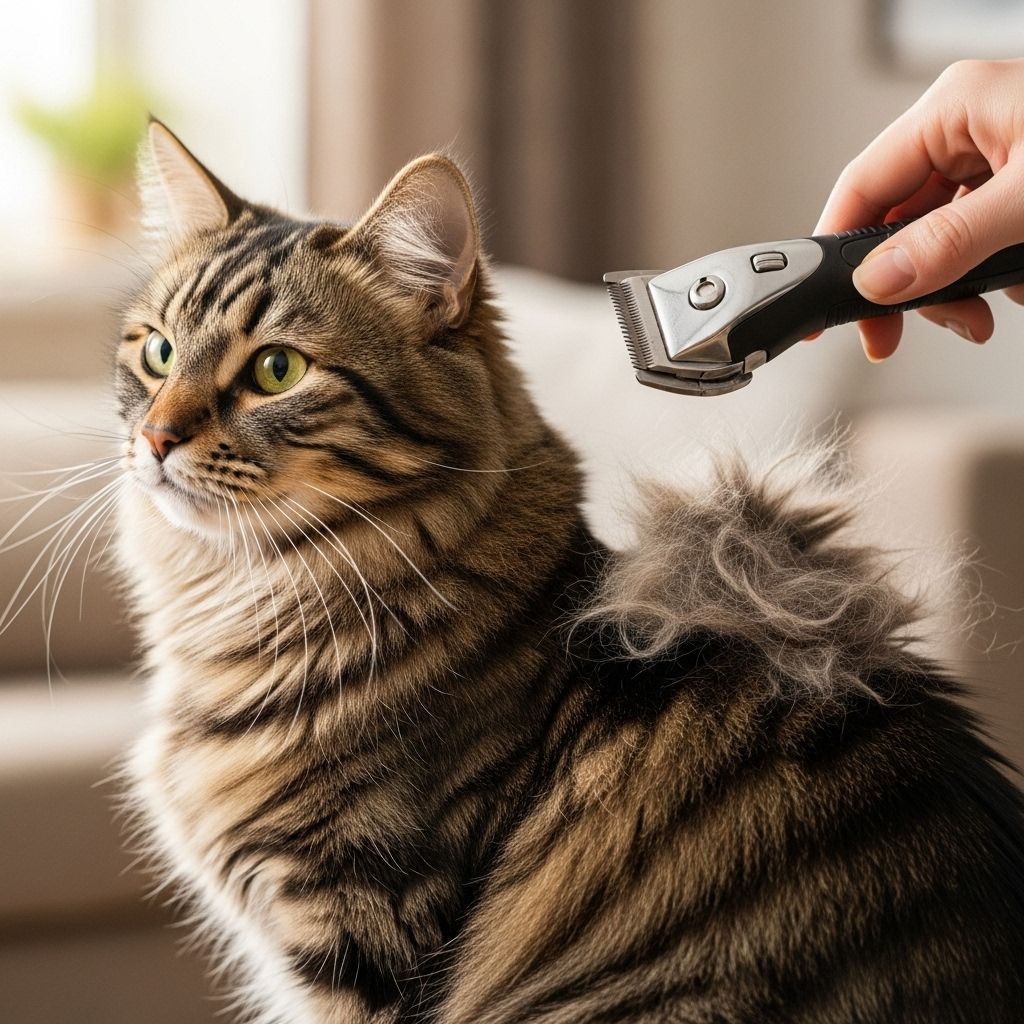
- Pet-safe electric clippers: Best for severe, tight mats that cannot be combed out and sit close to the skin.
- Detangling spray, coconut oil, or olive oil: Useful for loosening mats and making them easier—and less painful—to comb out.
- Treats: Keep your cat calm and reward positive behavior during grooming sessions.
- Helper: Another person can gently hold and reassure your cat, especially if your cat is nervous.
Preparing Your Cat for Grooming
Grooming your cat should be a positive, stress-free experience. Before starting, ensure your cat is relaxed; for example, after mealtime or a nap. Take the following steps:
- Gently handle and pet your cat to help them feel at ease.
- Present grooming tools beforehand so your cat can sniff and investigate.
- Gather treats and prepare a soft towel on your lap or grooming surface.
- Work in a quiet, comfortable environment without loud noises or distractions.
Patience is key—sometimes, especially with nervous cats, it’s best to handle just a small section at a time over several short sessions.
Step-by-Step Guide to Removing Mats from Cat Fur
- Check the mat: Gently examine the mat to assess severity. Loose, superficial tangles can often be combed out, while dense mats close to the skin require special attention and tools.
- Apply a detangler or oil (optional):
- Use a cat-safe detangling spray, coconut oil, or olive oil. Massage a small amount into the mat and allow it to sit for 5–10 minutes to help relax the hair.
- This softens the mat and makes it easier to comb or gently separate with your fingers.
- Work the mat out gently with fingers:
- Start loosening the outer edges of the mat with your fingertips. If your cat shows discomfort or the mat is very tight against the skin, do not pull hard—move to the next step.
- Use a comb or dematting tool:
- Begin at the mat’s edge, holding the fur close to the skin to avoid pulling.
- Slowly work the comb through the mat, using short, gentle strokes.
- If the mat is too dense, carefully employ a mat splitter or dematting tool.
- Employ electric clippers for severe mats:
- If the mat is very tight and cannot be combed out, use pet-safe clippers to cut only the mat, not the surrounding healthy fur.
- Do not use scissors unless absolutely necessary; cat skin is thin and easily injured by accidental slips.
- Reassure your cat throughout: Pause often to pet and talk calmly to your cat. Reward them with treats after each step.
Never force your cat into unnatural positions or restrain them forcefully. If your cat becomes highly stressed, stop and try again later. In some cases, deep or extensive mats are best handled by a professional groomer or veterinarian.
Popular Home Remedies for Removing Mats
Some home remedies can help loosen and remove mats safely:
- Coconut oil: Apply a small amount, massage into the mat, wait 5–10 minutes, then comb with a wide-toothed comb.
- Olive oil: Works similarly to coconut oil—use only a few drops.
- Cornstarch: Sprinkle lightly onto the mat and rub in to reduce friction before combing out.
These methods can help break down small, less severe mats and minimize discomfort for your cat, making combing easier and less stressful.
When to Seek Professional Help
Some mats require professional attention. Contact your vet or groomer if:
- The mat is very tight, extensive, or sits against sensitive skin.
- Your cat seems agitated, in pain, or resists gentle handling.
- There are open sores, swelling, or visible irritation under the mat.
- You’re unsure or nervous about using sharp tools near your cat’s skin.
Professional groomers and veterinary staff have the skills and equipment to safely remove severe mats. Do not hesitate to seek help if you are concerned about injuring your cat.
How to Prevent Mats in Your Cat’s Fur
Prevention is always preferable. Adopt these grooming habits to help keep your cat mat-free:
- Brush your cat regularly, especially if they have long or dense fur. Daily brushing greatly reduces the risk of mats.
- Choose appropriate grooming tools for your cat’s fur length and type. Slicker brushes and wide-tooth combs work well for most long-haired cats.
- Watch for seasonal shedding, when more regular grooming may be needed.
- Check high-risk areas frequently, including under the collar, behind the ears, and beneath the legs.
- Monitor your cat’s health: If your cat has mobility issues or appears to be grooming less, consult your veterinarian.
Developing a gentle, consistent grooming routine builds trust with your cat and keeps their coat healthy and comfortable.
Tips for a Calm and Successful Grooming Session
- Always start with a relaxed cat—never begin abruptly or when your cat is agitated.
- Break grooming sessions into short, manageable segments if your cat is nervous.
- Offer treats and pet your cat between steps to reinforce positive associations.
- Use a soft towel or grooming mat to provide secure footing and comfort.
- Be patient and always prioritize your cat’s comfort and well-being.
Common Mistakes to Avoid
- Do not use scissors unless absolutely confident: Cat skin is very delicate, and accidental injury is common.
- Avoid forced restraint: Forcing your cat can create fear and damage the trust needed for grooming.
- Never bathe a cat with mats: Wetting the mat causes it to tighten, making removal even more difficult.
Steer clear of these errors to ensure a safe and positive experience for both you and your cat.
Frequently Asked Questions
Q: Can I cut mats out of my cat’s fur with scissors?
A: It’s best to avoid scissors unless you are very experienced, as cat skin is thin and easy to cut accidentally. Pet-safe clippers or professional grooming are much safer options for tight mats.
Q: How can I keep my cat still while removing mats?
A: Work when your cat is relaxed, use treats as rewards, and enlist another person to calmly help hold your cat if necessary. Keep sessions brief, calm, and always stop if your cat becomes distressed.
Q: Is it safe to bathe my cat before removing mats?
A: No, avoid bathing a cat with mats since this tightens the clump and makes removal more painful and difficult.
Q: What is the best brush for preventing mats?
A: Slicker brushes, wide-tooth combs, or specialty de-matting tools work well. Choose based on your cat’s coat type—long-haired cats often need brushes that reach the undercoat.
Q: My cat hates brushing—what can I do?
A: Start with very short grooming sessions paired with treats and positive reinforcement. Allow your cat to sniff and get used to the brushes. Gradually increase grooming time as your cat becomes more comfortable.
Additional Resources
- Consult a professional groomer for advice tailored to your cat’s breed and temperament.
- Your veterinarian can help if mats are caused by underlying skin or health issues.
- Many pet care brands offer dematting sprays and tools specifically designed for cats—always choose products labeled as pet-safe.
Summary Table: Cat Dematting Tools and Their Uses
| Tool | Best For | Precautions |
|---|---|---|
| Wide-tooth comb | Light tangles, sensitive skin | Avoid pulling; work slowly |
| Slicker brush | Removing undercoat, preventing mats | Use gentle pressure to avoid irritation |
| Dematting tool/mat splitter | Breaking up thick knots | Sharp—handle with care, avoid skin |
| Electric clippers | Severe, tight mats close to skin | Use pet-grade; avoid nicks and burns |
| Detangling spray/oil | Softening mats | Use sparingly; check for pet-safe label |
Conclusion
Regular grooming is the best way to prevent and manage matted fur in cats. Use the right techniques and tools, proceed gently and patiently, and don’t hesitate to seek professional help if needed. Keeping your cat mat-free ensures they remain comfortable, healthy, and happy.
Similar Articles






Read full bio of Sneha Tete