Ragdoll vs Persian Cats: A Complete Comparison for Cat Lovers
Explore the differences, personalities, and care needs of Ragdoll and Persian cats before choosing your next feline companion.
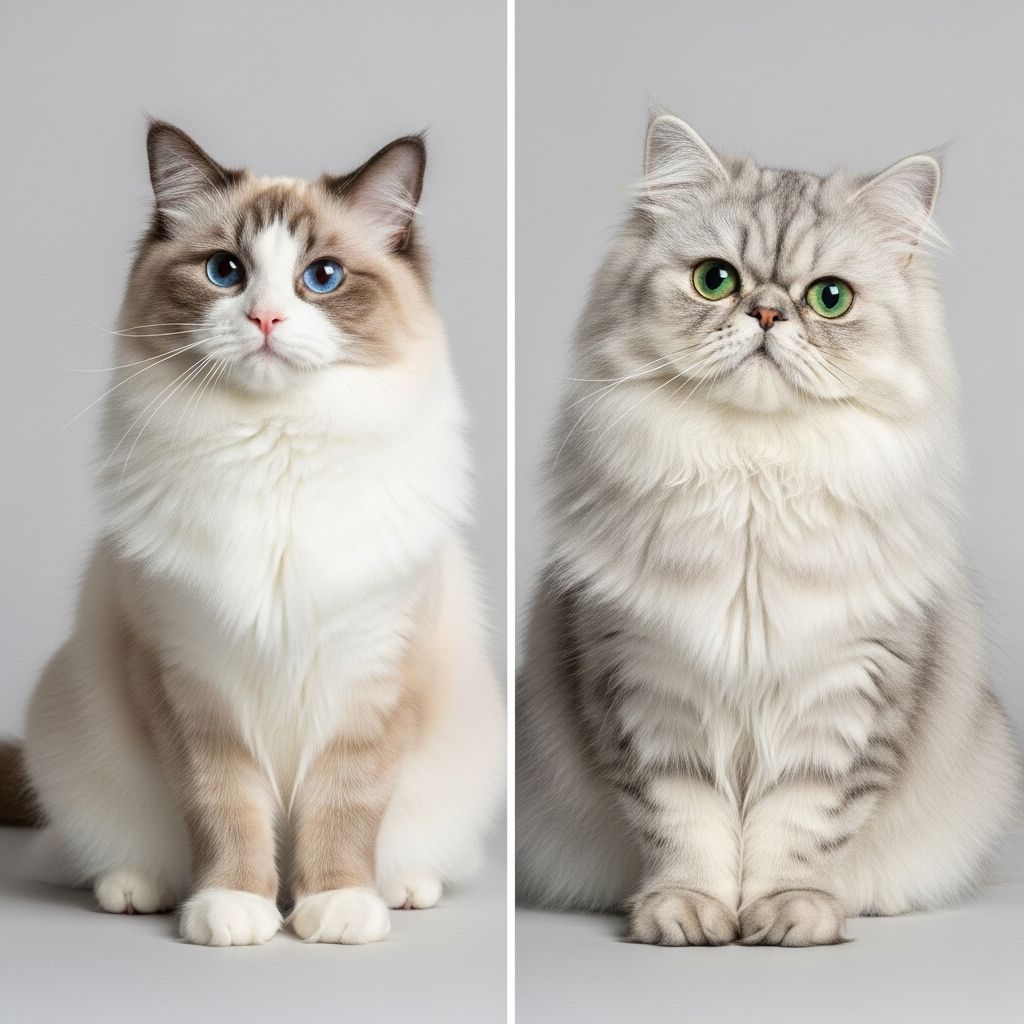
If you are seeking a gentle, affectionate companion and want a luxurious long-haired cat, the decision between Ragdoll and Persian cats can feel overwhelming. While they are both popular breeds with endearing personalities, they differ significantly in looks, care requirements, and suitability for various lifestyles. This article offers an in-depth, side-by-side analysis to guide you toward the ideal feline friend for your home.
Table of Contents
- Breed Overview
- Physical Appearance & Size
- Personality & Temperament
- Grooming and Maintenance
- Color and Pattern Varieties
- Lifespan & Health Issues
- Best Home Environments
- Frequently Asked Questions
Breed Overview
Ragdoll and Persian cats are treasured for their affectionate and laid-back natures. However, they originate from different breeding backgrounds and have unique physical features and grooming needs.
| Feature | Ragdoll | Persian |
|---|---|---|
| Origin | USA (1960s) | Persia (modern-day Iran, centuries old) |
| Group | Large semi-longhaired | Medium/large longhaired |
| Official Recognition | CFA, TICA, GCCF | CFA, TICA, GCCF |
Physical Appearance & Size
While both breeds share luscious coats and graceful lines, their body shapes and facial features are notably different. Understanding these helps potential owners recognize the breeds and anticipate their needs.
Build and Size
- Ragdolls are one of the largest domesticated cat breeds. Males generally weigh between 15-20 pounds, while females range from 10-15 pounds. They boast long, muscular bodies, angular wedge-shaped heads, and long legs.
- Persians are medium to large cats, but appear larger due to their voluminous double coats. Females typically weigh 7-12 pounds and males 9-14 pounds. They have compact, cobby builds with short, sturdy legs and broad chests.
Face Shape
- Ragdoll cats have a modified wedge-shaped face with prominent cheekbones, large oval blue eyes, and a medium-length nose. Their ears are medium, with rounded tips set slightly forward.
- Persian cats are recognized for their round, flat faces (brachycephalic) with large, expressive eyes (which can be copper, blue, or green), short broad noses, and small, rounded ears. Their distinctive ‘doll-face’ or ‘peke-face’ adds to their charm.
Coat & Eye Color
- Ragdolls always have striking blue eyes, while Persians can have a variety of eye colors that may correspond with their coat color.
Personality & Temperament
Both breeds are lauded for their affectionate and gentle natures, but subtle nuances make each one unique in terms of compatibility and companionship style.
Temperament
- Ragdolls are renowned for their docility and sweet disposition. When picked up, they often go limp—hence the name ‘Ragdoll.’ They are playful, tolerant, and love human attention. Ragdolls commonly greet owners at the door and may follow you around the house. They enjoy interactive play, get along well with children, and generally adapt to other pets.
- Persians are equally affectionate but more reserved. They enjoy the security of a calm environment and can be dignified or even a bit aloof. While Persians relish lap time and cuddling, they are less likely to be mischievous or ‘dog-like’ in their attention-seeking behaviors. They fit well in tranquil homes and thrive as loyal companions to adults and seniors.
Energy Level
- Ragdolls have moderate energy levels—loving to play but quickly settling down for naps or cuddles.
- Persians prefer serene surroundings and display low energy with occasional bursts of playfulness.
Compatibility
- Ragdolls excel in families with children and other pets, due to their robust builds and patience.
- Persians are better suited for quieter households, individuals, or couples seeking a peaceful, affectionate feline.
Grooming and Maintenance
While their flowing coats are beautiful, these breeds differ significantly in grooming needs. Prospective owners should consider how much time and effort they are willing to dedicate to coat care.
- Ragdolls have long, silky fur without a dense undercoat. This means fewer mats and tangles, and therefore, less frequent grooming is needed—generally a comb through once or twice a week is sufficient.
- Persians possess a gorgeous but labor-intensive double coat with a thick, woolly underlayer. Their fur mats easily and requires daily brushing to prevent knots, tangling, and discomfort. Regular professional grooming is sometimes necessary.
If you appreciate a longhaired companion but want to avoid high-maintenance fur, Ragdoll may be your better choice. Persian owners should be ready for a stricter grooming routine.
Color and Pattern Varieties
One of the joys of these breeds is appreciating their diverse, official coat colors and patterns.
Ragdoll Patterns & Colors
- Four official patterns: Colorpoint (darker extremities, no white), Bicolor (white inverted “V” on face, white belly/paws), Mitted (white front paws, sometimes a blaze on the nose), and Van (color mostly on head and tail).
- Six primary colors: Seal, Chocolate, Blue, Lilac, Cream, and Red.
- Additional patterns include lynx (tabby striping), tortie (mixed color patches), and torbie (tortoiseshell tabby).
- Eyes: Always brilliant blue.
Persian Variations
- Seven divisions in the Cat Fanciers’ Association standard: Solid, Silver & Golden, Smoke & Shaded, Tabby, Particolor, Bicolor, and Himalayan.
- Each division contains numerous possible color and pattern combinations—making the Persian one of the most visually diverse breeds.
- Eye color depends on coat color and may be copper, green, blue, or hazel.
- Himalayan Persians closely resemble Ragdolls in color and pattern, but differ in body size and face shape.
Lifespan & Health Issues
Knowing the breeds’ general health status and longevity can help with responsible pet ownership and anticipating potential veterinary needs.
- Ragdolls typically live 9–15 years, with some living longer in optimal care. They are generally robust but should be screened for heart conditions like hypertrophic cardiomyopathy (HCM). Regular vet check-ups support their naturally healthy constitution.
- Persians generally live 8–11 years. Due to their unique facial structure, Persians can suffer from breathing difficulties, eye drainage, and dental problems. Polycystic kidney disease (PKD) and heart disease also occur in the breed, making regular check-ups and advanced health screenings essential.
Best Home Environments
Choosing between Ragdoll and Persian cats also involves matching their personalities and needs to your household’s lifestyle.
| Ideal Household | Ragdoll | Persian |
|---|---|---|
| Families with young children | Yes – playful, tolerant, forgiving | Less ideal – prefers quiet, gentle interactions |
| Busy professionals (away often) | Not ideal – craves companionship | Not ideal – dislikes being left alone |
| Seniors or calm adults | Good fit – gentle, loves lap time | Excellent fit – serene, affectionate, not demanding |
| Multi-pet households | Adapts well to other cats and friendly dogs | Can adapt, but prefers calm pets |
Frequently Asked Questions (FAQs)
Q: Are Ragdoll cats and Persian cats the same breed?
A: No, they are distinct breeds with different origins, appearances, and breed standards. The Himalayan Persian does resemble the Ragdoll in color and pattern, but their face shape and build remain different.
Q: Which cat is bigger: Ragdoll or Persian?
A: Ragdolls are larger, with adult males reaching 15–20 pounds, while Persians average 7–14 pounds. Persians often appear bigger due to their dense coat.
Q: Are Persian cats high maintenance?
A: Yes, primarily due to their thick double coats which require daily grooming. They also need regular eye and face cleaning to prevent tear stains and infections.
Q: Are Ragdolls and Persians good with children?
A: Both are affectionate and gentle, but Ragdolls are typically more tolerant of active children and rowdy play.
Q: Which breed is more independent?
A: Persians are slightly more independent, enjoying quiet moments and less likely to follow you everywhere, whereas Ragdolls often shadow their humans throughout the home.
Q: Do Ragdoll or Persian cats require special diets?
A: Both breeds benefit from quality, balanced nutrition, but Persians may need special diets to help with hairball control due to their heavy shedding.
Summary Table: Ragdoll vs Persian Quick Facts
| Aspect | Ragdoll | Persian |
|---|---|---|
| Origin | USA (1960s) | Persia (Iran) |
| Average Weight | 10–20 lbs | 7–14 lbs |
| Coat Type | Long, no undercoat | Long, thick double coat |
| Grooming | Moderate (1-2x/week) | High (daily, sometimes professional) |
| Eye Color | Always blue | Varies with coat color |
| Temperament | Affectionate, playful, docile | Affectionate, calm, dignified |
| Lifespan | 9–15 years | 8–11 years |
Which Breed is Right for You?
The decision between Ragdoll and Persian cats depends on your household dynamics and the time you can dedicate to grooming. If you seek an easygoing, playful cat that thrives in active homes with children and other pets, the Ragdoll is likely your best match. If you prefer a serene, affectionate lap companion and are willing to comb daily, the regal Persian will reward you with love and beauty.
Regardless of your choice, both breeds adapt to indoor living and offer immense affection and companionship to devoted owners.
Similar Articles



Read full bio of Sneha Tete