What To Feed Ducks Instead of Bread: A Complete Guide
Learn which foods to safely feed ducks, why bread is harmful, and discover healthy, nutritious alternatives for wild and pet ducks.
What To Feed Ducks (Instead of Bread)
Feeding ducks is a popular pastime, whether at a neighborhood pond or in your backyard. However, not all foods are safe for ducks, and some commonly offered treats—like bread—can harm their health. This comprehensive, science-backed guide discusses exactly what to feed ducks instead of bread, explains why bread is unhealthy, and offers a range of nutritious, safe alternatives for ducks in the wild, as pets, or in backyard flocks.
Why Bread Is Bad for Ducks
While it’s common to see people feeding bread to ducks, this seemingly harmless gesture can be detrimental to duck health and the local ecosystem. Here’s why:
- Poor Nutrition: Bread lacks essential nutrients and is considered “junk food” for ducks. It fills them up without providing the protein, vitamins, or minerals they need to thrive.
- Digestive Problems: Bread is difficult for ducks to digest and can cause stomach discomfort and malnutrition.
- Environmental Harm: Uneaten bread pollutes water, fosters algae growth, and contributes to dangerous bacteria, which can harm both ducks and other wildlife.
- Behavioral Issues: Regularly feeding bread can make ducks reliant on handouts and discourage them from grazing for natural foods that form a balanced diet.
Healthy Foods You Can Feed Ducks
Instead of bread, there are a range of nutritious options suitable for feeding ducks. These foods support their well-being and keep ecosystems healthy:
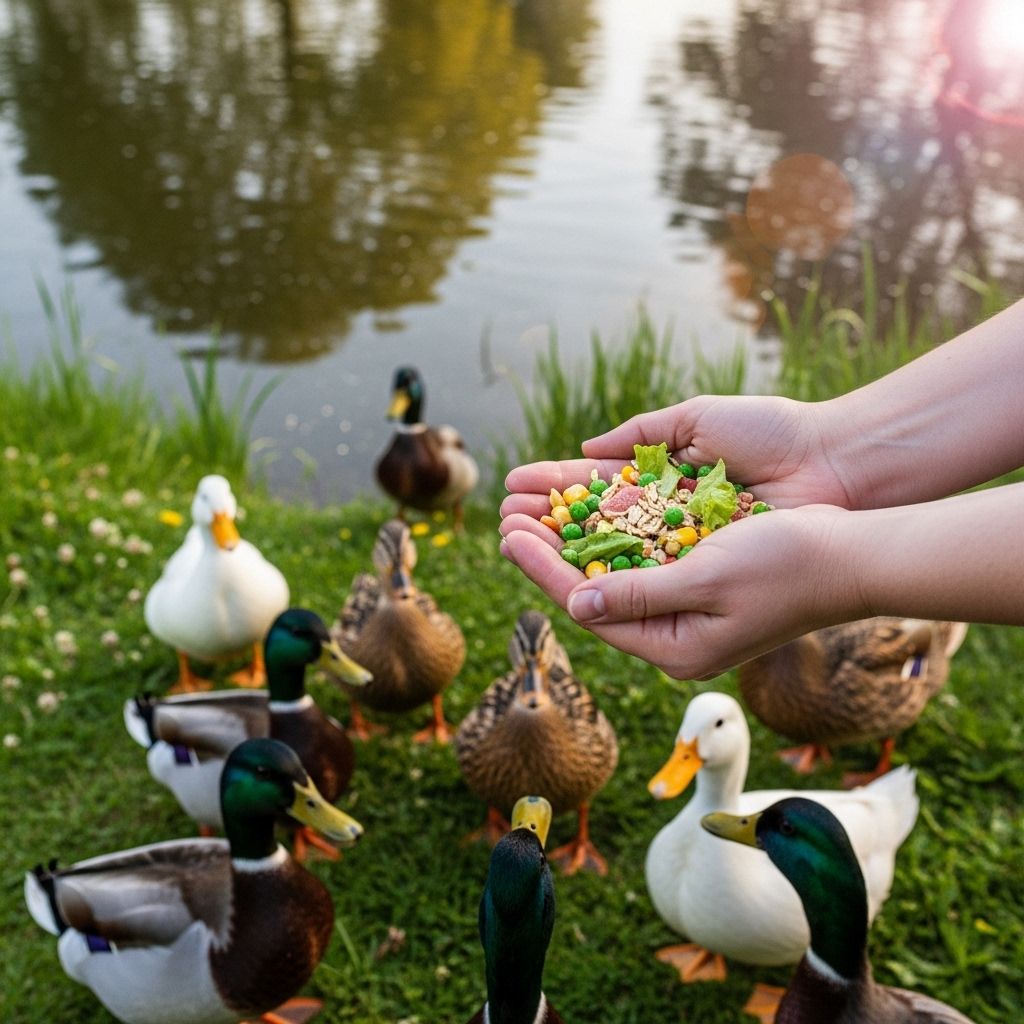
- Leafy greens: Romaine lettuce, cabbage, kale, and collard greens, chopped into small pieces.
- Vegetables: Frozen peas (thawed), chopped carrots, corn (cooked and cooled), cucumber slices, and zucchini.
- Fruits: Sliced seedless grapes, diced apples (without seeds), bananas, and berries as occasional treats.
- Grains: Plain cooked rice (brown or white), cooked oats, barley, or quinoa. Avoid added salt or sugar.
- Cracked corn: A popular choice sold at feed stores, safe in moderation.
- Specialty duck pellets: Commercial waterfowl or duck pellets provide balanced nutrition for pet, backyard, or wild ducks.
Feeding Ducks: Dos and Don’ts
- Do offer small, chopped, or crushed foods to prevent choking—especially for ducklings and smaller wild ducks.
- Do scatter food on the water or on the ground to mimic natural foraging.
- Don’t feed foods with salt, sugar, spices, or artificial coloring.
- Don’t feed ducks moldy, spoiled, or expired food items.
- Don’t give processed foods like chips, crackers, or cookies.
Nutritional Needs of Ducks
Ducks have specific dietary requirements to maintain healthy growth, egg production, and immune function. Whether wild, pet, or backyard ducks, understanding these requirements helps provide optimal nutrition.
| Nutrient | Adult Ducks | Ducklings |
|---|---|---|
| Protein | 16% for layers, 14% for maintenance | 18-20% for first 2-3 weeks, then 14-16% |
| Calcium | 2.9% for layers, 0.7% for non-layers | Low calcium, as excess can be toxic |
| Phosphorus | 0.35% | Low |
| Other Vitamins & Minerals | Vitamin A, D3, E, riboflavin, niacin, iron, zinc, selenium, and more | |
Access to clean, fresh water is essential at all times, as ducks need water to help swallow food and aid digestion.
Treats and Foods to Avoid
Not all scraps or treats are safe for ducks. Some can be dangerous or fail to provide adequate nutrition. The following foods should be avoided:
- Bread and crackers: Low in nutritional value, may cause digestive and ecological issues.
- Salty, sugary, or processed foods: Ducks’ bodies are unable to handle high levels of salt or sugar, which can cause health problems.
- Moldy or rotten foods: These can cause deadly diseases, including botulism.
- Onions, garlic, and chives: Can be toxic and damage red blood cells.
- Uncooked beans: Contain toxins that are only destroyed by proper cooking.
- Avocado: Contains a toxin called persin; best avoided.
- Chocolate and caffeine: Toxic to all birds.
- Raw potatoes and potato peels: Contain soluble glycoalkaloids which are toxic to ducks.
- Junk food: Chips, cookies, doughnuts, fries, and similar snacks should never be fed.
Feeding Wild Ducks vs. Pet or Backyard Ducks
The feeding approach may vary depending on whether you are feeding wild ducks at the park, backyard flock ducks, or pet ducks at home.
Wild Ducks
- Encourage foraging: Offer foods that mimic their natural diet, like leafy vegetables, seeds, and grains.
- Feed sparingly: Supplement only as a treat without encouraging dependency.
- Scatter food: Place food in water or on land to reduce competition and aggression.
Backyard and Pet Ducks
- Commercial Feed: Use waterfowl or duck-specific pellets for balanced nutrition.
- Feeding Schedule: Adult ducks benefit from two meals a day, while ducklings may need up to six.
- Fresh Treats: Offer fresh, healthy treats in small quantities, never exceeding 10% of their daily intake.
- Monitor Health: Watch for changes in feathers, droppings, and appetite for signs of nutritional imbalance.
Feeding Ducklings: Special Considerations
Ducklings have unique dietary requirements for growth and development. They need:
- Starter Feed: Use a non-medicated chick starter with 18-20% protein for the first 2-3 weeks, ensuring it’s formulated for waterfowl if possible.
- Niacin (Vitamin B3): Essential for healthy bones and joints. Ensure feed contains enough niacin (minimum 25 mg/lb), or supplement with brewer’s yeast or niacin-rich foods like peas, fish, and oats.
- Low Calcium: Avoid layer feed, which has excess calcium and can harm developing organs.
- Grit: If feeding treats or anything beyond starter feed, provide tiny grit so ducklings can digest their food properly.
Ducklings should always have access to clean, fresh, shallow water when eating.
Do Ducks Need Supplements?
Most healthy ducks on a balanced feed (plus access to greens and forage) do not need additional supplements. However, certain conditions or specialized diets may require extra nutrition. Scenarios where supplements could be needed include:
- Brewer’s yeast for niacin: Particularly important for ducklings or if feed is naturally low in this nutrient.
- Grit or small stones: Essential if ducks eat whole grains, insects, or foods other than pellets.
- Calcium sources: Laying females may need oyster shell or crushed eggshell for strong eggshell formation.
Best Practices for Safe Duck Feeding
- Always remove uneaten food to prevent mold and pests.
- Offer foods in moderation; treats should only make up a small portion of the diet (5-10%).
- Ensure all produce and grains are fresh, clean, and free from contaminants or pesticides.
- Feed by scattering over the ground or in water to promote natural foraging behavior.
- Always provide clean, fresh drinking water.
Sample Diet: What a Healthy Duck Meal Looks Like
- Main Diet: Commercial duck pellets or waterfowl feed, given in two daily meals for adults.
- Supplemental Greens: Chopped leafy vegetables or thawed peas scattered into their water bowl or on the grass.
- Occasional Treats: Sliced grapes, cooked plain rice, or oats shared occasionally as a reward.
- Fresh Water: Always accessible for drinking and cleaning their bills.
Frequently Asked Questions (FAQs)
Q: Why can’t ducks eat bread?
A: Bread lacks essential nutrients and fills ducks up without nourishing them, leading to malnutrition and water pollution.
Q: What vegetables are best for ducks?
A: Ducks enjoy leafy greens (lettuce, cabbage, kale), peas, corn, chopped carrots, cucumber, and zucchini. Cut into small pieces to avoid choking.
Q: Is it safe to feed ducks fruit?
A: Yes, as an occasional treat. Offer sliced grapes, apples (seedless), bananas, and berries. Avoid seeds and pits that can be toxic.
Q: Can ducklings eat adult duck feed?
A: No, ducklings require starter feed with higher protein and low calcium. Avoid layer feeds until ducks are mature to prevent health problems.
Q: How often should I feed my ducks?
A: Adult ducks typically thrive on two meals per day, while ducklings may need small frequent feedings (up to 6 meals daily).
Q: What foods should never be fed to ducks?
A: Never feed bread, salty snacks, chocolate, caffeinated items, raw potatoes, onions, garlic, avocado, or spoiled foods. These can be harmful or toxic.
Supporting Healthy Duck Habits
Contributing to duck health starts with informed feeding. By choosing nutritious, natural foods and skipping bread, you support not only the ducks’ well-being but the health of local wetlands and ecosystems as well.
If you want to provide ducks with the very best, prioritize balanced commercial feeds, supplement with fresh greens and the occasional safe treat, and always avoid foods known to cause harm. For more detailed advice tailored to your situation (wild, pet, or backyard flock), consult with a veterinarian experienced with waterfowl.
Similar Articles







Read full bio of Sneha Tete