Why Does My Cat Bite My Nose? 6 Surprising Reasons & What They Mean
Understand why your cat bites your nose—play, affection, warning, or marking—and learn how to interpret and respond to this feline quirk.
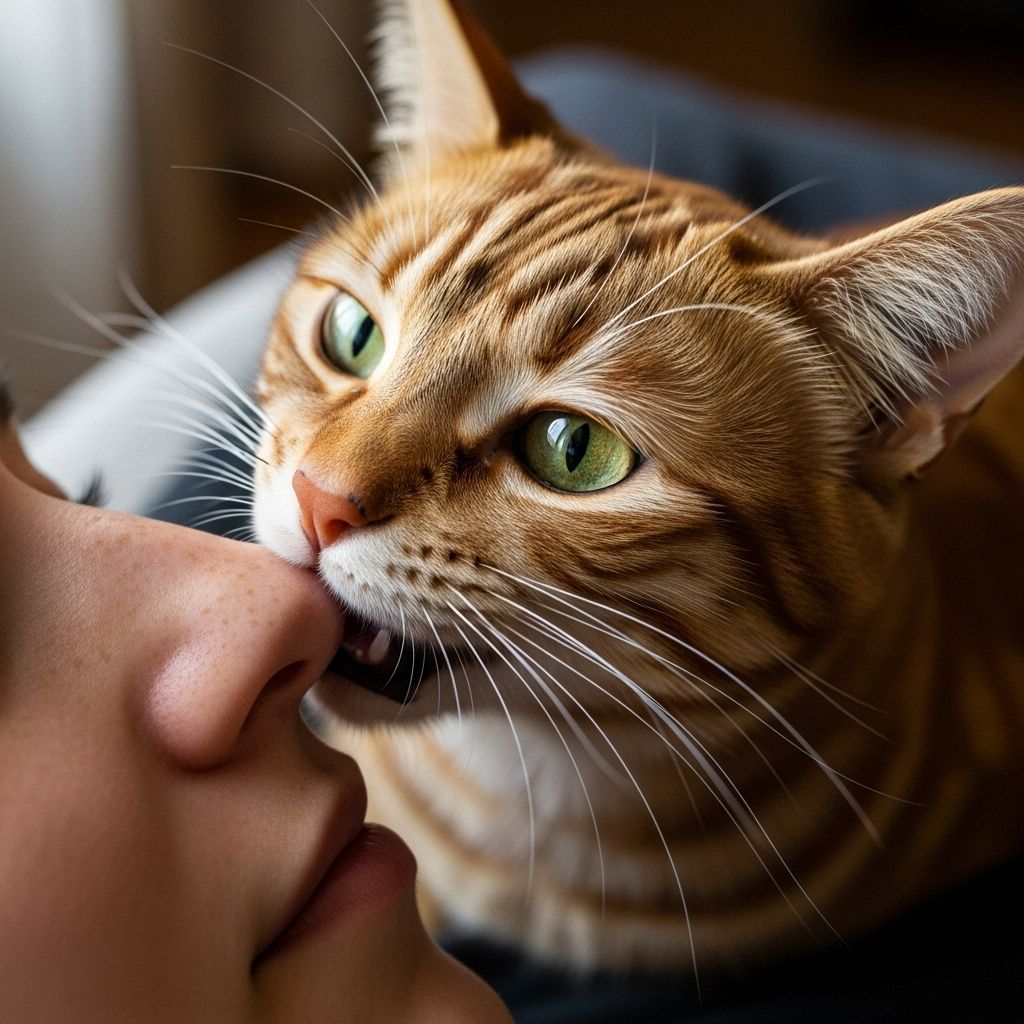
If you share your life with a cat, you might have experienced the odd, sometimes startling moment when your feline companion leans in and—seemingly out of nowhere—gives your nose a bite. Whether gentle or strong, nose biting is a behavior that leaves many cat owners both perplexed and curious. Does it mean your cat loves you, wants to play, or is telling you to back off? In this comprehensive guide, we’ll dig into the six most common reasons cats bite noses, explore the feline logic behind the behavior, and offer clear advice for keeping human-cat interactions both safe and rewarding.
Table of Contents
- The 6 Reasons Why Your Cat Bites Your Nose
- Understanding Cat Body Language During Nose Biting
- Is Nose Biting a Sign of Affection?
- Nose Biting as a Warning or Boundary
- Marking & Ownership: Does Your Cat Think You Belong to Them?
- Playfulness & Curiosity: Kittens and Their Mouths
- Stress, Anxiety & Overstimulation Triggers
- How to Respond to Cat Nose Biting
- Frequently Asked Questions
The 6 Reasons Why Your Cat Bites Your Nose
| Reason | Description | How to Respond |
|---|---|---|
| Playfulness | Cats, especially kittens, use their mouths during play. A gentle nip to your nose can mean excitement and fun. It’s common when you’re holding, petting, or in close contact with your cat. | Redirect play with toys. Avoid roughhousing with hands or face. |
| Affection | Some cats bite gently to show love, much like licking or rubbing. It often accompanies purring and relaxed body language. | Accept the gesture, but set boundaries if it becomes uncomfortable. |
| Warning / Overstimulation | A firmer bite may signal your cat feels overstimulated or wants you to stop. Watch for hissing, growling, or twitching tails. | Give your cat space. Respect boundaries to prevent escalation. |
| Territory Marking | Cats mark territory using glands in their cheeks, paws, or even through gentle bites. Nose bites can be a sign your cat is ‘claiming’ you as theirs. | Recognize as possessive affection; no action needed if gentle. |
| Stress / Anxiety | Biting, including on the nose, can stem from anxiety. Sudden or hard bites can occur during environmental changes or stressful situations. | Monitor triggers. Seek vet or behaviorist if biting escalates. |
| Curiosity / Exploration | Cats explore with their mouths. This is especially true with kittens but can persist in some adults. | Offer safe outlets for exploration (chew toys). |
Understanding Cat Body Language During Nose Biting
Decoding your cat’s body language is crucial to distinguishing between an affectionate nose bite and a warning nip. Observe these cues:
- Relaxed Ears & Tail: Indicates affection, play, or bonding.
- Pinned Back Ears & Swishing Tail: Suggests irritation or overstimulation.
- Purring & Kneading: Typically accompany gentle ‘love bites.’
- Growling, Hissing, Stiff Posture: Signals the need for space or discomfort.
Cats communicate complex messages through body posture, vocalization, and subtle gestures. Always watch for escalation—most bites are preceded by ample warning signs.
Is Nose Biting a Sign of Affection?
For many cats, biting your nose is the feline version of a kiss or hug. Known as ‘cat love bites,’ these gentle nips often occur when the cat is feeling especially close to their human. You might notice this after a long petting or grooming session, or when your cat is being cradled in your arms.
- Cats may bite, lick, and nuzzle as part of grooming behavior—mimicking how they socialize with other cats.
- Reciprocal affection: Your cat may want to “pet” you back and chooses a gentle bite.
- Body language is relaxed, sometimes with soft purring or slow blink eyes—a sign your cat feels safe.
This display is normal, especially with cats that are strongly bonded to their owners.
Nose Biting as a Warning or Boundary
Not all nose bites are expressions of love. If the bite feels forceful, sudden, or is followed by aggressive signals, your cat may be issuing a warning telling you to stop. Overstimulation is a common cause:
- Petting-induced aggression can occur if you stroke your cat for too long or in a sensitive area.
- A warning bite may be preceded by tail flicking, flattened ears, or dilated pupils.
- Some cats have lower tolerance for touch or handling than others; respect their limits.
- Never respond aggressively—calmly end the interaction and let your cat cool off.
Understanding individual preferences is vital; some cats crave cuddles, others prefer solitude. Repeated warning bites signal the need for changed interaction habits.
Marking & Ownership: Does Your Cat Think You Belong to Them?
Your cat might bite your nose gently to strengthen their claim on you. Cats mark their territory in a variety of ways—rubbing, bunting, or even biting places that are close to them. Bunting is a behavior where a cat presses and rubs their face or head against you, releasing pheromones from scent glands. This marks you as ‘theirs’ to other animals.
- Nose biting may be accompanied by cheek rubs, purring, or headbutts.
- Cats with strong territorial instincts may repeat the behavior often, especially if other pets are in the household.
- This form of marking is not harmful; it is a testament to your cat’s devotion.
If you’re the recipient of these bites, count yourself among your cat’s chosen humans!
Playfulness & Curiosity: Kittens and Their Mouths
Kittens are notorious for using their mouths and teeth during play. They explore everything—including their humans’ faces—through nipping, licking, and gentle bites. While most cats outgrow the habit, some playful adults persist in this behavior.
- Bites are usually soft and occur during energetic play sessions.
- May be accompanied by pouncing, chasing, or rolling on the floor.
- Redirect mouthy play away from hands and faces to appropriate toys.
- Don’t encourage face biting as a game; discourage with gentle, consistent correction (“No,” then put cat down).
Consistent redirection and positive reinforcement help teach boundaries.
Stress, Anxiety & Overstimulation Triggers
Biting is sometimes an indicator of fear, stress, or anxiety. Changes in the environment, routine, or the introduction of new pets or people can trigger defensive behaviors.
- Biting hard, or accompanied by hissing or hiding, indicates distress.
- Monitor for triggers: loud noises, guests, travel, or major household changes.
- Anxious cats may also groom excessively, hide, or avoid interaction.
- Provide safe spaces, maintain routines, and offer enrichment.
- If biting is frequent or severe, seek the help of a veterinarian or feline behaviorist.
Early intervention can prevent anxiety-driven behaviors from escalating.
How to Respond to Cat Nose Biting
- Stay calm: Never punish or yell. This can worsen anxiety and aggression.
- Redirect: Gently stop play or affection if biting occurs; offer toys for play instead of fingers or face.
- Observe: Monitor your cat’s signals for overstimulation and learn when to stop petting.
- Respect boundaries: Not all cats enjoy prolonged snuggles. End interactions if you sense irritation.
- Positive reinforcement: Reward gentle behavior with treats, praise, and attention.
- Consult an expert: If biting is frequent, severe, or unpredictable, consult a vet or certified animal behaviorist.
Frequently Asked Questions (FAQs)
Q: Is it normal for a cat to gently bite my nose?
A: Yes. Gentle nose bites—often called ‘love bites’—are a way some cats show affection or engage in play. As long as the bite is not hard or accompanied by aggression, it is usually harmless.
Q: Should I be concerned if my cat bites my nose hard or aggressively?
A: Aggressive biting, especially if it draws blood or is accompanied by hissing and growling, is a warning sign. This may indicate fear, overstimulation, or anxiety. Stop interaction, give your cat space, and if biting persists, consult a professional.
Q: How can I teach my cat not to bite my face or nose?
A: Use gentle, consistent corrections such as a firm “No,” and immediately stop the interaction. Redirect play to suitable toys. Never punish physically. Reward gentle behavior and provide outlets for play.
Q: Do all cats bite noses for the same reasons?
A: No. Each cat is unique; some bite as part of play, others for affection, and some as a warning. Watch your cat’s body language for context and always consider their personality.
Q: Is nose biting a sign of illness or health issues?
A: While biting is rarely a direct sign of illness, sudden changes in behavior, including biting, may be caused by pain, discomfort, or health changes. Consult a vet for any unexplained aggression or behavioral shifts.
Q: My kitten bites my nose all the time. Will they outgrow this behavior?
A: Most kittens use their mouths for exploration and play. With consistent training, appropriate outlets, and as they mature, many kittens outgrow face biting. Guide and redirect to toys early on for best results.
Conclusion: Embracing Your Cat’s Unique Communication Style
Nose biting is just one of many ways cats communicate with their humans. Whether it’s a sign of affection, a warning, or a playful tactic, understanding the motivation behind your cat’s nips can strengthen your bond and ensure happy, healthy interactions. Remember—respect, observation, and positive reinforcement are the keys to harmonious feline relationships.
If you’re ever unsure about your cat’s biting behavior—or if it becomes painful or frequent—consult your veterinarian or a qualified feline behaviorist to get expert guidance. Every cat is an individual, and learning their language is the best way to keep your relationship rewarding and safe.
Similar Articles






Read full bio of medha deb